Swimming pool maintenance news Atlanta, GA owners need right now goes beyond a basic skim-and-shock routine. A statewide drought declaration, heavy spring pollen, and Atlanta's humid summers all change how often your pool needs attention this year. Here's what's current, what's seasonal, and what actually keeps water clear in metro Atlanta backyards.
What's New in Atlanta Pool Care for 2026
Two real developments affect how Atlanta homeowners should plan pool care this year, and neither shows up on a generic national maintenance checklist.
Statewide drought response. On April 27, 2026, the Environmental Protection Division (EPD) Director declared a state-wide Drought Response Level 1 for public water systems using surface water and/or groundwater. The good news for pool owners: outdoor water use between the hours of 4 PM and 10 A.M. is still allowable and unaffected by a Drought Response Level 1. That means topping off evaporation loss or refilling after a leak repair is still fine under current rules, but it's worth watching for updates if conditions worsen, since higher drought levels can add restrictions on filling pools.
Swim safety planning. Georgia's Izzy's Law changed how private swim instruction works statewide. Izzy's Law, signed into law in 2023, requires the Department of Public Health (DPH) to develop a safety plan for aquatic activities based on the standards for nationally accredited swim instructors.
As of April 1, 2024, all private swim instructors must have an aquatic safety plan in place before providing swimming lessons to any individual. If you host lessons in your backyard pool, this is worth confirming with your instructor.
Why Atlanta's Climate Changes Your Maintenance Routine
Atlanta's heat, humidity, pollen, and clay-heavy runoff push pool care into a different rhythm than a one-size-fits-all guide ever covers. Warm, wet air gives algae spores an easy foothold, and rising water temperatures burn through sanitizer faster than most owners expect.
Winters stay comparatively mild. NOAA's 1991-2020 climate normals for the Atlanta Hartsfield-Jackson station put January's average high at 54.0°F, average low at 35.6°F, and average temperature at 44.8°F. That mild stretch is exactly why Atlanta pools rarely need a full winter shutdown, but it also means algae can get a head start the moment spring temperatures climb.
On top of the weather, dense tree cover and active wildlife add organic debris to the water. Pollen, leaves, and clay sediment all end up in the pool between cleanings, which is why a fixed weekly rhythm matters more here than in drier climates.
Weekly Pool Cleaning Checklist
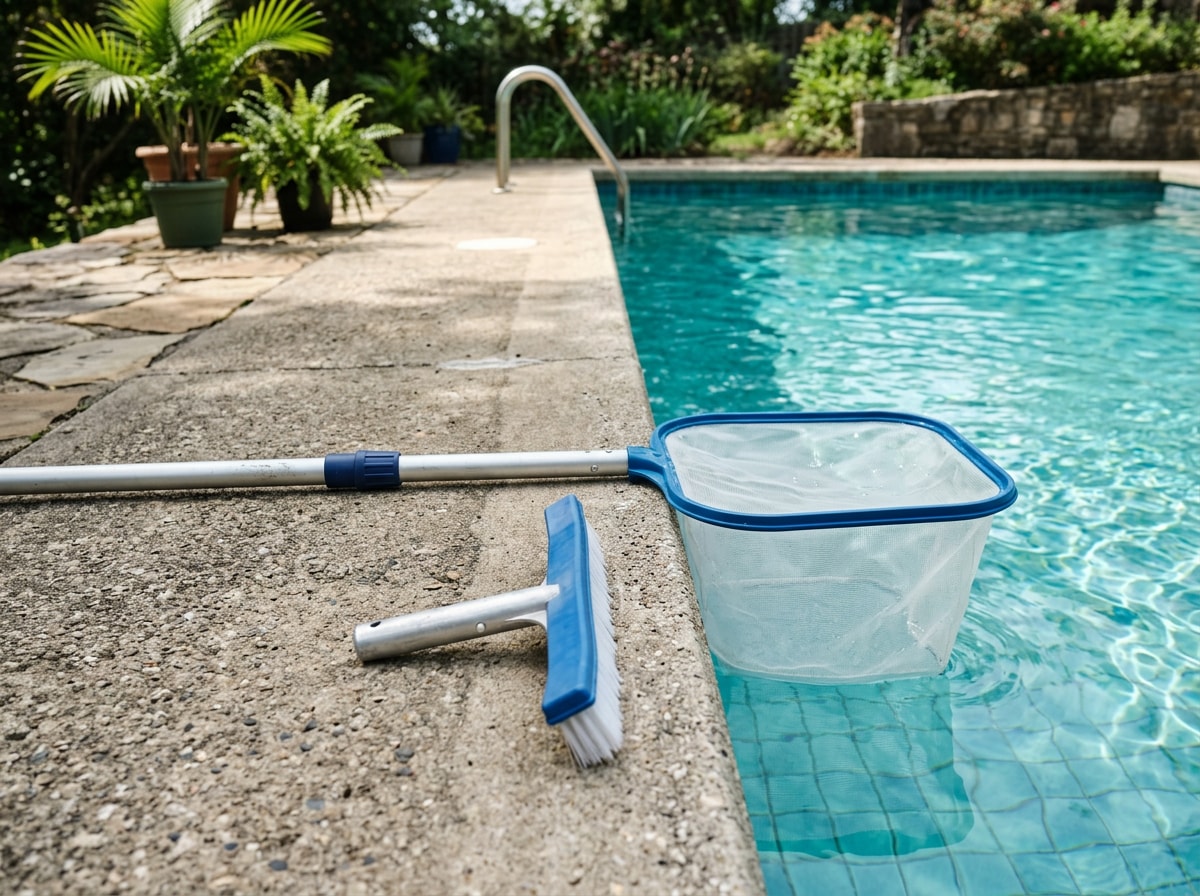
A consistent routine beats catching up after the fact. In our service visits across metro Atlanta backyards, pools that skip even one cleaning cycle during July typically need an extra shock treatment just to recover.
Daily
- Skim the surface for five minutes, especially right after afternoon thunderstorms. Debris that sinks before you catch it can stain the pool floor.
Weekly
- Brush walls, steps, and corners to stop algae from gaining a foothold in slow-circulation spots.
- Empty skimmer and pump baskets so trapped debris doesn't choke water flow or strain the motor.
- Vacuum the floor if automated cleaning equipment hasn't kept pace with pollen season.
Pairing these habits with professional support makes the routine sustainable. Our pool and spa maintenance service handles the heavy lifting if a DIY schedule isn't realistic for your household.
Test and Balance Your Water Chemistry
Weekly testing protects both your equipment and your skin. Atlanta's shifting weather, heavy pool use, and outdoor debris load make skipping a week risky rather than harmless.
CDC recommends pH 7.0-7.8 and a chlorine concentration of at least 1 ppm in pools and at least 3 ppm in hot tubs. Most Atlanta pool professionals aim for the tighter 7.2-7.6 band for swimmer comfort and equipment longevity, which still falls inside CDC's safe range. For homes running stabilized chlorine products, CDC recommends pH 7.0-7.8 and a chlorine concentration of at least 2 ppm in pools when using cyanuric acid or chlorine products with cyanuric acid.
Testing frequency matters as much as the numbers themselves. Test chlorine concentration and pH at least twice per day, and more often when the pool or hot tub is being used by a number of people. That's a higher bar than most homeowners realize, especially during a crowded Saturday pool party. Georgia's naturally hard water and red-clay runoff can also skew calcium and turbidity readings, so testing more often during rainy stretches catches problems before they show up as cloudy water or scale. If you're unsure which test kit or strips actually hold up to Atlanta's conditions, this guide to pool water testers walks through what to buy and how often to use it.
Filtration & Circulation System Maintenance
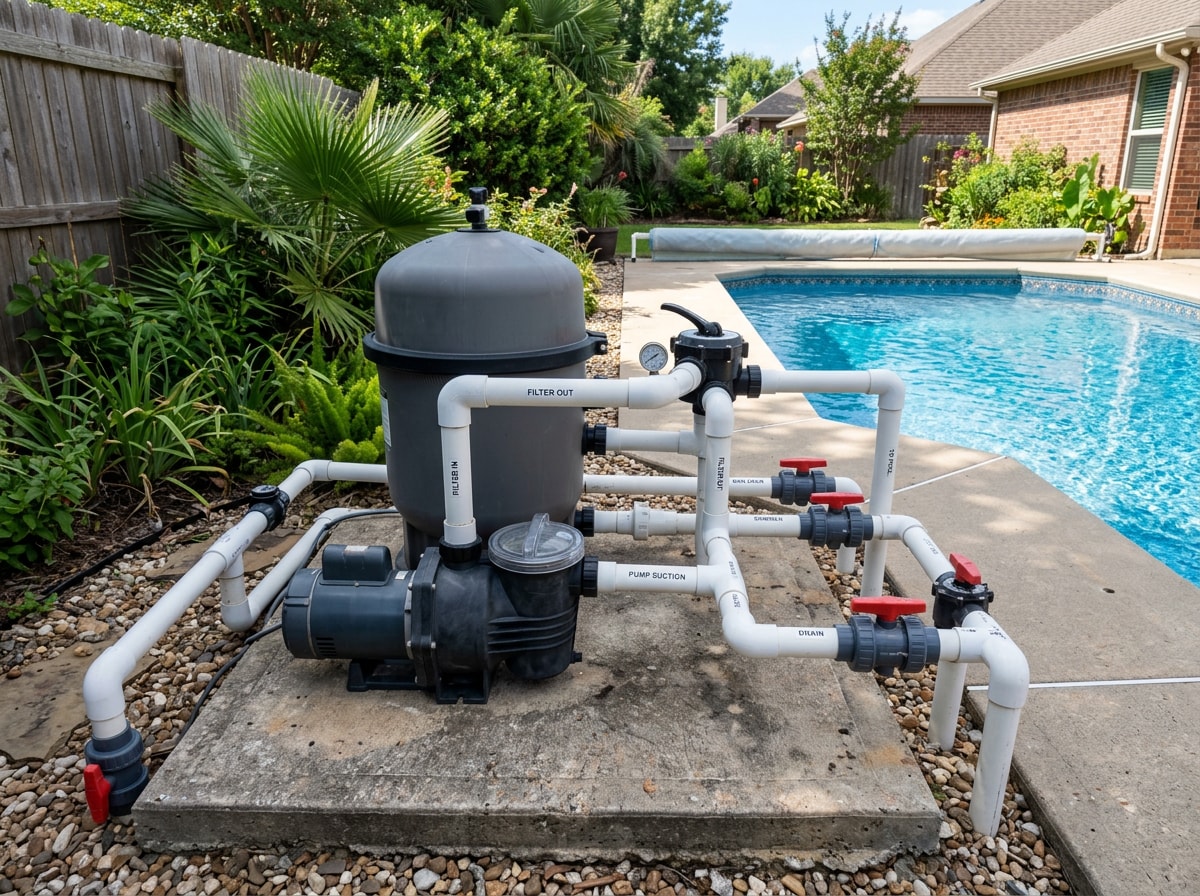
Every Atlanta-focused pool guide treats the pump, filter, and circulation system as one unit, because neglecting any single part undermines the whole system's ability to keep water clear.
Run the pump for 8 to 12 hours daily, especially during peak summer swimming season, to keep water properly circulated and filtered. This run time matters most when heat and heavy bather load push organic debris to its highest levels.
Alongside steady pump run time, backwash or rinse the filter regularly to clear trapped dirt before it restricts flow. A clogged filter forces the pump to work harder, raises energy costs, and often shows up first as cloudy or dull-looking water. If your pump or filter is aging out, our pool repair and renovation team can evaluate whether a repair or a full equipment swap makes more sense.
Owners who want lower chemical handling sometimes switch systems entirely. A saltwater pool conversion still needs regular salt-cell and stabilizer checks, but it changes the day-to-day chemistry workload.
Troubleshooting: Why Your Pool Is Acting Up
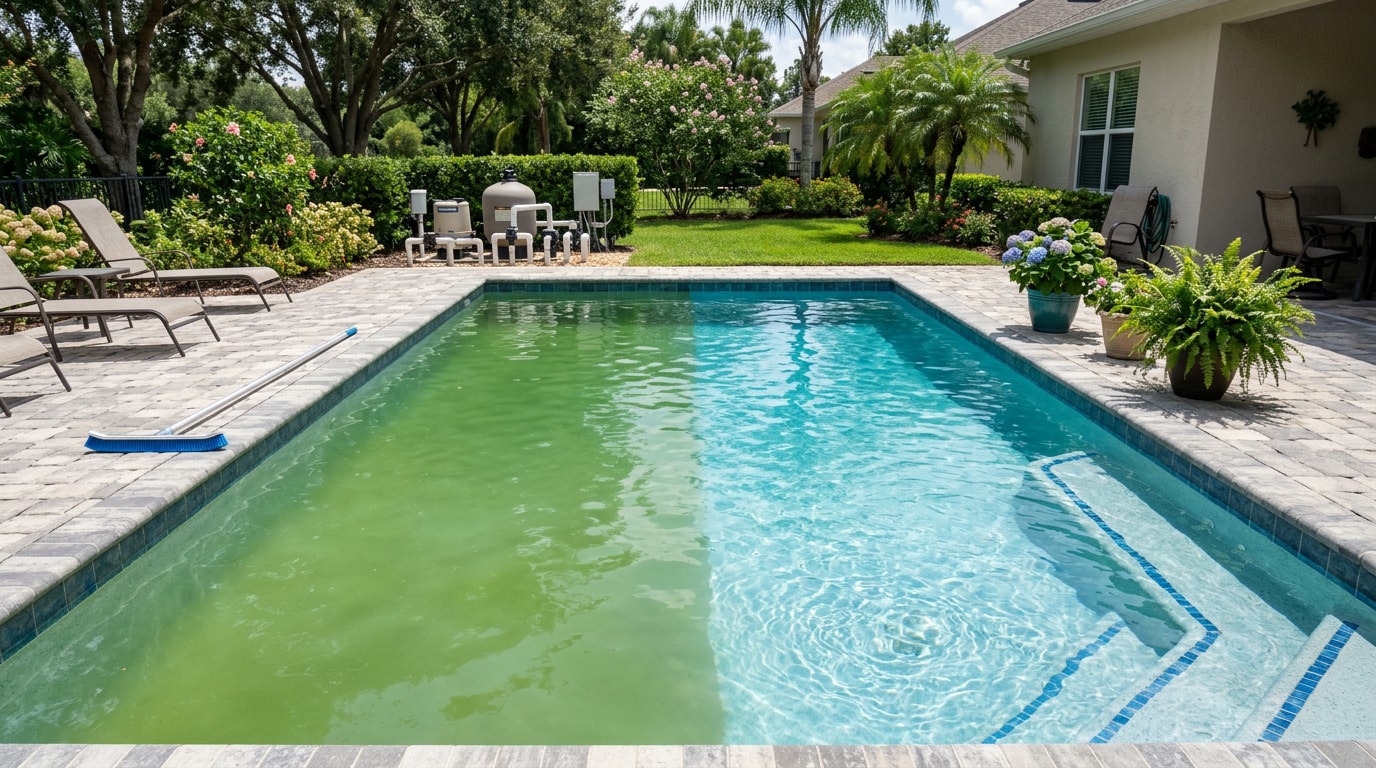
Cloudy water and sudden algae blooms usually trace back to a missed shock treatment. Be proactive about shocking the water after heavy rain or a crowded pool party, since both events dump extra contaminants into the water fast.
Georgia's humidity practically invites mustard algae, a stubborn strain that resists low chlorine levels and clings to shaded walls. If routine shocking and brushing aren't clearing things up, a full guide to clearing algae in Atlanta pools breaks down the exact dosing and brushing steps that reset the water without draining the whole pool.
Seasonal Maintenance Calendar
Atlanta's mild winters mean maintenance never fully stops. It just slows down and shifts focus.
| Season | Primary Focus | Typical Tasks |
|---|---|---|
| Spring | Reopening & pollen control | Rebalance chemistry, clean filters, increase skimming frequency |
| Summer | Peak bather load | Daily skimming, twice-daily testing, weekly shock treatments |
| Fall | Leaf and debris management | Trim pump run time gradually, net leaves daily, check heater before cooler nights |
| Winter | Reduced-use upkeep | Lower pump run time, secure cover, periodic chemistry checks |
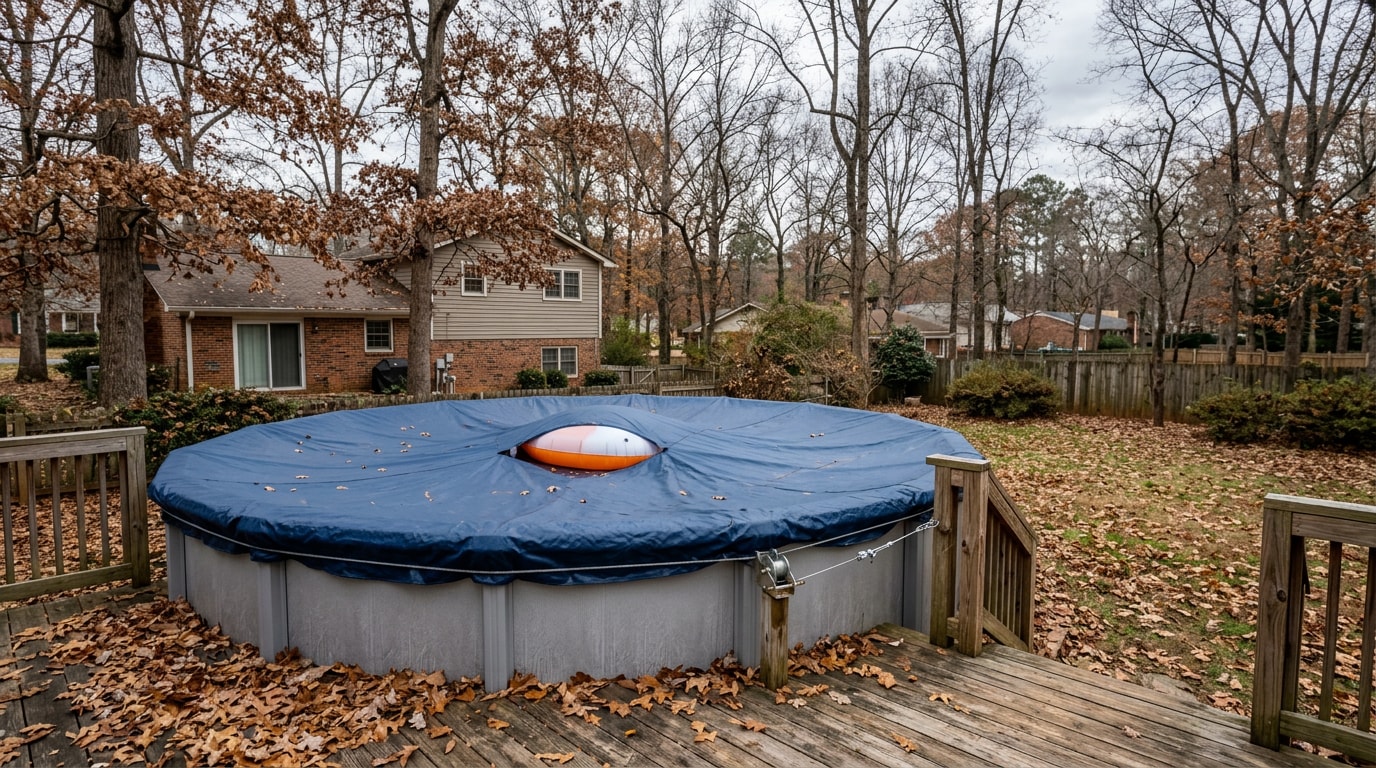
Even in the cooler months, pools still need periodic attention. Reduced pump run time, a secure pool cover, and occasional chemistry checks keep a pool from turning into a green mess by spring, even when Atlanta's winter rarely forces a full shutdown.
For a deeper dive into off-season prep, our guide covering how to clean a green pool in Dahlonega also applies to Atlanta-area pools that sat neglected over a slow winter.
Need a hand with any part of this routine? Get a free estimate and we'll build a maintenance plan around your pool's actual condition, not a generic template.
FAQ
Why does my pool get cloudy after it rains?
Rain dilutes sanitizer levels and washes in organic debris, which clouds the water almost overnight. Testing chemistry and shocking the pool soon after a storm usually clears it within a day or two.
How often should I shock my pool?
Make shocking a weekly habit as a baseline, then add an extra treatment immediately after a big gathering or a major thunderstorm to neutralize the added contaminants.
Do I really need to test the water every week?
Yes, and twice a day is closer to the actual standard during heavy use. Atlanta's changing weather, frequent pool use, and outdoor debris make frequent testing necessary to keep chemistry balanced and swimming safe.
How often should pool maintenance be performed in Atlanta, GA?
Most residential pools in the metro area do well with weekly professional servicing during peak season, though usage spikes may call for more. Public, HOA, and commercial pools face additional state health department requirements beyond what a single-family backyard owner needs to track.
Does the current drought affect my ability to fill or top off my pool?
Not right now. At the current Level 1 status, outdoor water use including pool filling remains unrestricted, though stricter levels could change that if conditions worsen, so it's worth checking for updates before planning a full refill.
Is my pool still covered by Georgia's swim safety law if I only swim at home?
Izzy's Law applies to private swim instructors providing lessons, not to private at-home swimming in general. If you hire an instructor to teach lessons in your backyard pool, confirm they have an aquatic safety plan in place first.
---
For hands-on help keeping your pool clear through every season Atlanta throws at it, visit {{SITE_URL}} or explore our full pool cleaning service lineup for homes across Atlanta, GA.