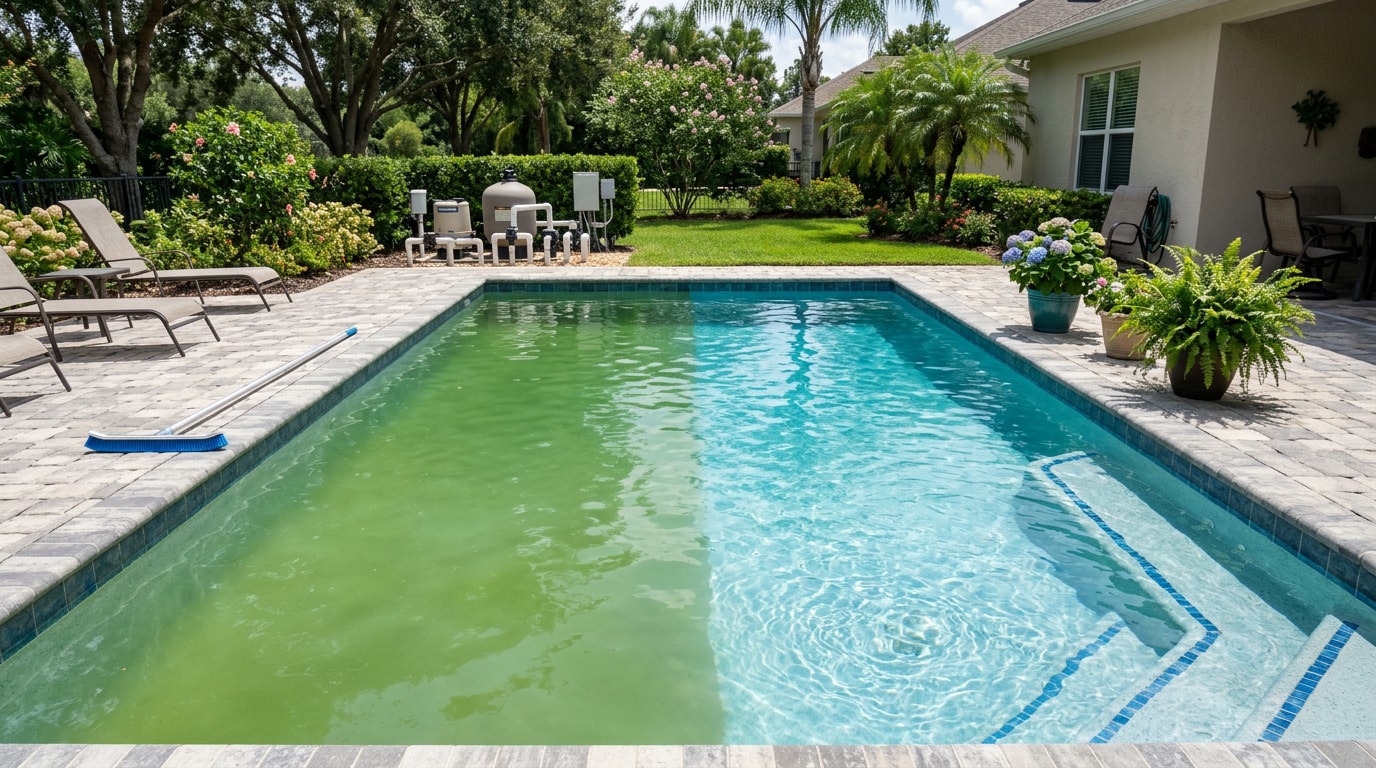
A pool that turns green overnight is one of the most common warm-weather headaches in Lumpkin County. Red-clay runoff after summer storms, pollen season, and the mineral content in local well water all give algae exactly what it needs to take hold fast. This guide walks through exactly how to clean a green pool in Dahlonega, GA, from the tools you need to the final vacuum pass that brings the water back to life.
What You'll Need to Clean a Green Pool
Before touching any chemicals, gather your gear. A green pool recovery is a multi-day job, and having everything on hand saves you trips back to the store mid-process.
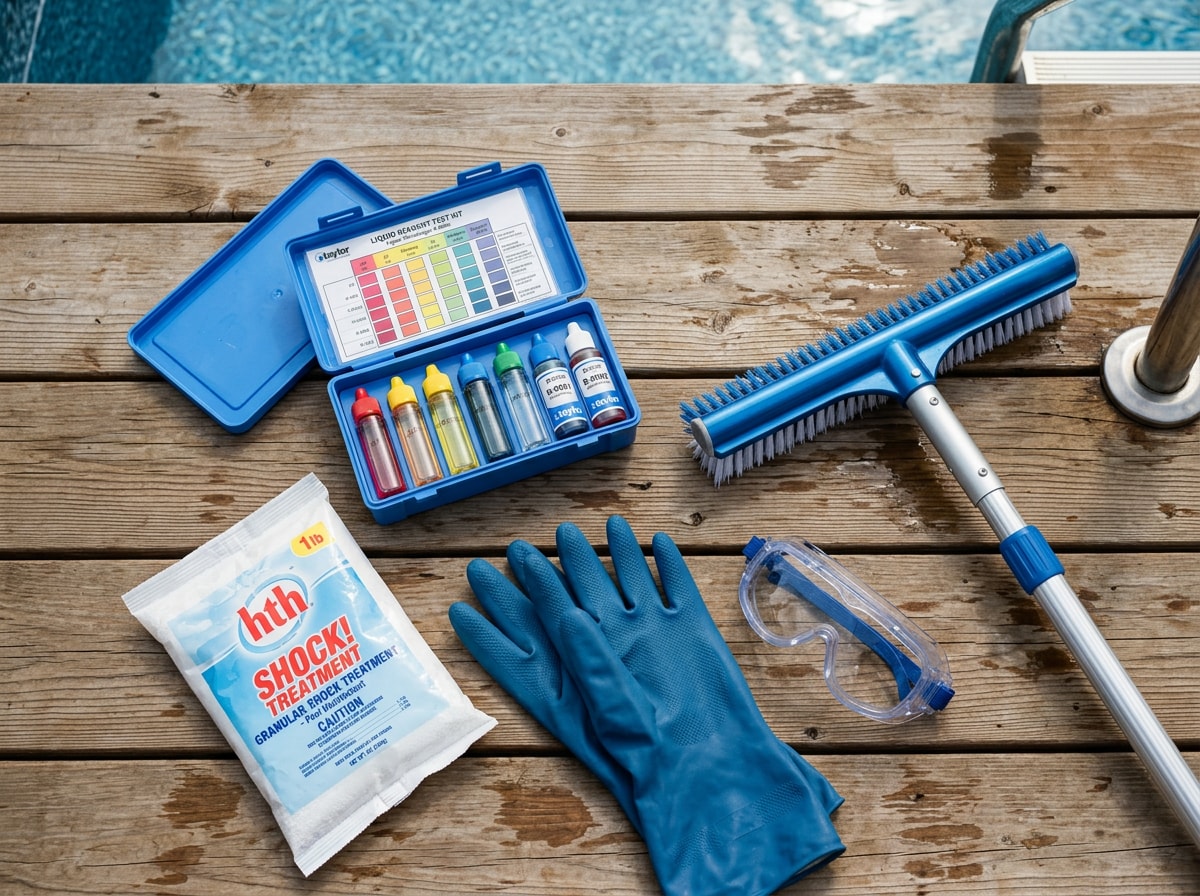
- Liquid-reagent pool test kit — reads chemistry more precisely than strips, which matters once you start dosing shock.
- Pool brush matched to your pool's surface
- Pool vacuum (manual or robotic)
- Skimmer net for surface debris
- Pool shock, enough to treat your pool's full gallonage at double or triple strength
- Rubber gloves and eye protection
Skim out leaves and loose debris before you begin. It keeps your filter from clogging immediately once treatment starts.
One safety note worth repeating: never mix different pool chemicals together, even briefly. Pool chemicals should never be allowed to mix, since the most common ones are incompatible with each other. Store containers closed and away from heat; keep pool chemicals below 95°F/35°C and in conditions recommended by the manufacturer , per public health storage guidance.
If you need help sourcing the right shock or filter media for your setup, our Pool and Spa Maintenance team can point you to the right products before you start.
Step-by-Step Guide to Cleaning a Green Pool
Clearing a green pool follows a predictable sequence: test the water, brush every surface, shock the pool, run and clean the filter, then vacuum out what's left. Skipping steps or doing them out of order is the main reason green pool recovery drags on longer than it should. Depending on how severe the bloom is, expect the full process to take anywhere from two days to about a week.
Test and Balance Your Pool Water
Test your pool's pH, total alkalinity, and cyanuric acid level before adding any shock. This tells you how much chlorine the water can actually use and whether old stabilizer is blocking its effectiveness. Skipping this step is one of the most common reasons green pool treatments fail or waste chemicals.
Public health guidance calls for maintaining the pH level of pool water at 7.0 to 7.8 and a minimum free chlorine level of 1 part per million before anyone swims. A chlorine test paired with a cyanuric acid reading tells you whether your stabilizer is too high, which can blunt chlorine's ability to kill algae.
Liquid drop-kits tend to read more accurately than test strips, especially for chlorine and pH, which is worth the extra minute per test when you're troubleshooting a stubborn bloom. If your numbers are wildly off, correct alkalinity first, then pH, before moving on to brushing.
Brush the Pool Walls, Floor, and Surfaces
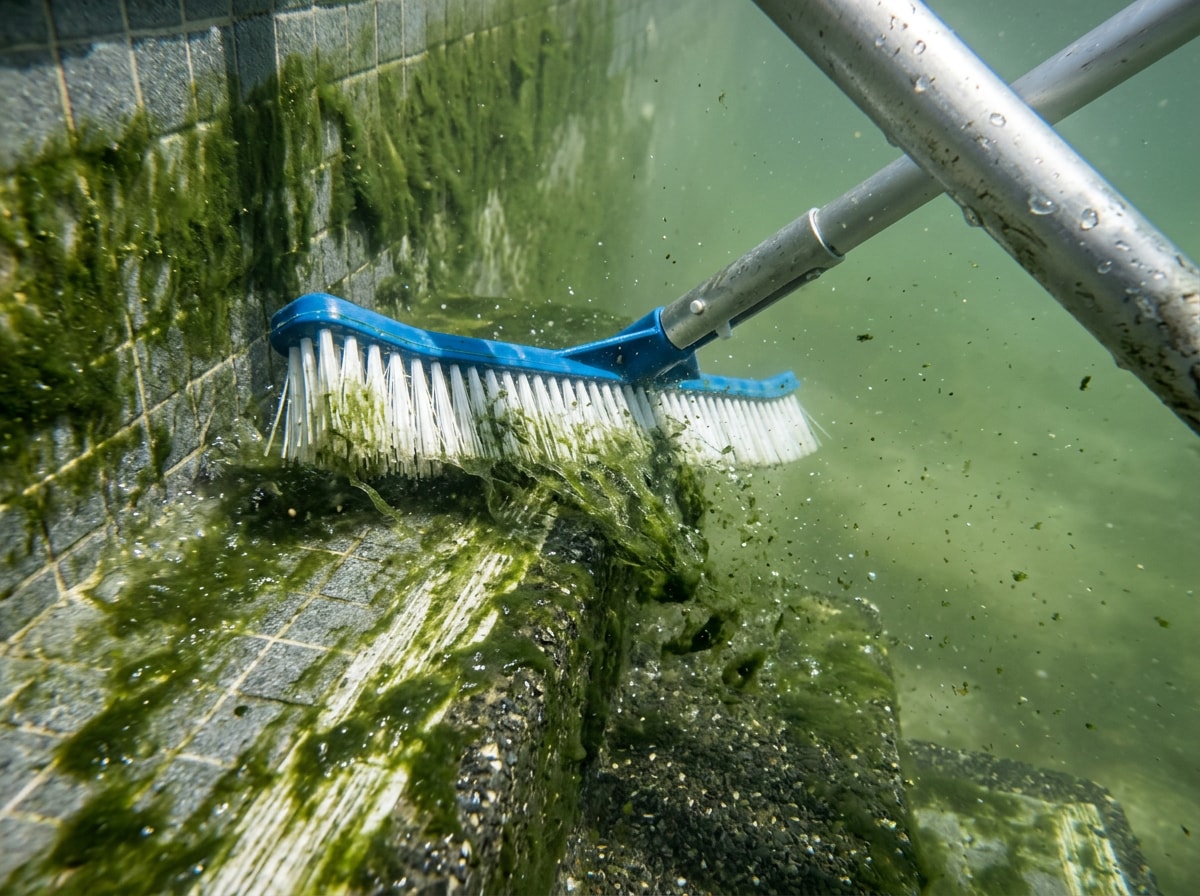
Brushing breaks algae's grip on pool surfaces so shock can actually reach and kill it. Chemicals alone struggle to penetrate algae that's clinging to walls and floors. Work from the shallow end down, hitting corners, steps, and the waterline where algae tends to cling hardest.
Matching brush type to surface matters more than most guides mention in passing:
- Steel-bristle brushes — best for plaster, gunite, and concrete pools; too abrasive for vinyl or fiberglass, where they can cause scratches or tears.
- Nylon-bristle brushes — the safe choice for vinyl liners and fiberglass shells; gentler, but still effective on algae when used with consistent pressure.
- Combination brushes — a middle ground for painted concrete, though they won't outperform steel on heavy algae buildup.
In Lumpkin County, one brushing pass often isn't enough. Red-clay runoff after summer thunderstorms, plus the area's humidity, tends to feed algae regrowth faster than drier climates. Plan to scrub pool walls again after your first shock treatment, not just once at the start. On our service calls around Dahlonega after major storms, this second pass is almost always the step DIY attempts skip, and it's the reason the pool stalls out green for an extra week.
Shock the Pool to Kill Algae
Dose your shock based on how dark the green is. A light green pool needs a double dose, while a dark green or black-tinted pool needs triple or even quadruple the normal amount. Calcium hypochlorite is the most common choice for a strong initial chlorine shock, though always follow the product label's dosage instructions rather than estimating.
Shock at dusk or after the sun goes down. UV rays burn off unstabilized chlorine quickly, so daytime shocking wastes a meaningful amount of your dose. Run the pump continuously overnight to circulate the chemical through the whole system.
If the pool is still green the next morning, that's often a sign the first dose wasn't strong enough for the algae load, not that shock "doesn't work." A second, equally calculated dose is usually the fix, though persistent green water can occasionally mean something other than algae is at play (more on that below).
Clean the Filter and Run Your Pump Continuously
Run your pool pump 24/7 during the entire recovery process. Stopping it even overnight lets dead algae settle and resettle on surfaces you just brushed clean. A green pool clogs filters far faster than normal, so expect to clean it more than once mid-process.
Backwash sand or DE filters once pressure rises noticeably above baseline. For a cartridge filter, pull the cartridge and hose it down, or soak it in filter cleaner if it's heavily coated.
If your filter or pump seems undersized for the job, our Pool Repair and Renovation service can help diagnose it.
Vacuum the Pool to Remove Dead Algae
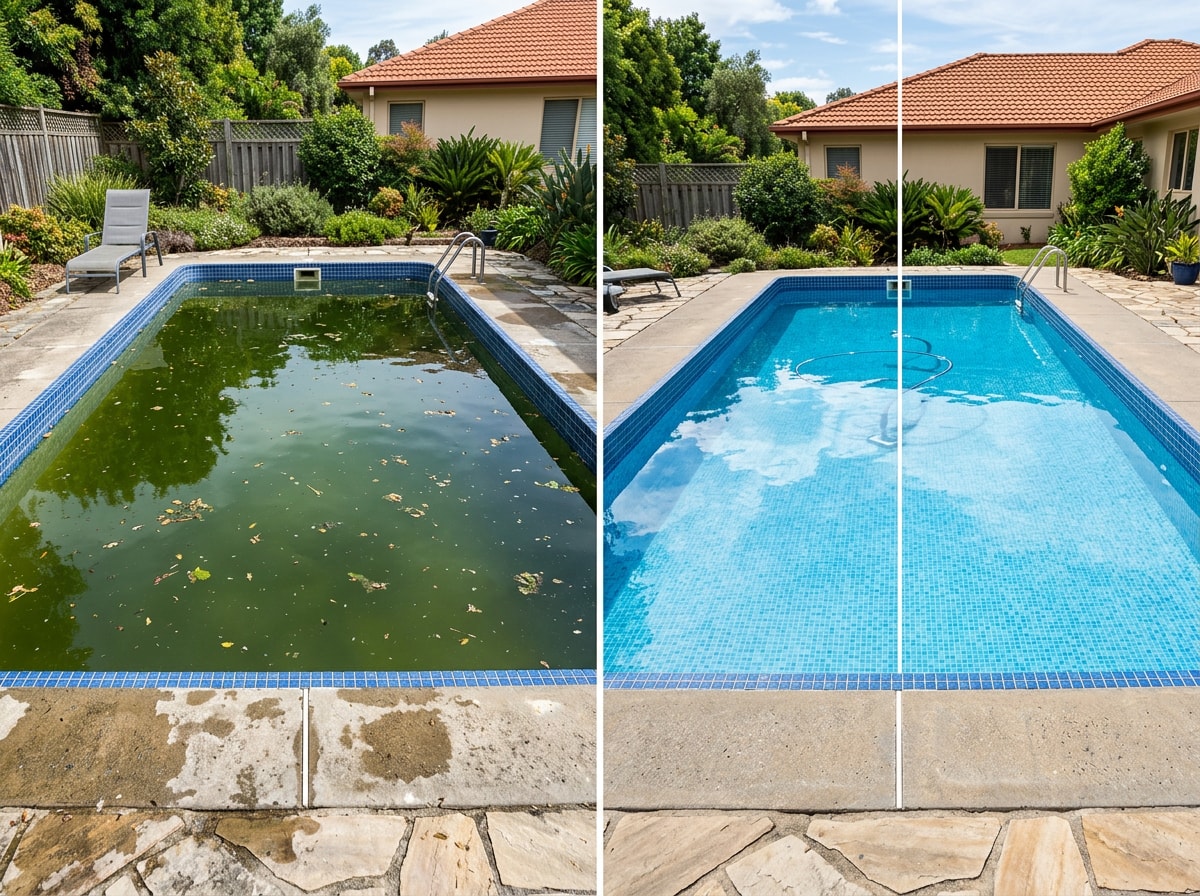
Once the water shifts from green to a cloudy gray or white, that color change signals the algae is dying. This is your cue to start vacuuming. Vacuum to waste if your system supports it, since this sends dead algae straight out of the pool rather than back through a filter that's already working hard.
If you don't have a waste setting, vacuuming through the filter works too, just expect to clean the filter again shortly after. For water that stays stubbornly cloudy even after vacuuming, a pool flocculant can clump remaining particles together so they settle to the floor for easier removal.
How Long It Takes to Clear a Green Pool in Dahlonega
Timelines vary by severity, and Dahlonega's heat and humidity tend to push recovery toward the longer end of each range compared to drier climates.
| Algae Severity | Shock Dose | Typical Clear Time |
|---|---|---|
| Light green / teal | Double dose | 24 to 48 hours |
| Medium green | Triple dose | 2 to 4 days |
| Dark green or black-tinted | Triple to quadruple dose, repeated | 4 to 7 days |
If you're past the upper end of these windows and the water still hasn't cleared, something other than a standard algae bloom (an undersized filter, a dead pump, or metal staining) is usually the holdup.
How to Prevent a Green Pool
Once your water is clear, the goal shifts to keeping it that way. A weekly routine of brushing, vacuuming, and testing chemistry catches small imbalances before they turn into another bloom, while a monthly deep-clean of the filter and a visual inspection for early algae spots round out a solid maintenance schedule.
Rebalance your chemistry fully, pH, alkalinity, and chlorine all in range, before anyone swims again. Georgia's heavy summer rainfall and spring pollen season both introduce organic material that can undo weeks of good maintenance in a matter of days if testing lapses. Staying consistent, especially after storms, is the real difference between a pool that stays blue and one that turns green every July. For a deeper look at algae-specific treatment, see our guide on how to get rid of algae in a pool.
For hands-off upkeep, our pool cleaning service handles the testing and brushing routine for you, and you can see examples of our work across North Georgia.
If you're a Dahlonega homeowner who'd rather skip the trial and error, get a free estimate and we'll walk your pool through the recovery process in person.
FAQ
Will chlorine clear up a green pool?
Yes. Sufficient free chlorine kills the algae causing the green color, but it has to be dosed as shock, not just maintained through a floating chlorinator or tablets. Regular daily doses aren't strong enough to beat back an active algae bloom; you need a concentrated shock treatment first.
What if copper, not algae, is turning my pool green?
Green water isn't always algae. If your water tests clean for chlorine demand but stays tinted green, test specifically for copper, which can come from certain algaecides or metal fittings. A metal sequestrant treats this by binding the copper so your filter can remove it; brushing and shocking alone won't fix it.
How long does it take to clear a green pool?
It depends on severity. A light green pool can often clear in 24 to 48 hours with proper shocking and filtration, while a dark green or black pool may take four to seven days of repeated shocking, brushing, and filter cleaning before it's fully clear.
Is it safe to swim in a green pool?
No. Green water usually means unbalanced chemistry and active bacteria or algae growth, which carries a real infection risk. Wait until the water is clear and your chlorine and pH levels have returned to a normal range before letting anyone back in.
Why is my pool still green after shocking?
A few culprits are common: not brushing thoroughly enough before shocking, a dirty filter recirculating algae back into the water, or an underdosed shock treatment for how severe the bloom was. In some cases, lingering green tint is actually copper or metal staining rather than algae at all. If you've tried a repeat shock treatment and the pool still won't clear, our Pool Repair and Renovation team can take it from there.
What causes a pool to turn green overnight?
A sudden drop in free chlorine combined with warm water and sunlight lets algae spores multiply fast enough to tint a pool green in a single day. Heavy rain, a dead pump, a maxed-out stabilizer level, or several days without testing are the usual triggers.
Will baking soda clear a green pool?
No. Baking soda only raises total alkalinity and pH; it doesn't sanitize or kill algae. Using it on a green pool without also shocking can actually push pH too high and make your chlorine less effective.