Figuring out how to get rid of algae in a pool in Atlanta, GA starts with one question: what color is it? Green, yellow, and black algae each need a different fix, and using the wrong one just wastes a weekend and a stack of chemicals. This guide covers identification, the exact brush-and-shock process, and the local conditions that make metro Atlanta pools especially prone to blooms.
Not All Pool Algae Is the Same
Pool algae shows up in a handful of common forms, and each one behaves differently once it's in the water. Use the table below as a fast reference, then read the section for your specific type.
| Algae Type | Color / Look | Where It Hides | Chlorine Resistance | Primary Fix |
|---|---|---|---|---|
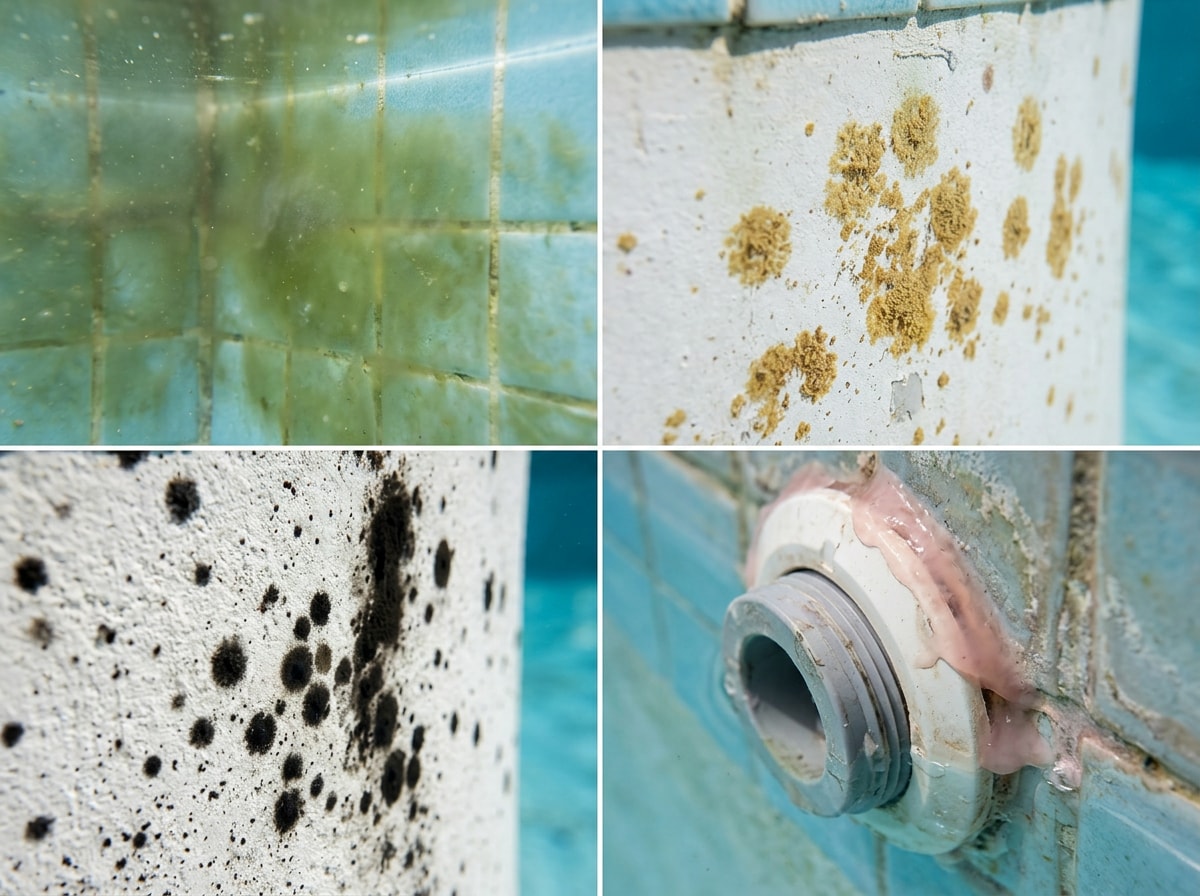
| Green | Cloudy green water, slimy film on surfaces | Open water, walls, floor | Low, responds to a standard shock | Brush, shock, algaecide |
| Yellow (Mustard) | Dusty yellow-brown, looks like sand or dirt | Shaded walls, behind ladders, steps | High, needs double or triple shock | Brush hard, mustard-specific algaecide, decontaminate gear |
| Black | Dark raised spots or splotches | Rooted into plaster/concrete pores | Very high, protected by an outer layer | Wire brush each spot, spot-treat, then full shock |
| Pink (Slime) | Pink film or slime | Skimmer baskets, fittings, corners | High, this is bacteria, not true algae | Scrub, disassemble fittings if needed, shock |
Green Algae
Green algae is the cloudy, greenish discoloration with a slippery film on walls and floors that makes a pool look more like a pond than a place to swim. It's the most common type and, fortunately, the easiest to beat.
Green algae usually means chlorine dropped too low for too long, giving spores room to multiply. The fix is brushing to break up the colonies, shocking to spike free chlorine, and adding an algaecide to finish the job.
Keep the pump and filter running continuously for 24 to 48 hours after shocking. Good circulation pushes dead algae toward the filter instead of letting it settle back down.
Yellow Algae (Mustard Algae)
Mustard algae is often mistaken for sand or dirt because of its dusty yellow-brown color and the way it settles into shaded corners and behind ladders. It brushes off easily but tends to reappear within hours, which is the biggest clue you're dealing with mustard rather than green algae.
The dose that wipes out green algae often barely dents mustard algae. It typically needs a stronger, sustained shock along with a mustard-specific algaecide, and it hitches rides on pool toys, floats, and swimsuits. If you don't rinse or disinfect that gear, it can reintroduce the problem days after the pool looks clear.
Black Algae
Black algae isn't actually algae at all. Along with pink slime, it belongs to a group of organisms called cyanobacteria, which the EPA classifies as blue-green algae rather than true algae. It behaves more like a plant, with roots that burrow into the microscopic pores of plaster and concrete, which is why the spots look stubborn and won't scrub away with a light pass of the brush.
Because it roots below the surface, standard shock can't reach it until the protective outer layer is physically broken open. Removal usually starts with a stiff-bristle brush scrubbed directly onto each spot, followed by a concentrated chlorine application right on the spot before a full-pool shock. Even after visible spots disappear, black algae is notorious for returning in the same plaster pores, so a repeat treatment a week later is common.
Pink Algae (Pink Slime)
Pink slime is less common than the other three types, but it shows up in Atlanta pools often enough to mention. It tends to hide in corners, behind fittings, and inside skimmer baskets rather than spreading across open surfaces.
Like black algae, pink algae is bacterial rather than a true algae species. It responds to the same combination of targeted scrubbing and chlorine shock, though persistent cases around fittings sometimes need the equipment disassembled for a full clean.
What Causes Pool Algae (and Why Atlanta Summers Make It Worse)
Pool algae grows when chlorine drops too low, pH or stabilizer levels drift out of range, and sunlight or warm water give spores the conditions to multiply. In metro Atlanta, summer heat and humidity push all three factors at once, which is why blooms spike hard every July and August.
Heat speeds up the chemical reactions that burn through chlorine. In July 2023, Atlanta's average monthly temperature ran 83.1°F, 2.2 degrees above normal, with a monthly high of 98°F , the kind of stretch that eats through free chlorine far faster than a mild spring week. Add sudden afternoon thunderstorms that dilute chlorine and rinse pollen and organic debris into the water, and it's easy to see why algae clusters so heavily around the hottest, stormiest months.
There's a chemistry detail most guides skip: pH isn't the only thing that controls how hard your chlorine works. If you run stabilized chlorine (dichlor or trichlor tablets), CDC recommends pH 7.0 to 7.8 and at least 2 ppm free chlorine, compared with at least 1 ppm when no cyanuric acid is present , because stabilizer blunts chlorine's killing power. In our service calls across north Atlanta suburbs, the single biggest driver of repeat algae outbreaks isn't a bad shock dose, it's cyanuric acid that's crept up over several seasons of tablet-only dosing until the chlorine can barely keep up, even at levels that look fine on a test strip.
How to Get Rid of Algae in Your Pool: Step-by-Step
Regardless of which algae type you're dealing with, removal follows the same order: brush first, adjust the water, vacuum out debris, then shock. Skipping steps or doing them out of order is the most common reason DIY treatment stalls.
Scrub the Pool
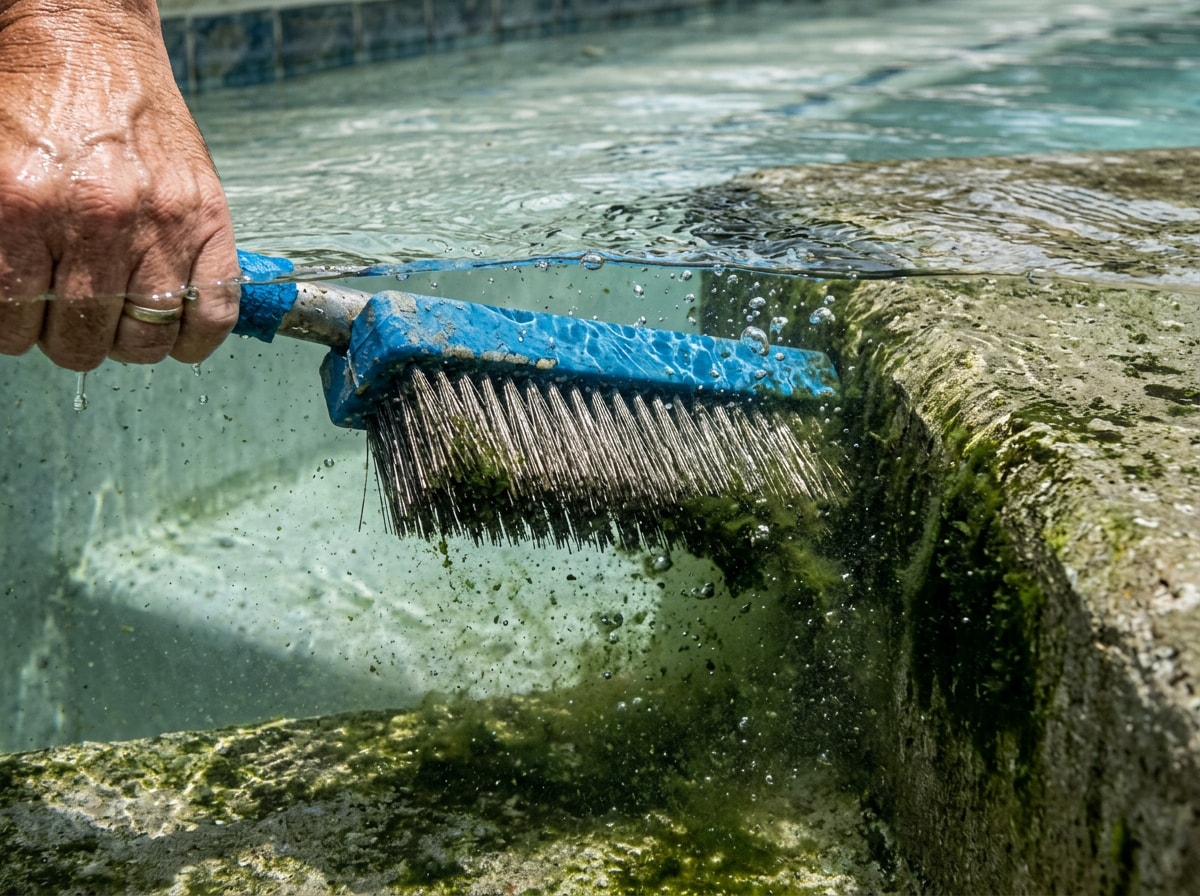
Brushing physically breaks up algae colonies so chemicals can reach them, which is why it always comes before shocking. Use a nylon-bristle brush on vinyl liners to avoid scratching, and a stainless-steel brush for concrete or plaster surfaces.
Focus on steps, ladders, corners, and shaded crannies where algae clings longest. A single light pass rarely finishes the job. Plan on scrubbing the same problem areas more than once before shocking.
Adjust the Pool's pH
Test pH with a reliable kit before adding any chemicals. Chlorine works best in a pH range of roughly 7.2 to 7.6. Outside that window, even a correctly dosed shock won't sanitize effectively.
If pH or alkalinity is too high, sodium bisulfate or muriatic acid will bring it down. An alkalinity reducer can help if total alkalinity is also elevated. Retest a few hours after adjustments settle before moving on.
Vacuum the Pool
Once algae is dead and starting to settle, vacuum it out manually rather than relying on an automatic cleaner, which can struggle with heavy debris. Set the valve to vacuum to waste if your system allows it, sending dead algae straight out instead of through the filter.
Watch the water level while vacuuming to waste; it drops fast. Pause and refill with a hose if the level gets uncomfortably low for the pump to handle safely.
Shock the Pool
Shock at dusk or after dark, since sunlight burns off chlorine before it can fully work. Always wear gloves and eye protection and follow the product's mixing instructions exactly. Never mix different pool chemicals with each other, especially chlorine products with acid .
Dosage scales with algae type: green algae usually clears with a standard shock dose, mustard needs double, and black may require triple applied directly to affected spots first. Always confirm the exact amount for your pool's gallon count on the product label, since concentrations vary by brand. For a full dosing walkthrough by pool size, see our liquid chlorine shock guide for Marietta pools. Run the filter continuously afterward and retest before anyone swims again.
How to Prevent Pool Algae From Coming Back
Killing algae once is only half the job. Keeping it from returning is cheaper and far less disruptive than repeating a full shock treatment every few weeks. A little routine maintenance goes a long way, which is exactly what our pool and spa maintenance team handles for owners across metro Atlanta who'd rather not manage it themselves.
The Chemistry of Prevention
Four numbers matter most: free chlorine in the 1 to 3 ppm range, pH between 7.4 and 7.6, cyanuric acid kept moderate rather than letting it climb year over year, and phosphates as low as possible since they act as algae's food source. Letting any one of these drift, especially during Atlanta's hottest weeks, opens the door for algae to re-establish even in a pool that looked clear days earlier.
If your pool runs a salt chlorine generator, chlorine output tends to stay more consistent day to day than hand-dosing tablets, which is one reason owners who convert often see fewer algae callbacks. Our saltwater pool conversion service is worth a look if you're tired of chasing chlorine levels by hand.
Weekly Brushing: The Step Most Pool Owners Skip
Even with balanced chemistry, algae spores constantly enter the pool from wind, rain, and swimmers. Brushing weekly interrupts those colonies before they form a protective layer that resists chlorine.
A five-minute brush of walls, steps, and corners once a week is a small habit that prevents most outbreaks before they start.
When to Call a Professional (DIY vs. Hiring a Pro)
Some warning signs mean it's time to stop troubleshooting alone: chemicals that won't hold balance no matter how often you dose them, algae that returns within days of treatment, or black algae that keeps reappearing in the same spots. These patterns often point to an underlying issue, like a failing filter, bad stabilizer levels, or plumbing dead zones, that chemicals alone can't fix. Our pool repair and renovation team handles the equipment side of those recurring problems.
DIY treatment typically costs less upfront in chemicals, but repeat outbreaks add up in time and wasted product. A professional pool service in the Atlanta area generally diagnoses the root cause in one visit, which often costs less over a season than cycling through shock treatments that keep failing.
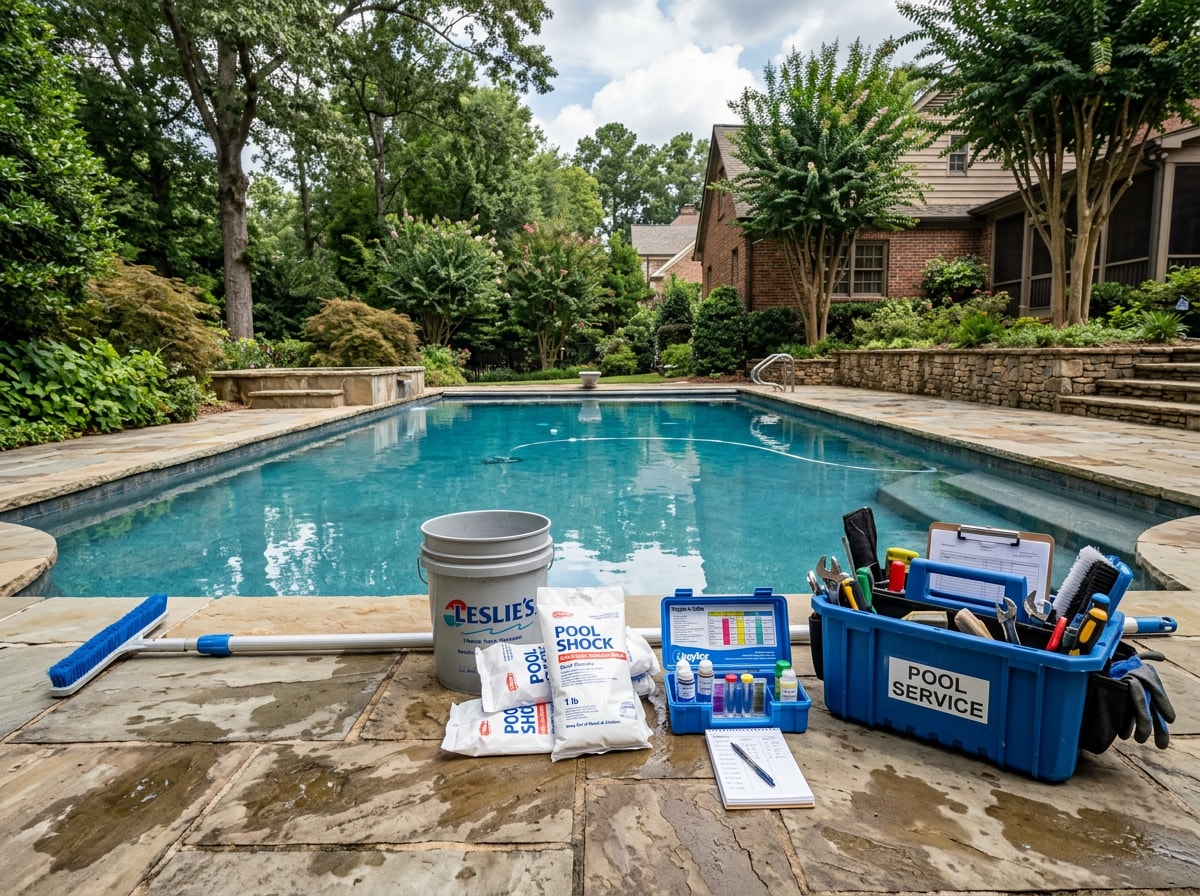
If outbreaks keep returning despite following every step above, contact our team for a free estimate and a second opinion on what's actually going wrong.
About this guide: This article was put together and reviewed by the licensed pool technicians at Southern Life LLC, who service pools and spas across Atlanta, Marietta, Roswell, Alpharetta, and the greater north Georgia area. Questions about a specific pool? Reach out here.
FAQ
Can I remove algae from my pool myself?
Yes, DIY removal works for most green algae cases with the right brushing, pH adjustment, and shock routine. Mustard and black algae take more time and repeat treatments, and outbreaks that keep recurring are a sign to bring in a professional.
What dissolves algae in a pool fastest?
Pool shock, which sharply raises free chlorine, is what actually kills and dissolves algae. It comes in granulated calcium hypochlorite and liquid chlorine forms, both effective when dosed correctly for the algae type and brushed in first.
How long does it take to get rid of algae in a pool?
Green algae usually clears in a few days with proper brushing, shocking, and filtration. Mustard algae can take closer to a week because of its chlorine resistance, and black algae often needs repeat spot treatments over one to two weeks before it's fully gone.
Is it safe to swim in a pool with algae?
No. Algae itself isn't always harmful, but an algae bloom means chlorine is too low to kill other germs that may be present, and cloudy or green water hides drowning hazards. Wait until the water is clear and chemical levels test normal before swimming again.
Should you vacuum algae out of the pool?
Yes, but only after brushing loosens it first. Vacuuming to waste, rather than through the filter, keeps heavy dead algae from clogging your filtration system.
Why does my pool keep getting algae even after I shock it?
Recurring algae usually means the chemistry isn't holding between treatments, often because cyanuric acid has built up over time and is blocking chlorine's effectiveness, a filter isn't cycling enough water, or there's a shaded, low-circulation dead zone in the pool. Retesting a few days after treatment, not just right after, usually reveals the real cause.
How can I find professional pool algae removal services in Atlanta?
For stubborn or recurring algae, a local professional can diagnose underlying chemistry or equipment issues a DIY approach might miss. Request a free estimate from our Atlanta-area team for a second opinion on persistent problems.