An automatic pool filler in Kennesaw, GA keeps your water level steady without a garden hose in your hand every week. Cobb County summers pull a surprising amount of water out of a pool through evaporation and splash-out, and a dry skimmer line can burn out a pump fast. Here's what these systems cost in 2026, how local backflow rules apply, and which type actually fits your pool.
How Automatic Pool Fillers Work
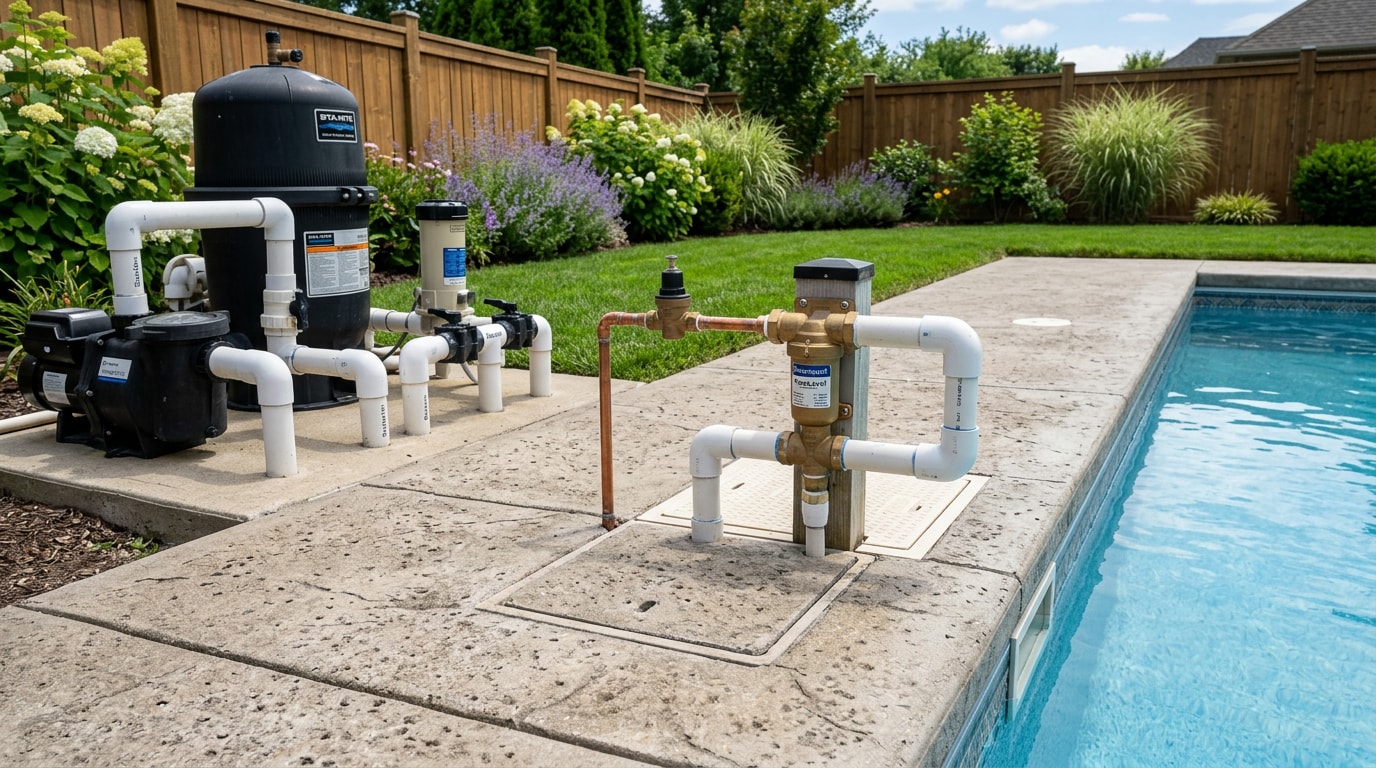
An automatic pool filler, also called a water leveler or autofill system, watches your pool's water level and adds water the moment it drops too low. Most residential units fall into one of two categories: mechanical float valves and electronic sensor systems.
A mechanical float valve works almost exactly like the fill valve in a toilet tank. As the water drops, a float lowers and opens a valve tied into your home's water line. The unit uses a simple, reliable float mechanism to monitor the water level, and when water drops below a preset level, it meters in additional water until the proper level is restored , then shuts off once the pool reaches the set point.
Electronic systems swap the float for an optical or pressure sensor wired to a control box. The sensor triggers a solenoid valve instead of a mechanical arm, which gives you tighter control and, on newer models, app alerts if the valve sticks open.

| System Type | Install Difficulty | 2026 Price Range | Best For |
|---|---|---|---|
| Mechanical float valve | Easy to moderate | $150–$400 | Standard in-ground and above-ground pools |
| Electronic sensor-based | Moderate | $400–$900 | Pools with automated pumps and filtration |
| Wireless/smart autofill | Moderate to professional | $600–$1,500+ | Vanishing-edge or high-end pools |
2026 Automatic Pool Filler Cost in Kennesaw, GA
A mechanical float valve typically runs $150 to $400 for the device, with professional installation adding another $200 to $500 depending on how far the unit sits from your water line. Electronic and wireless systems cost more upfront, usually $400 to $1,500 for the unit plus $300 to $700 for installation when a backflow assembly is required.
| System Type | Device Cost | Install Labor | Est. Annual Water Savings |
|---|---|---|---|
| Mechanical float | $150–$400 | $200–$500 | $30–$80 |
| Electronic sensor | $400–$900 | $300–$600 | $50–$120 |
| Wireless/smart | $600–$1,500+ | $400–$700 | $60–$150+ |
Those savings estimates aren't guesswork. The EPA estimates that an uncovered 500-square-foot swimming pool can lose between 12,000 and 31,000 gallons of water per year to evaporation, with the number running even higher for heated pools , according to the EPA WaterSense pool water efficiency guide. An autofill system doesn't stop that evaporation, but it replaces exactly what's lost instead of the overshoot that comes from eyeballing a hose.
Want an exact number for your pool? Get a free estimate from our Kennesaw install team before you commit to a system.
Why Kennesaw Pool Owners Install an Autofill System
The obvious win is convenience. No more checking the water line before work or dragging a hose across the deck on a Tuesday night.
The bigger win is equipment protection. When the water drops below the skimmer, the pump can suck air instead of water, which causes it to run dry and risk burning out the motor. That's the single most common pump failure our techs see on service calls, and it's almost always preventable. If low water has already damaged a pump or filter, our pool repair and renovation team can assess the damage and get things running again.
A properly calibrated autofill also prevents overfilling, which protects your deck, coping, and nearby landscaping from standing water and erosion.
Choosing the Right System for Your Pool
Start with your pool type. A vanishing-edge pool spills water constantly over the edge, so it loses far more volume than a standard rectangular pool and usually needs a higher-capacity electronic or wireless unit.
Saltwater pools need corrosion-resistant components since salt accelerates wear on metal float arms and valve bodies. If you're weighing a conversion, our saltwater pool conversion page covers what changes in your equipment and plumbing.
Pool size matters too. Larger pools lose more water in absolute gallons even when the percentage loss looks similar to a smaller pool. And Georgia's humid subtropical climate adds its own wrinkle: heavy spring pollen and frequent summer thunderstorms can gum up sensors, so look for UV-resistant, corrosion-resistant housings built for outdoor exposure year-round. Homeowners throughout Kennesaw, GA deal with this same pollen-and-storm pattern every season.
Cobb County Permit and Backflow Rules
Kennesaw sits inside Cobb County's water service area, which means any autofill line tied into your home's potable water has to meet the county's cross-connection rules, not just generic plumbing code. Any property with a potential cross-connection that could contaminate the public water system is required to have a backflow prevention device installed , per Cobb County's own backflow prevention and testing resources page.
Cobb County's swimming pool code gets specific about how that connection has to look. Water supplied to the pool must be delivered through a fill spout with a minimum three-inch air gap, installed at least two pipe diameters above the rim of the pool or surge chamber, or through a make-up water system with an approved backflow prevention device installed somewhere accessible for inspection, repair, or testing .
When our technicians plumb an autofill line in Kennesaw, we install that air gap or backflow assembly first, before the float or sensor ever goes in. Skipping it isn't just a code violation. It's the detail most DIY installs miss, and it's the one a county inspector will flag first.

Installation Steps and Maintenance Checklist
A typical autofill installation follows four general steps:
- Choose the right system type for your pool size and shape.
- Position the device near the skimmer or equipment pad.
- Connect it to the water supply line through a code-compliant air gap or backflow assembly.
- Calibrate the float or sensor to your target water level.
Once it's running, seasonal upkeep is quick:
- Check float arms for pollen and debris buildup each spring.
- Inspect sensor wiring and connections before peak storm season.
- Recalibrate the float valve if the water line drifts from where you set it.
- Test the backflow assembly annually, as most local water authorities require.

A seasonal check takes a few minutes and catches a stuck valve before it wastes water for weeks. Our pool and spa maintenance visits include this as a standard line item.
Common Autofill Mistakes to Avoid
Most service calls for a malfunctioning autofill trace back to one of these:
- Skipping the shut-off valve. If the float sticks open, there's nothing to stop an overflow.
- Ignoring permit or backflow rules. This is the fastest way to fail an inspection in Cobb County.
- Poor float calibration. Even a half-inch of drift can affect skimmer performance.
- No seasonal inspection. Pollen and storm debris are the top causes of stuck sensors in Georgia.
The fix is straightforward: have a professional verify calibration at installation, always include a manual shut-off valve, and build a seasonal check into your regular maintenance routine. For more on year-round pool upkeep in this area, see our Pool Tools in Kennesaw, GA guide.
FAQ
What does an automatic pool filler cost in Kennesaw, GA?
Mechanical float valves run $150 to $400 for the device, while electronic and smart systems range from $400 to $1,500 or more. Installation adds $200 to $700 depending on complexity and whether a backflow assembly is needed.
Is a pool autofill worth it?
For most owners, yes. Water savings, less manual maintenance, and protection against pump damage from low water typically pay back the installation cost within a few seasons.
Do I need a backflow preventer for a pool autofill in Cobb County?
Yes. Cobb County requires an air gap or an approved backflow prevention device on any line connecting your pool to the public water supply. Skipping this is the most common reason installs fail inspection.
Can I install an autofill system on an existing pool?
Yes. Retrofitting a mechanical float model is usually straightforward. Electronic or hard-plumbed systems that tie into your home's water line should go through a licensed installer to meet Cobb County code.
Will an autofill system work with a saltwater pool?
Yes, as long as the components are corrosion-resistant. Salt accelerates wear on standard metal float arms, so saltwater pools generally need upgraded hardware. See our saltwater pool conversion page for details.
How long does a pool autofill valve last before it needs replacing?
A well-maintained mechanical float valve typically lasts 5 to 10 years. Electronic sensors tend to need replacement sooner, often in the 3 to 7 year range, especially with heavy pollen and storm exposure.
Ready to stop babysitting your water line? Request a free estimate and we'll recommend the right autofill system for your pool, your budget, and Cobb County's code requirements. Browse our full range of backyard services on the Southern Life homepage.