Pool tools in Kennesaw, GA have to fight more than average debris, from spring pollen to oak and pine leaf drop to red clay runoff after storms. This 2026 guide covers the pole, net, brush, vacuum, filter, and test kit that actually hold up here. It also breaks down when a DIY kit beats a service call.
Essential Pool Tools Checklist: What You Actually Need in Kennesaw, GA
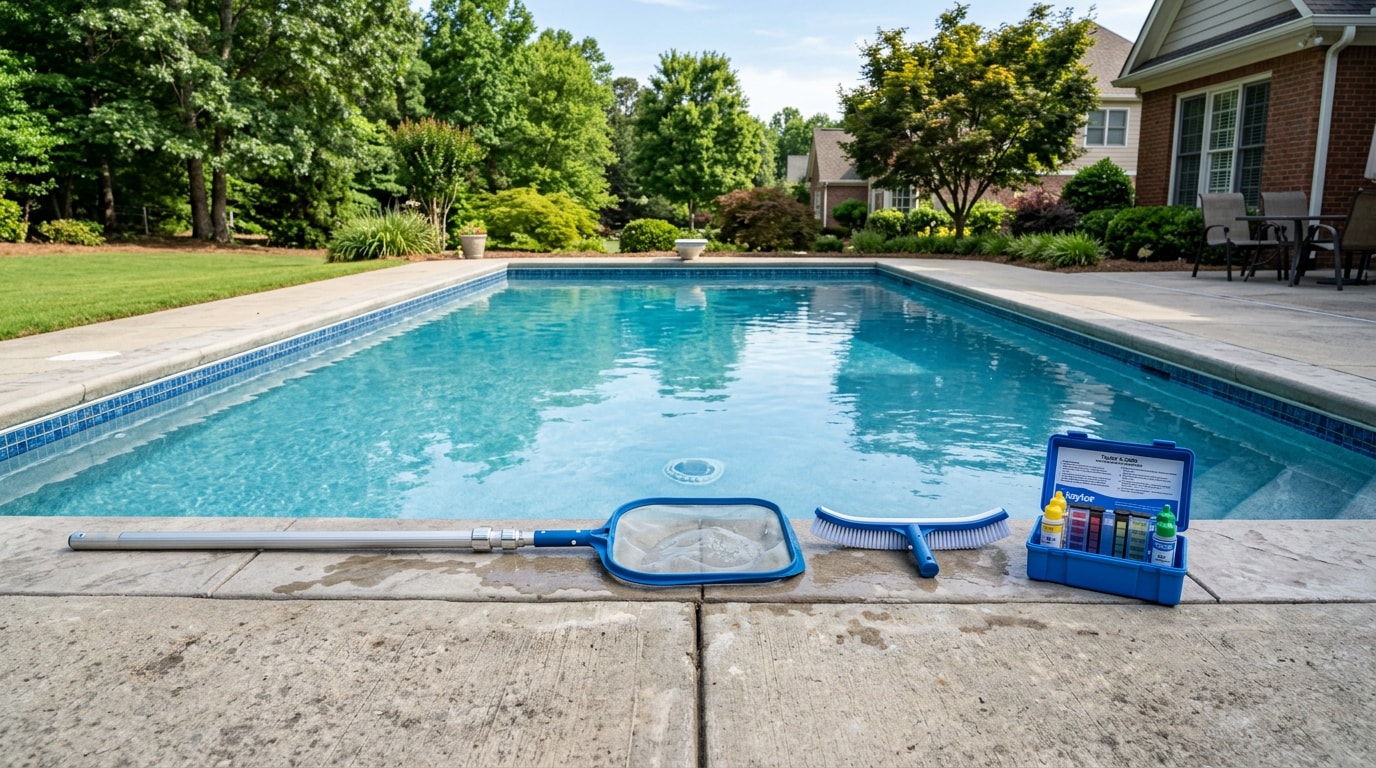
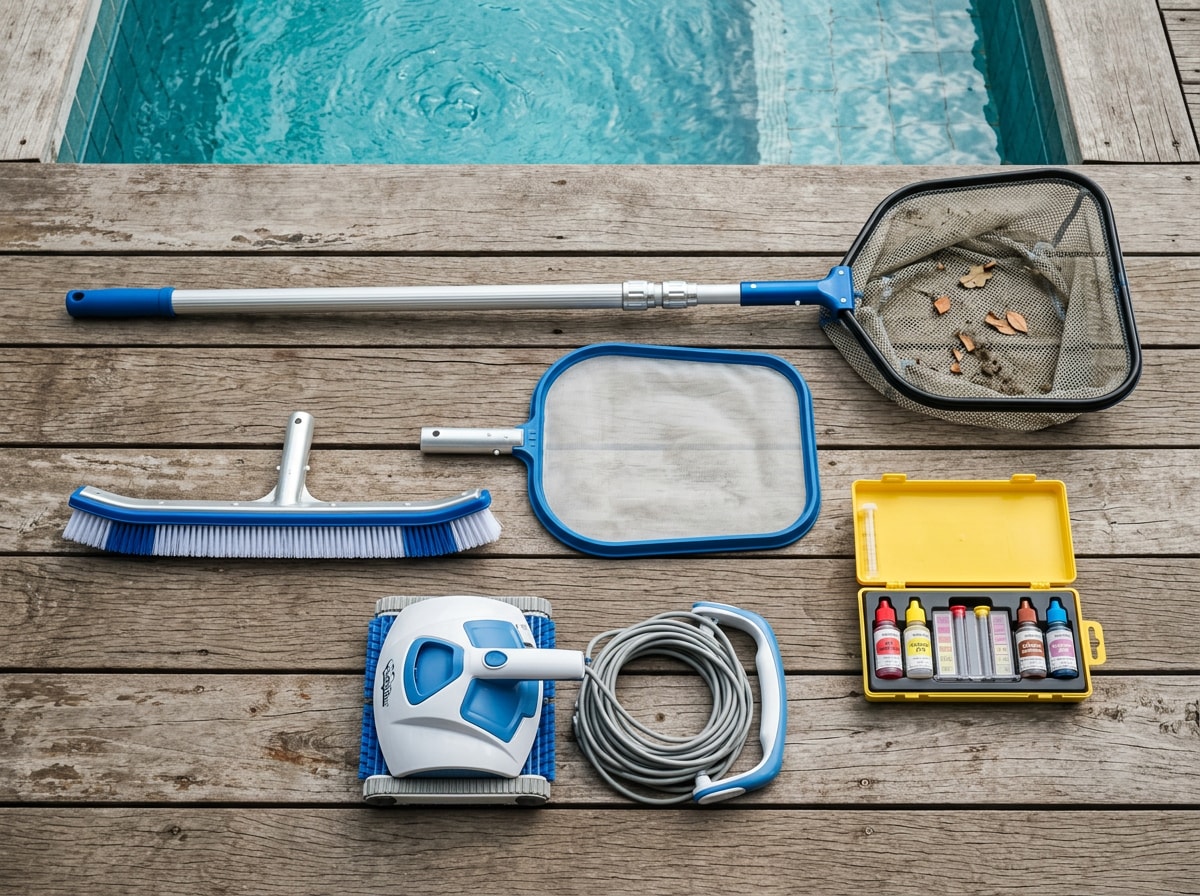
The essential pool tools every homeowner needs are a telescopic pole, a leaf rake and skimmer net, a surface-appropriate pool brush, a vacuum or robotic cleaner, a filter cleaning tool, and a reliable water testing kit. Together, these cover the three pillars of pool care: debris removal, surface cleaning, and water chemistry.
A more complete pool maintenance checklist for this area also includes:
- A telescopic pole at least 12 feet long
- A deep-bag leaf rake and a flat skimmer net
- A nylon or stainless steel brush matched to your pool's surface
- A manual vacuum head and hose, or a robotic cleaner
- A filter cleaning nozzle or attachment
- A liquid DPD water testing kit
- A chlorine floater or automatic chemical dispenser
Kennesaw's climate makes a few of these non-negotiable. Pollen season coats the water in a fine yellow film by April. Fall leaf drop combined with clay-heavy soil runoff after heavy rain means skimmer baskets fill up fast. Pool owners who skip the leaf net or brush here tend to pay for it later in algae removal and filter strain.
Our Southern Life LLC crews maintain pools throughout Kennesaw and the North Georgia foothills, and we see the same pattern every fall: homeowners who skip a deep-bag leaf rake end up calling for an emergency filter cleaning before the holidays. You can browse our full lineup of pool care services on the pool and hot tub service page, or see everything we offer on the Southern Life LLC homepage.
The Telescopic Pole
Nearly every other pool tool attaches to a pole, which makes it the foundation of your whole kit. A cheap, flimsy pole bends, slips, and makes a simple skimming job feel twice as long.
Look for a pole that extends to at least 12 feet, long enough to reach the center of most residential pools without walking the entire deck. Aluminum poles are lighter and more affordable. Fiberglass versions resist bending better under pressure but cost more.
Rinse the locking collar and extension mechanism with fresh water after each use. Chlorine residue and calcium buildup can jam the extension so it won't lock properly, and a quick rinse prevents most of that problem.
Leaf Rake & Skimmer Net
A standard skimmer net is flat and wide, built for scooping a few leaves or bugs off the surface quickly. A leaf rake is different. It has a deep mesh bag designed to hold large volumes of debris without leaves floating back out mid-scoop.
In tree-heavy Kennesaw neighborhoods, oak and pine debris is close to a daily issue during fall. A flat net isn't built for that volume. Running a deep leaf net through the pool before it hits the skimmer basket saves wear on your basket and lets the pump breathe easier.
Most owners keep both tools on hand: the flat net for quick daily passes, the deep rake for the heavier cleanup after a windy afternoon or a cold front moves leaves across the yard.
Pool Brush
Brushing is non-negotiable for pool longevity because it physically breaks up algae spores on the walls and floor before they become visible blooms. Skipping this step and relying only on chemicals is a common reason algae keeps coming back even when chlorine levels look fine.
Using the wrong bristle type on the wrong surface can scratch or dull a pool finish, so matching brush to surface matters as much as the brushing itself.
Types of Pool Brushes
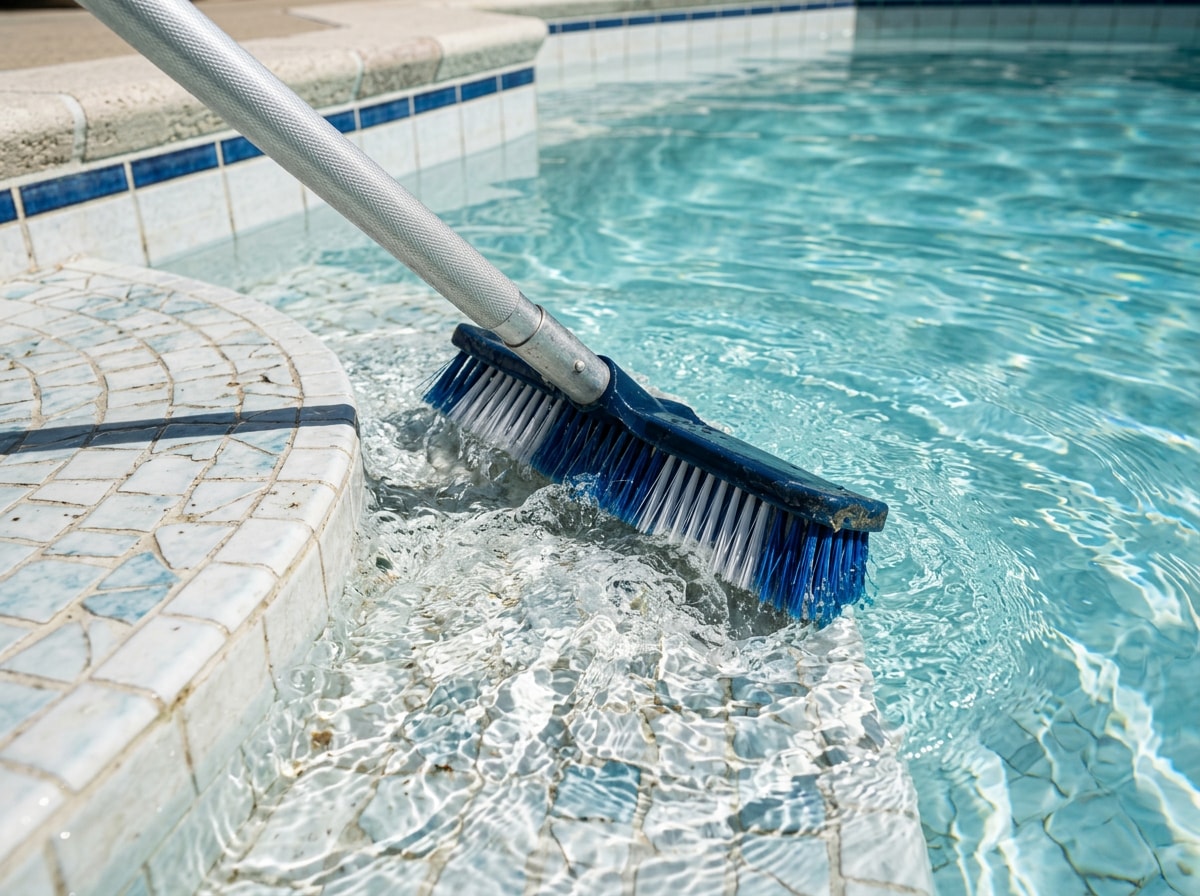
Nylon brushes feature soft bristles that are ideal for vinyl, fiberglass, and painted concrete pools, since stiffer bristles would scuff or wear down those finishes over time. Stainless steel brushes use rigid metal bristles built for unpainted concrete and plaster pools, where tougher scrubbing is needed to knock loose algae and calcium scale.
Beyond those two main types, combination brushes blend nylon and light metal bristles for pools with mixed surfaces. Corner brushes use a curved head to reach tight steps and corners that flat brushes miss. Check your pool surface type before buying to avoid an expensive mistake.
How to Use a Pool Brush
Attach the brush to your telescopic pole and start at the steps, benches, and shallow-end walls, since algae tends to collect there first. Work down the shallow-end floor next, brushing toward the main drain, then finish with the deep-end walls and floor.
Use firm, even strokes rather than light swipes. The goal is physical contact with the surface, not just a quick pass. Brushing two to three times per week during Georgia's hot summer months keeps algae from gaining a foothold between full cleanings.
Pool Vacuums: Manual vs. Robotic Cleaners
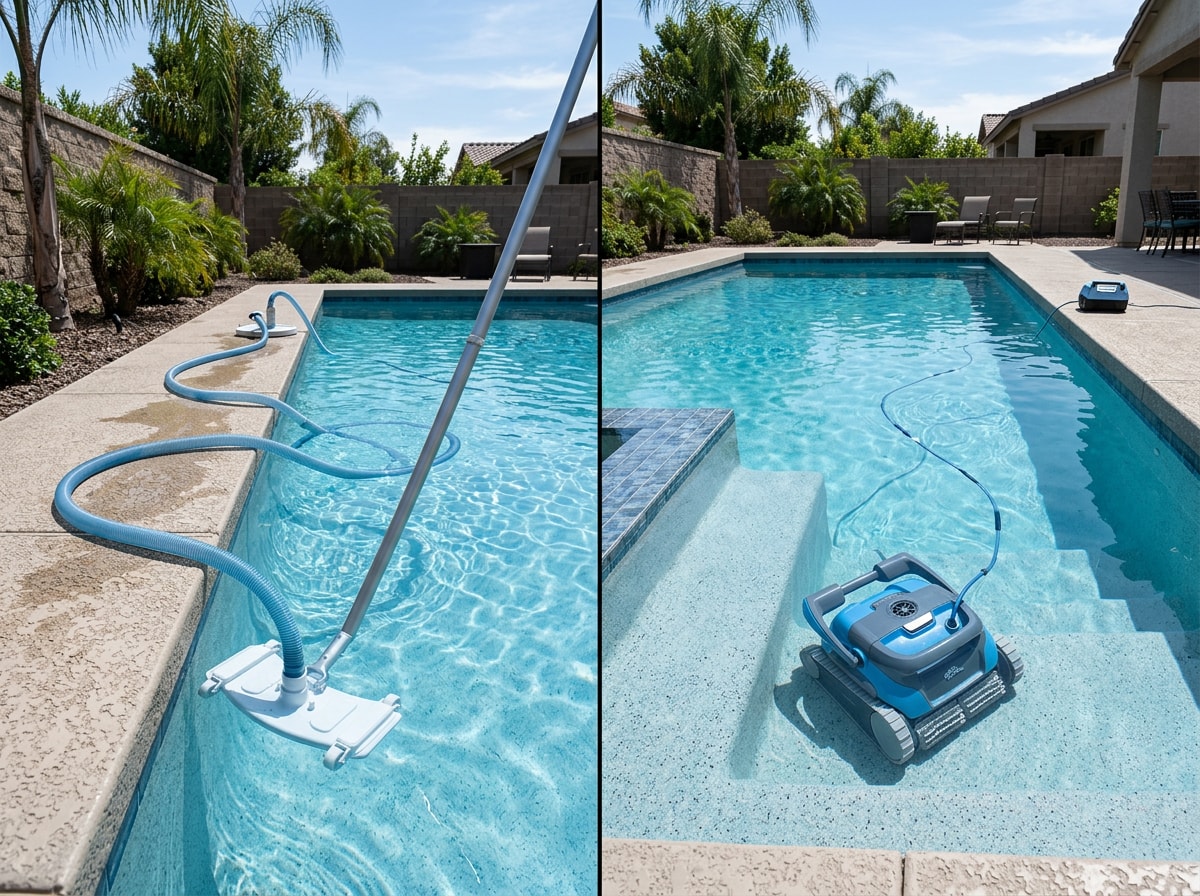
A manual vacuum still earns its place after storms, landscaping work, or any day with unusually heavy dirt on the pool floor. Robotic cleaners add convenience and cut down weekend maintenance time, but they don't replace brushing or regular water testing. They handle floor and wall debris, not chemistry.
Suction-side and pressure-side cleaners sit in between: they automate the vacuuming but still depend on your pump or a booster pump to run.
| Cleaner Type | Avg. Upfront Cost (2026) | Maintenance Effort | Best-Fit Pool Type |
|---|---|---|---|
| Manual vacuum head | $40-$90 | Low cost, but requires hands-on time each use | Small pools, spot-cleaning after storms |
| Suction-side cleaner | $150-$350 | Attaches to skimmer line; needs regular basket checks | Pools with strong existing suction |
| Pressure-side cleaner | $300-$600 | Needs a booster pump; self-empties into its own bag | Larger pools with heavy debris load |
| Robotic cleaner | $400-$1,200+ | Independent filter canister; needs regular rinsing and charging | Any pool size; best for hands-off owners |
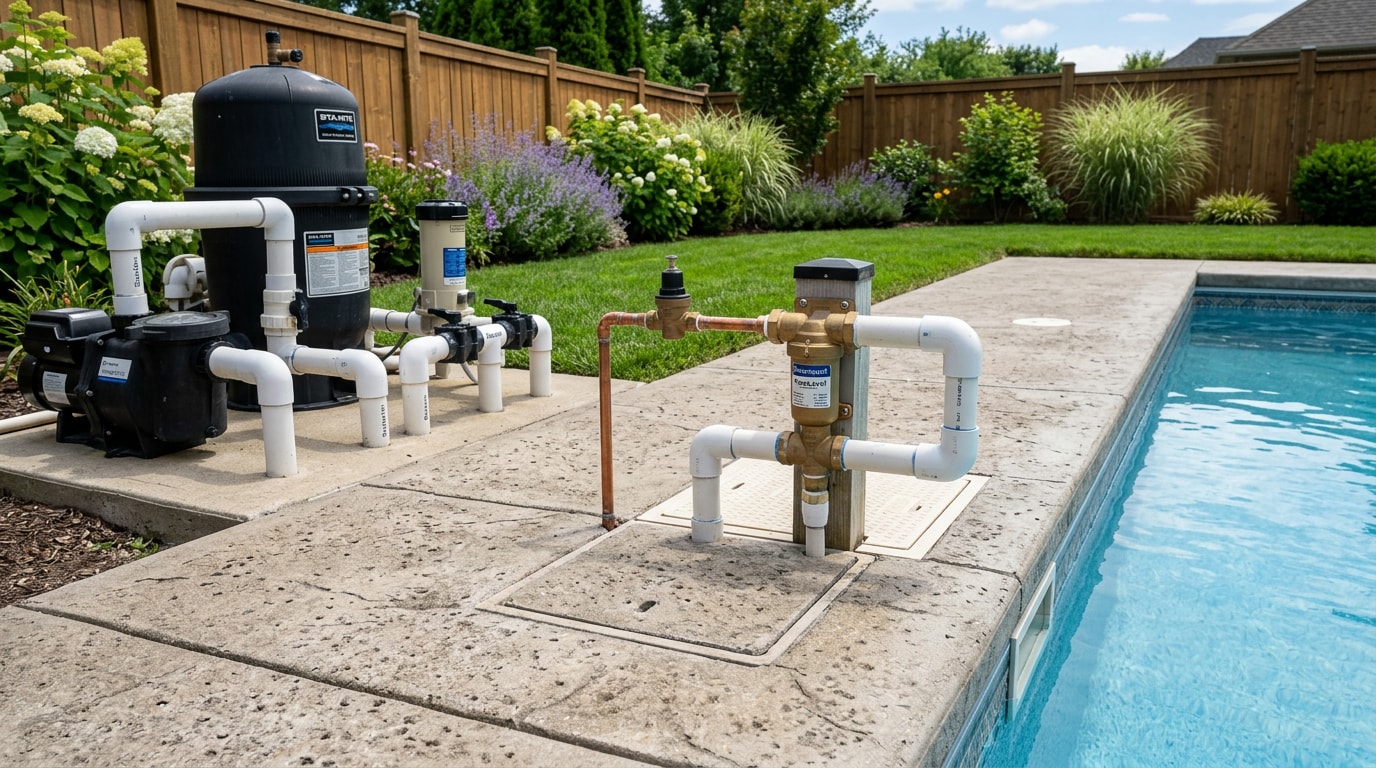
Runtime, charging habits, and filter-cleaning frequency vary between robotic cleaner models, so check current manufacturer specs rather than assuming one model behaves like another. If you're also due for a pump upgrade, an ENERGY STAR certified pool pump can run at different speeds and be programmed to match the pool operation with its appropriate pool pump speed , which cuts energy use during filtration compared to a single-speed model. You can see current certified models on the ENERGY STAR pool pump program page.
If weekly upkeep still feels like more than you want to manage, our pool and spa maintenance service covers what a professional visit typically includes.
Pool Filter & Filter Cleaning Tools
When the filter gets dirty, everything else about pool maintenance gets harder. Water clouds faster, brushing feels less effective, and chemicals work overtime. A cartridge cleaning nozzle or filter-cleaning attachment helps rinse between pleats evenly, which matters because sand, cartridge, and DE filters each need slightly different care routines.
Filter Types
Sand filters push water through silica sand and catch particles as small as 20 to 40 microns, making them affordable and simple to maintain. DE (Diatomaceous Earth) filters are generally considered the gold standard, catching particles down to 3 to 5 microns, though they require more hands-on upkeep and periodic DE powder recharging.
Cartridge filters sit in the middle. They use pleated fabric elements that trap moderate-sized debris and need regular rinsing or replacement rather than backwashing. None of the three is universally "best." The right pick depends on pool size, budget, and how much maintenance time you want to spend. If your filter housing is cracking or a cartridge no longer seals properly, our pool repair and renovation service can diagnose whether a repair or a replacement makes more sense.
Water Testing Kits
A water testing kit is arguably the single most important tool category, since it tells you whether the chemistry underneath a clean-looking pool is actually safe. The most reliable method is a liquid DPD test kit, where reagents produce a distinct color change that lets you measure Free Chlorine, Total Chlorine, pH, and Acid Demand with real precision, far more accurate than most basic test strips.
A good kit covers five readings: chlorine, pH, alkalinity, stabilizer, and calcium hardness. Testing two to three times a week in summer, and daily after heavy rain since runoff dilutes chemistry fast, keeps you ahead of problems instead of reacting to green water. For safe ranges, CDC recommends pH 7.0-7.8 and a chlorine concentration of at least 1 ppm in pools and at least 3 ppm in hot tubs , according to the CDC's home pool and hot tub testing guidance.
Stabilizer readings deserve their own attention in Kennesaw, since cyanuric acid builds up slowly and most test strips undersell it. Our cyanuric acid guide for Kennesaw pool owners walks through how to test it and when to dilute.
Chemical Dispenser & Chlorine Floater
Every pool needs chlorine to stay sanitary, and a chlorine floater is a simple device that circulates around the pool releasing chlorine continuously, doing a chunk of the sanitizing work between your manual test sessions. It won't replace testing, but it smooths out the gaps.
Never mix chemical types in the same floater or feeder, and always follow manufacturer dosing instructions on the label. This alert reviews the hazards of swimming pool chemicals and the protective measures pool owners should take to prevent fires, toxic vapor releases, and personnel injuries , according to the EPA's chemical safety alert on pool chemicals, which is worth a read if you store more than one chemical type in a pool shed.
If constantly buying and balancing chlorine chemicals feels like a chore, ask about our saltwater pool conversion service, which cuts down on manual dosing without cutting down on sanitation.
DIY Pool Tool Kit vs. Professional Pool Service: What Kennesaw Owners Actually Spend
A full DIY tool kit (pole, net, brush, manual vacuum, and test kit) typically runs $150 to $400 up front, plus two to four hours a week during swim season. Adding a robotic cleaner pushes the starting cost toward $600 to $1,500 but cuts hands-on time closer to one to two hours a week.
A weekly professional visit removes the tool investment and the weekend labor entirely, which matters most for busy households, rental properties, and pools under heavy tree cover where leaf and pollen load never really lets up.
Neither approach is wrong. Owners who enjoy the routine save money with a DIY kit. Owners who'd rather spend Saturday doing anything else usually come out ahead with a service plan. If the weekly brushing and testing routine stops fitting your schedule, get a free estimate and our team can fold pool care into a regular maintenance visit.
FAQ
What Tools Do I Need to Clean My Pool?
At minimum, you need a telescopic pole, a leaf rake or skimmer net, a surface-appropriate brush, a water testing kit, and either a manual vacuum or robotic cleaner. These five cover debris removal, surface cleaning, and chemistry monitoring.
What Is the Single Most Important Pool Cleaning Tool?
Physical cleaning keeps surfaces clear, but unbalanced chemistry lets algae and bacteria grow regardless of how clean the pool looks. Because of that, most pool pros rank the water testing kit as the single most important tool.
How Often Should I Replace My Pool Maintenance Tools?
Regular use, chemical exposure, and sun exposure all wear tools down over time, so there's no single fixed replacement schedule. Check skimmer nets and leaf rakes monthly for tears or rust, and replace brushes once bristles visibly flatten or fray.
How Often Should I Clean or Replace My Pool Filter?
Sand filters typically get backwashed every three to four weeks and replaced every three to five years. Cartridge filters need cleaning every two to four weeks, while DE filters follow a similar three to four week backwash schedule.
Is It Cheaper to Buy My Own Pool Tools or Hire a Pool Service in Kennesaw?
A basic DIY kit is cheaper on paper, usually $150 to $400 up front versus an ongoing service fee. But factor in your time, chemical mistakes, and tree cover before deciding. Heavy-shade pools and busy households often save money overall with a maintenance plan once labor and trial-and-error chemical costs are counted. See our Kennesaw service area page for what local coverage includes, or contact us for a free estimate.