Cyanuric acid for pool Kennesaw, GA owners add each spring is the single biggest factor in how fast their chlorine disappears in Georgia's sun. Get the dose wrong and you're either burning through chlorine by 2 p.m. or fighting cloudy water that won't clear no matter how much you shock it. Below are the exact ppm targets, the dosing math for raising or lowering CYA, and the point where it's worth calling a pool pro instead of guessing.
What Is Cyanuric Acid (CYA)?
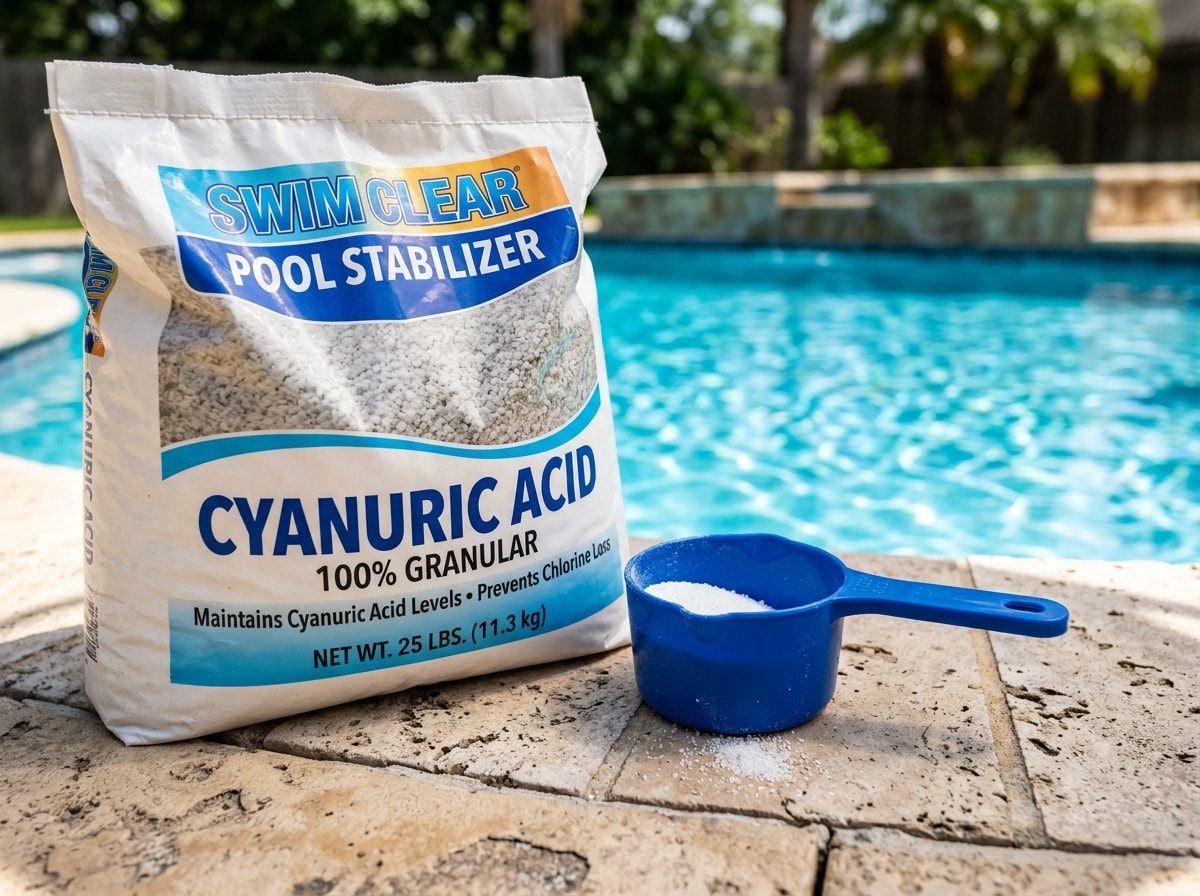
Cyanuric acid, also called pool stabilizer, chlorine stabilizer, or pool conditioner, is the same compound under four different names. It's what keeps chlorine from vanishing within hours of hitting the water.
Chemically, CYA (C3H3N3O3) forms a loose, reversible bond with free chlorine. That bond works like sunscreen, shielding chlorine from ultraviolet rays so it keeps sanitizing instead of breaking down in direct sun.
Most granular chlorine products and stabilized tablets already contain some CYA. That's why levels creep up over a season even if you never add stabilizer on its own.
Our technicians at Southern Life LLC test CYA on nearly every maintenance stop across Cobb County, and it's consistently one of the most overlooked numbers on a test strip. If you'd rather hand off the testing and math, our pool and spa maintenance team checks it on every visit.
Ideal Cyanuric Acid Levels for Your Pool
Target CYA range depends on pool type, not personal preference:
| Pool Type | Ideal CYA Range |
|---|---|
| Outdoor chlorine pool | 30–50 ppm |
| Outdoor saltwater pool | 60–80 ppm |
| Indoor or fully covered pool | 0 ppm |
| Indoor pool with some sun exposure | 0–20 ppm |
Low CYA lets sunlight chew through chlorine fast. CYA pushed too high, generally above 100 ppm, starts weakening chlorine's actual sanitizing strength even when a test strip shows plenty of it.
Georgia's own pool code backs up that 100 ppm ceiling. The Georgia Department of Public Health's rules for public and commercial pools cap cyanuric acid at 100 ppm statewide. Residential backyard pools aren't permitted or inspected the same way public pools are, but the same number is the practical limit pool professionals use for homes too.
How Cyanuric Acid Protects Chlorine: The FC:CYA Ratio
Without a stabilizer, direct Georgia sunlight can destroy unprotected free chlorine in a matter of hours. This is why an unshaded outdoor pool can test fine in the morning and show almost nothing by afternoon.
The tricky part is balance. A widely used industry rule of thumb, popularized by pool chemistry trainers and used by service techs nationwide, holds that free chlorine should stay at least 7.5% of your CYA reading. This is often called the FC:CYA ratio.
| CYA Level (ppm) | Minimum Free Chlorine Needed (ppm) |
|---|---|
| 30 | 2.25 |
| 50 | 3.75 |
| 80 | 6.0 |
| 100 | 7.5 |
Notice how the chlorine requirement climbs along with CYA. This is exactly why "high chlorine" and "high CYA" pools can still turn cloudy. The ratio is off, not the raw chlorine number.
The Council for the Model Aquatic Health Code (CMAHC), which studies cyanuric acid's effect on disinfection for the CDC's national pool code, has its own committee devoted entirely to this ratio question. You can read the technical background on their cyanuric acid policy page.
Is "Chlorine Lock" Really a Thing?
Most pool guides throw around the term "chlorine lock" as if CYA permanently traps chlorine. It doesn't.
The chlorine-CYA bond is reversible. Chlorine constantly cycles between bound and free states, so stabilized chlorine is always available, just in smaller active amounts as CYA climbs. The real problem isn't a "lock," it's that higher CYA means you need more total chlorine to keep the same active sanitizing power.
That distinction matters because it changes the fix. Instead of hunting for a mythical unlocking product, the actual solution is simple: raise free chlorine to match your CYA level using the ratio above, or lower CYA itself.
How to Add Cyanuric Acid to Your Pool
Adding CYA is straightforward once you know the ratio. Roughly 13 ounces of pure cyanuric acid raises levels by about 10 ppm in a 10,000-gallon pool. Test your current CYA level first, then calculate the gap between that number and your target range before dosing.
CYA is sold in two forms:
- Granular – more common and cheaper, but dissolves slowly.
- Liquid – costs more per dose but mixes into the water almost immediately.
Either works. The right choice usually comes down to how patient you want to be.
Since most stabilized chlorine tablets already contain CYA, it's easy to overshoot both chemicals at once if you're not tracking them separately. Our chlorine tablet dosing guide breaks down how much tablet chlorine to use without pushing CYA too high in the process.
How to Safely Add Granular Cyanuric Acid
Granular CYA dissolves slowly, so technique matters:
- Place the granules in a mesh bag or old pantyhose inside the skimmer basket (the "skimmer sock" method) instead of dumping powder straight into the water.
- Keep the filtration pump running continuously for at least 24 hours while the stabilizer dissolves.
- Avoid backwashing for three to four days afterward.
- Wait at least 72 hours before retesting or adding more.
Low Cyanuric Acid: What to Do If Levels Are Too Low
When cyanuric acid drops below 30 ppm, chlorine breaks down fast in sunlight, and water can turn unsanitary within hours instead of days. CYA under 30 ppm is one of the most common reasons chlorine seems to "disappear" no matter how much you add.
The fix uses the same math from the dosing section above: roughly 13 ounces per 10,000 gallons for every 10 ppm you need to raise. There's no special formula for low CYA specifically, you're just closing the gap to the 30–50 ppm target range.
Retest after a few days before adding more. Granular CYA takes time to fully dissolve and register on a test strip.
How to Lower Cyanuric Acid in Your Pool
CYA climbs because trichlor and dichlor, the most common stabilized tablets and granules, leave behind a small amount of cyanuric acid every time they're used. Over a full Georgia pool season, that residue adds up fast.
Lowering CYA isn't as simple as raising it. Here's what actually works, in order of practicality:
- Partial or full drain and refill – the most practical fix for nearly every homeowner. Drain 25% of the water and CYA drops roughly 25%.
- Reverse osmosis filtration – works well but is expensive and rarely available for residential use.
- CYA-reducer products – sold in stores, but results are inconsistent and most pool chemistry professionals don't recommend them as a primary fix.
Cyanuric Acid in Saltwater Pools
Saltwater pools need more cyanuric acid than traditional chlorine pools because salt cells generate unstabilized chlorine that's highly vulnerable to UV degradation. Salt system manufacturers typically recommend keeping CYA between 60 and 80 ppm, noticeably higher than the 30–50 ppm range for standard chlorine pools.
That higher buffer does double duty. It protects the chlorine the salt cell produces, and it keeps the cell from working overtime to replace chlorine lost to sunlight, especially during Kennesaw's long, high-UV summer stretch. If you're considering a switch, our saltwater pool conversion service covers how CYA targets change with a new salt system.
When to Call a Pool Professional in Kennesaw
Some CYA issues are easy DIY fixes. Others aren't worth the guesswork. Consider calling a pool service professional if:
- You're seeing repeated green or cloudy water despite correct chlorine readings.
- Your CYA test results seem inconsistent or confusing between test kits.
- A partial drain needs to happen without damaging your liner, finish, or equipment.
- You're opening or closing the pool for the season and want a full chemistry reset.
Cobb County's pollen season and humid summer months make seasonal opening and closing a smart time for exactly that kind of reset. A technician can confirm CYA, chlorine, and pH are all working together instead of fighting each other.
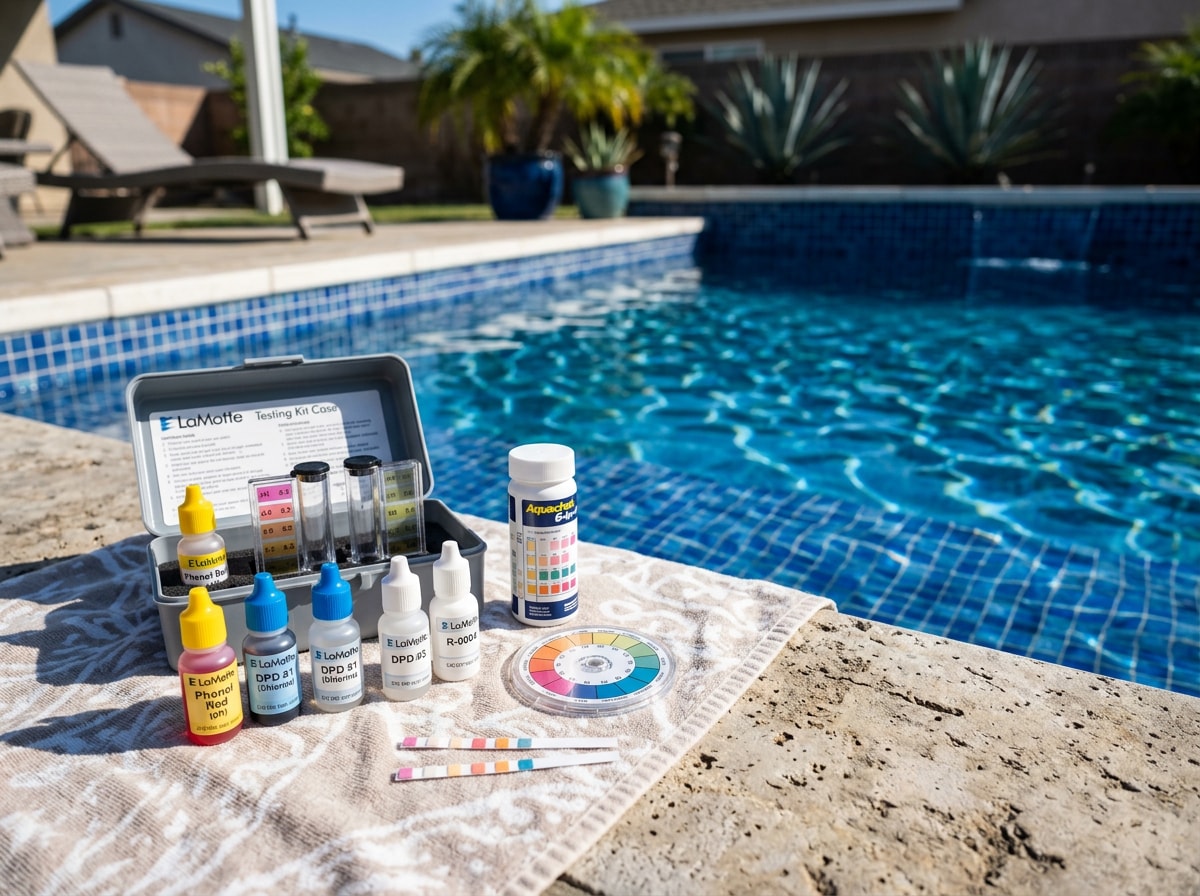
If a drain or refill is involved, our pool repair and renovation team handles it without risking your liner or surface. Looking for help nearby? Visit our Kennesaw and Cobb County service area page or get a free estimate. When vetting any technician, look for Certified Pool Operator (CPO) credentials through the Pool & Hot Tub Alliance.
FAQ
What Is Cyanuric Acid in a Pool?
Cyanuric acid, also called pool stabilizer or pool conditioner, protects chlorine from UV rays so it can sanitize water for hours longer than it would unprotected. It's a standard additive in most outdoor pools, and many stabilized chlorine products already contain it.
What Is the Ideal Cyanuric Acid Level for a Pool?
Standard outdoor chlorine pools should keep CYA between 30 and 50 ppm. Saltwater pools run higher, typically 60 to 80 ppm, because salt cells generate unstabilized chlorine.
Can Too Much Cyanuric Acid Make Your Pool Unsafe?
Yes. CYA above 100 ppm significantly reduces chlorine's ability to kill bacteria and algae effectively, a condition often (and inaccurately) called chlorine lock. Even a high chlorine reading may not keep the water properly sanitized at that point.
Do Saltwater Pools Need Cyanuric Acid?
Yes. Salt cells produce unstabilized chlorine that's especially vulnerable to UV degradation. Manufacturers recommend keeping CYA between 60 and 80 ppm to protect that chlorine and prevent the salt system from overworking.
How Do You Lower Cyanuric Acid in a Pool?
Partial or full drain and refill is the most reliable method for most homeowners; draining 25% of the water drops CYA by roughly 25%. Reverse osmosis filtration also works but is costly, and store-bought CYA reducers tend to give inconsistent results.
Is "Chlorine Lock" Really a Thing?
Not the way most people describe it. The bond between chlorine and CYA is reversible, not permanent, so chlorine isn't actually trapped. What's real is that higher CYA requires more total free chlorine to maintain the same active sanitizing power.