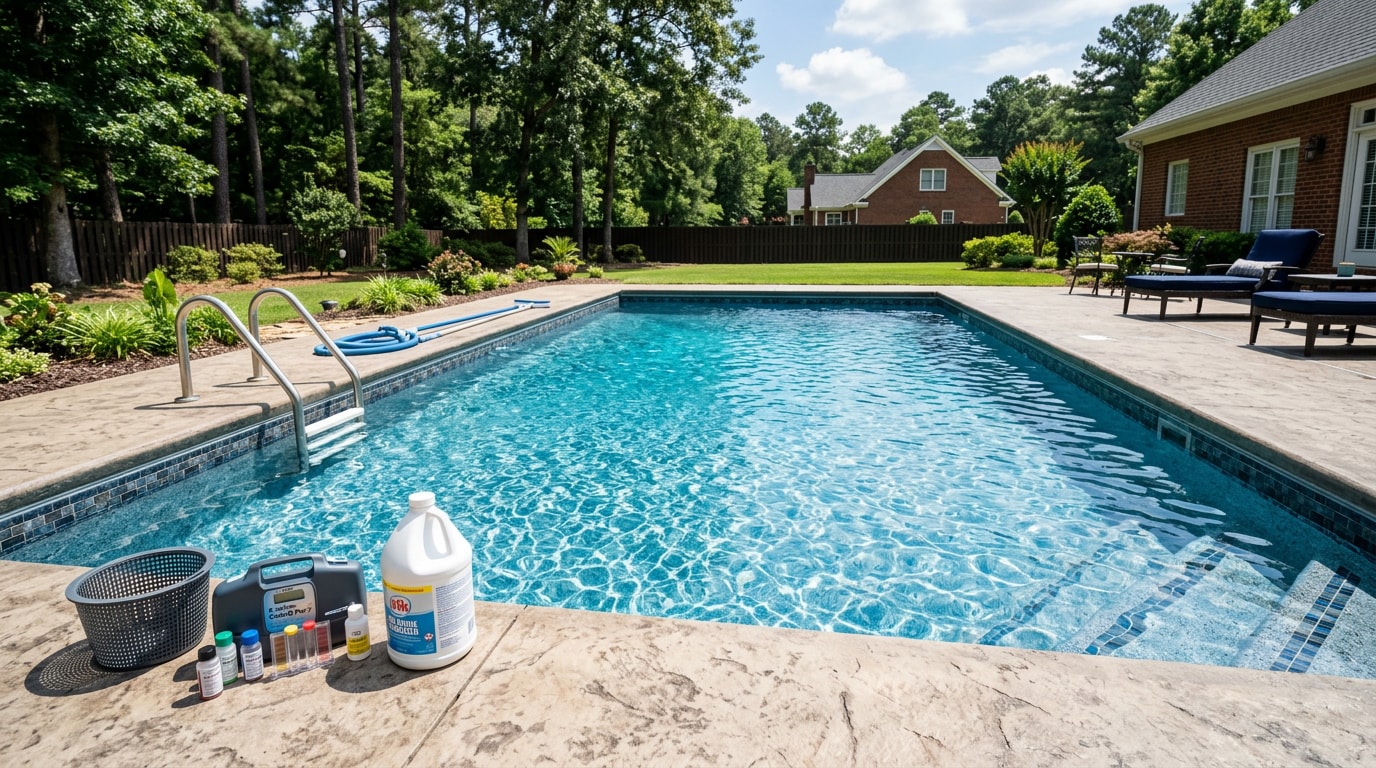
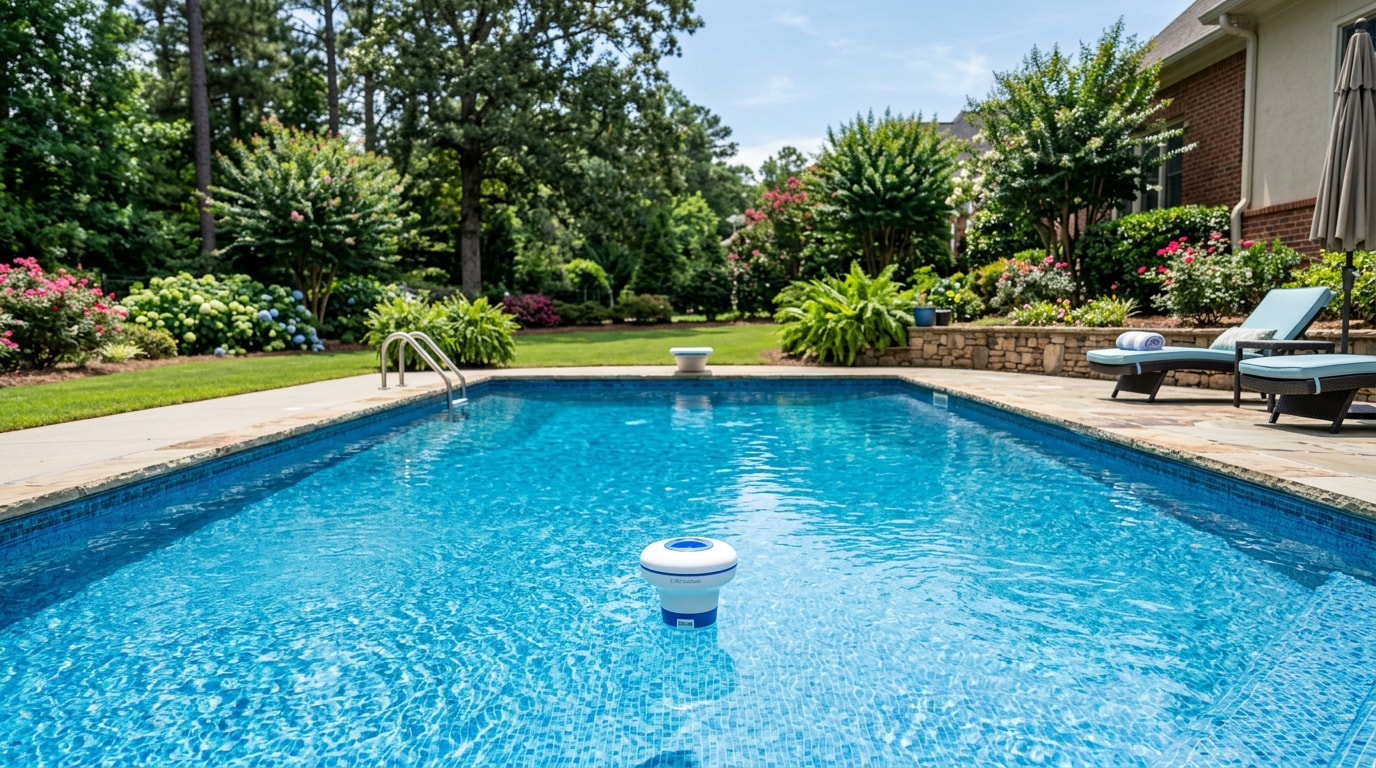
How many chlorine tablets your Atlanta, GA pool needs depends on three things: gallons of water, tablet size, and how hot the summer gets. Get the math wrong and you either burn through chemicals every week or end up with cloudy, under-chlorinated water by July. Below is the exact chart, the precise calculation method, and the local climate adjustments that make the difference for Atlanta-area pools.
The licensed technicians at Southern Life LLC service pools across Alpharetta, Marietta, Roswell, Kennesaw, and the greater Atlanta metro, and the seasonal patterns below reflect what we see on actual service routes, not just manufacturer averages.
Quick Answer: Chlorine Tablets by Pool Size for Atlanta Pools
A simple starting point for many pool owners is to use one 3-inch chlorine tablet per 5,000 gallons of water per week, so a 10,000-gallon pool needs about two tablets weekly . That rule of thumb rounds up to the nearest 5,000-gallon increment , so a 12,000-gallon pool is treated as 15,000 gallons' worth of tablets, not two and a fraction.
Here's how that plays out across common residential pool sizes, with an added column for Atlanta's long, hot swim season:
| Pool Size (Gallons) | Chlorine Tablets Needed (Per Week) | Atlanta Summer Adjustment (May–Sept) |
|---|---|---|
| 5,000 | 1 tablet | 1–2 tablets |
| 10,000 | 2 tablets | 2–3 tablets |
| 15,000 | 3 tablets | 3–4 tablets |
| 20,000 | 4 tablets | 5 tablets |
| 25,000 | 5 tablets | 6 tablets |
Treat these numbers as a baseline, not gospel. Heavy rain, a pool party, or a 97-degree weekend can push demand higher. Test your water and adjust rather than dosing on autopilot.
1-Inch vs. 3-Inch Chlorine Tablets: Which Size Fits Your Pool
Chlorine tablets typically come in two sizes, 3-inch or 1-inch, and as a general rule, one 3-inch tablet will sanitize about 5,000 gallons of pool water . By weight, that's a 20-gram tablet at 1 inch across and a 200-gram tablet at roughly 3 inches in diameter .
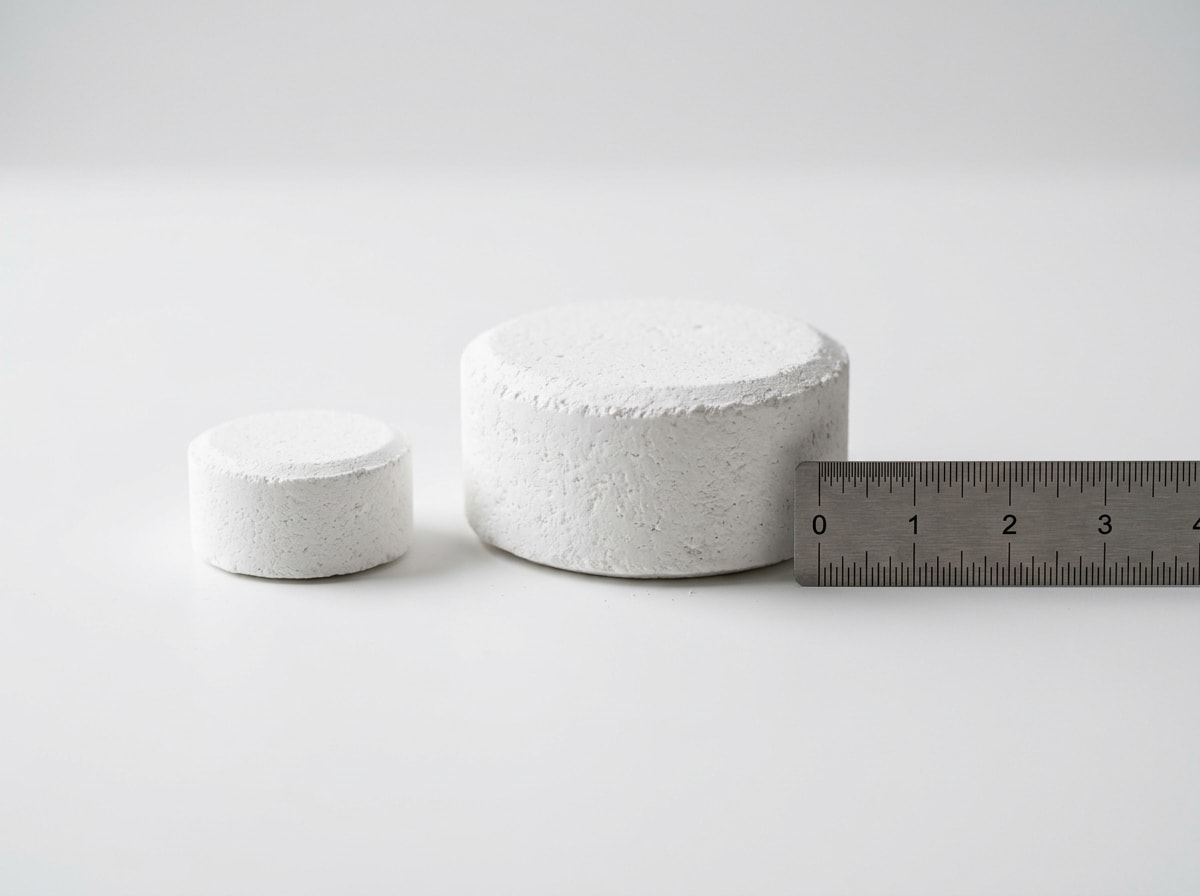
The size difference isn't cosmetic. A standard 3-inch tablet weighs about 7 ounces and is used in most residential inground pools because it dissolves slowly, keeping chlorine levels steady for several days . A 1-inch puck dissolves faster and delivers less total chlorine per tablet, which makes it the better fit for smaller bodies of water.
Quick rule of thumb:
- Pool holds 5,000+ gallons: Use 3-inch tablets.
- Hot tub, kiddie pool, or small plunge pool: Use 1-inch pucks.
- Above-ground pool under 5,000 gallons: 1-inch tablets give you finer control over dosing.
Why Atlanta's Heat and Georgia's Pool Code Change the Numbers
Chlorine tablet charts written for a national audience assume average conditions. Atlanta doesn't have average conditions for most of the swim season.
In July 2025, Atlanta's average monthly temperature ran 84.3°F, which was 3.4 degrees above normal, with a maximum of 100°F recorded on July 29 , according to the National Weather Service's Atlanta climate summary. That kind of sustained heat accelerates UV-driven chlorine breakdown, which is exactly why the seasonal column in the chart above runs higher than the baseline.
On water chemistry targets, most guidance calls for a minimum free chlorine level of 1 part per million , but the recommended minimum rises to 2.0 ppm once cyanuric acid is present , which it always is with trichlor tablets. Pair that with a pH level kept between 7.0 and 7.8 , per the CDC's healthy pools guidance.
Here's a detail most national chlorine-tablet guides leave out: if your pool is part of an HOA, swim club, or condo association, Georgia's actual pool code may apply to you, and it doesn't match the casual "1-3 ppm" range most homeowners use. The Georgia Department of Public Health notes that pools, hot tubs, and water playgrounds with proper chlorine or bromine levels and pH are less likely to spread germs , and that standard is enforced under Georgia's official pool code. Private, single-family backyard pools are exempt from that chapter, so if you own the pool outright and only family and guests use it, you're free to follow the homeowner-level targets in this guide. HOA and shared pools are a different story, and that distinction trips up a lot of Atlanta-area homeowners moving from a private home into a townhome community with a shared pool.
The Precise Method: Calculate Your Pool's Exact Chlorine Demand
The chart above gets most pools close. If you want an exact number instead of an estimate, run this test:
- Test free chlorine at the same time every day for three days straight.
- Add the three readings together, then divide by three.
- That average is your daily chlorine loss, the amount your pool actually burns through per day rather than a generic estimate.
This method assumes you're using trichlor tablets since they're the most common type sold for residential pools; if you're running dichlor or calcium hypochlorite instead, stick with the rule of thumb in the chart above . The math behind those other chlorine types works differently enough that it isn't worth the extra complexity for most homeowners.
If you'd rather skip the spreadsheet entirely, our team can set up a dosing and testing schedule as part of a pool and spa maintenance plan built around your specific pool.
Where (and Where Not) to Add Chlorine Tablets
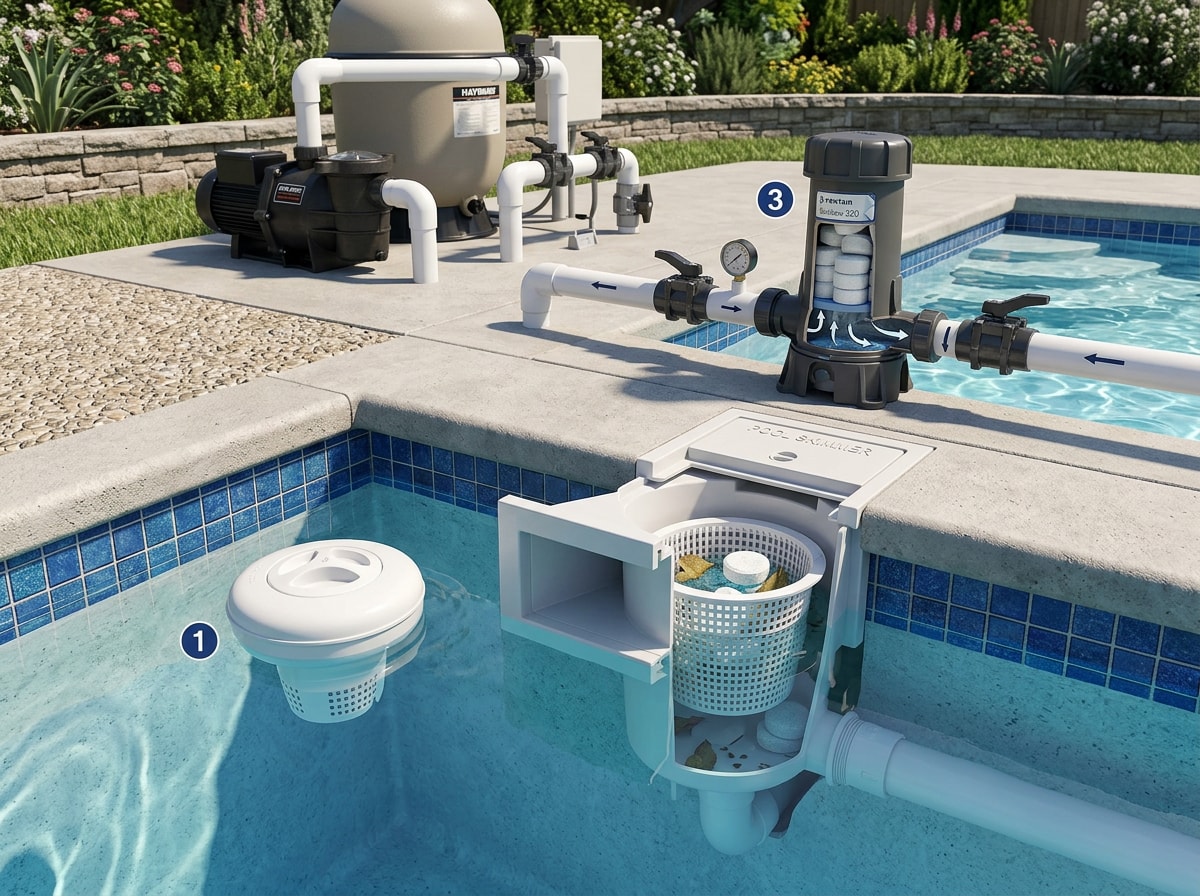
There are three common placement methods: an automatic chlorinator, a floating dispenser, or the skimmer basket. Only two of those are safe for daily use.
Safe methods:
- Automatic in-line chlorinator (feeds tablets evenly, best for larger pools)
- Floating chemical dispenser (inexpensive, works for most residential setups)
Not recommended:
- Dropping tablets straight into the skimmer basket
Standing tablets in a skimmer create a pocket of highly concentrated, acidic chlorine right before it hits your pump and heater. Chlorine is corrosive to metals such as steel and copper, and exposed piping has corroded badly enough to cause leaks in documented cases , according to the EPA's chemical safety alert on pool chemicals. That concentrated slug of acidic water is hardest on copper heat exchangers, which is an expensive repair to invite for the sake of convenience.
How Often to Refill Your Chlorine Feeder
Tablets work by releasing chlorine slowly over several days rather than all at once, which is the entire point of using them over liquid chlorine. Most 3-inch tablets dissolve over roughly 3 to 5 days, so plan on refilling your floater or feeder once or twice a week.
During Atlanta's peak heat, from June through August, lean toward the higher end of that range. Come November, once pool traffic drops off, you can stretch refills out or stop dosing entirely if you're closing the pool for the season. For a broader look at what your pool actually needs heading into warm weather, see our guide on pool essentials for Atlanta-area homeowners.
What Happens If You Use Too Many Tablets?
Overdoing it isn't harmless. Too much chlorine can irritate skin and eyes, degrade pool equipment seals over time, and throw off your pH balance, none of which makes for a more swimmable pool.
There's a slower-moving risk too. Trichlor tablets add cyanuric acid to the water every time they're used , and repeated over-tableting pushes CYA levels high enough that chlorine stops working as effectively even when your test strip looks fine. If you're chasing high CYA readings, liquid chlorine is a cleaner way to shock a pool back into balance; our breakdown of how much liquid chlorine to shock a pool in Marietta, GA walks through that process step by step.
If your CYA has crept up over a few seasons, draining and refilling part of the pool is usually faster than waiting it out. Homeowners weighing a bigger change at that point sometimes look at a saltwater pool conversion instead, which sidesteps trichlor's CYA buildup altogether.
Not sure where your pool's chemistry actually stands? Get a free estimate and we'll test your water and build a dosing plan that fits your pool, not a national average.
FAQ
How many chlorine tablets should I use per 10,000 gallons?
About 2 standard 3-inch tablets per 10,000 gallons of pool water each week. Adjust based on your actual test results and the season.
Can I put chlorine tablets in the skimmer basket?
It's not recommended. Tablets sitting in standing skimmer water create a concentrated, acidic slug of chlorine that can corrode pump seals and heater components over time. Use a floating dispenser or automatic chlorinator instead.
How many chlorine tablets are in a bucket?
It depends on the brand and tablet weight, since standard 3-inch tablets vary from roughly 7 to 8 ounces each depending on manufacturer. Check the package label for the exact tablet count rather than assuming a standard number across brands.
Should I use 1-inch or 3-inch chlorine tablets?
Use 3-inch tablets for pools holding 5,000 gallons or more. Reserve 1-inch tablets for smaller pools, hot tubs, and spas, where a full-size tablet would release more chlorine than the water needs.
How often should I add chlorine tablets to my pool?
Most 3-inch tablets dissolve over 3 to 5 days, so refill your floater or feeder once or twice a week. Refill more often during Atlanta's peak summer heat and less often once the pool season winds down.
Do I really need chlorine tablets for my pool?
Yes, for most residential pools. Tablets dissolve slowly to provide a steady, continuous chlorine supply; without that steady release, a pool can turn into a breeding ground for bacteria and algae surprisingly fast during an Atlanta summer.