Learning how to winterize an above ground pool in Gainesville, GA comes down to one thing: following the steps in the right order. Skip or rush one, and you risk a green reopening, a cracked liner, or a ruined pump. North Georgia's mild winters give you a little more flexibility than colder states, but the process itself doesn't change — here's exactly what to do, step by step.
Above Ground Pool Winterizing Checklist at a Glance
Before diving into the details, here's the full sequence. Each step is covered in depth below.
- Gather your winterizing supplies (cover, chemicals, air pillow, plugs).
- Clean the pool one final time — vacuum, brush, skim.
- Test and balance pH, alkalinity, and sanitizer.
- Shock the pool 2–3 days before closing.
- Add winter algaecide and stain/scale preventer.
- Lower the water 4–6 inches below the skimmer.
- Drain and winterize the filter, pump, and plumbing.
- Handle salt cell shutdown if you have a saltwater system.
- Remove and store ladders, steps, and accessories.
- Install the air pillow and secure the winter cover.
When Should You Close an Above Ground Pool for Winter in Gainesville, GA?
Pool professionals don't circle a date on the calendar — the real trigger is water temperature, not the month. Once your water consistently sits around 65°F, algae growth slows enough to close the pool without the chemicals breaking down too fast or too slow.
Most Gainesville-area pool closings happen between late October and mid-November, once overnight lows start pulling daytime water temperatures down. NOAA's 1991–2020 climate normals for the Gainesville area show average lows dropping to the low-to-mid 40s by November , and the area sees roughly 57 freezing nights a year on average — more than enough to justify a proper closing rather than hoping for a mild winter.
Closing too early traps summer heat in the water, which can let algae bloom under a sealed cover. Waiting too long into late November risks a hard freeze before you've finished balancing the water. Checking current conditions for your service area before picking a weekend to close up is a smart first step.
Pool Closing Supplies You'll Need
Before draining a drop of water, gather everything so you're not mid-project searching for a missing part. A basic winterizing kit includes:
- Winter cover sized for your pool
- Cable-and-winch or clip system
- Air pillow ("ice compensator")
- Skimmer cover plate or expansion plugs
- Return line plugs
- pH increaser/decreaser
- Shock (cal-hypo, dichlor, or non-chlorine)
- Winter algaecide
- Stain-and-scale preventer
DIY supplies for a standard-size above ground pool generally run in the range of $75 to $200, depending on chemical brands and cover quality, though exact pricing varies by retailer. If you'd rather skip the supply run and the trial-and-error, you can get a free estimate and have a crew handle the whole closing in one visit. Browsing our pool and spa maintenance page ahead of time also helps you compare what's actually needed against what's optional.
Clean Your Pool One Last Time
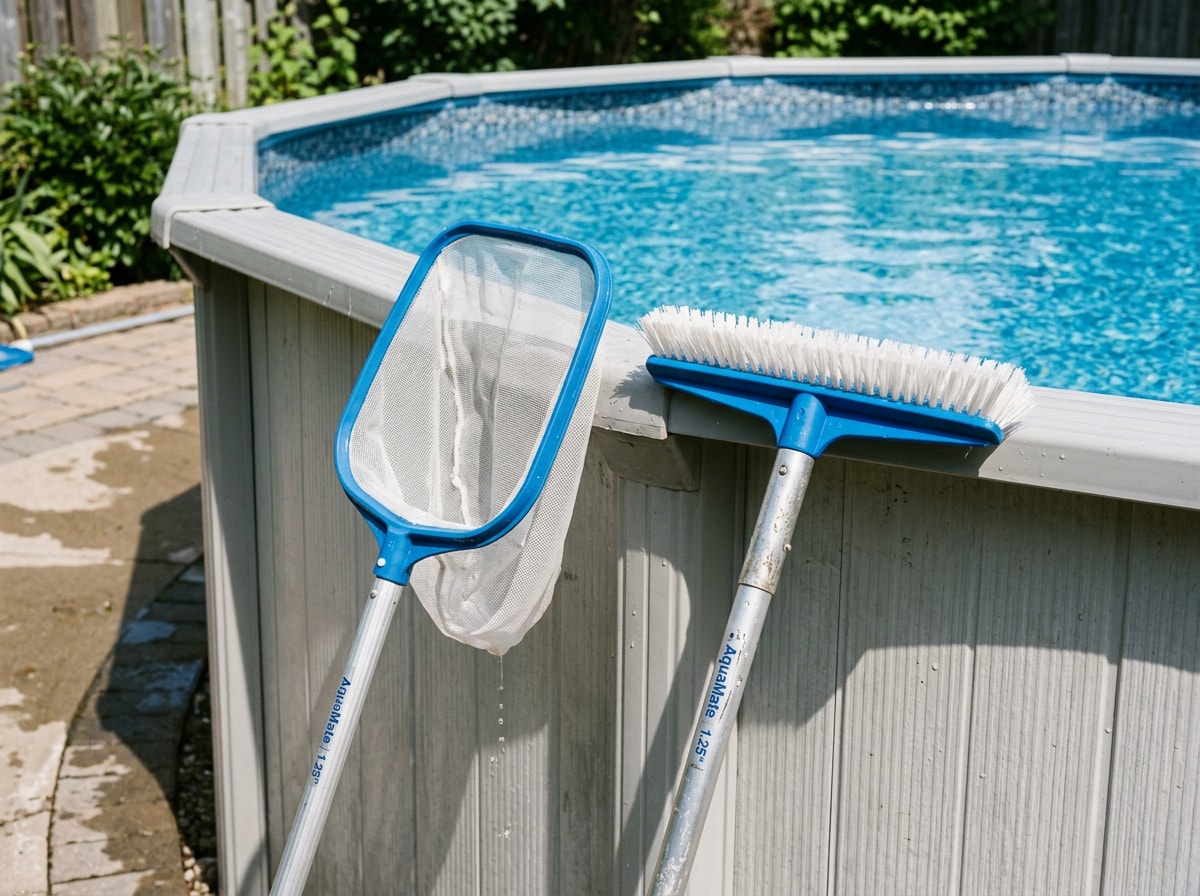
Vacuum the floor, brush the walls, and skim the surface before adding a single chemical. Leftover leaves and organic debris feed algae all winter long, even under a sealed cover, and they can stain a liner if left to settle for months.
It only takes 20 to 30 minutes to vacuum and brush a standard above ground pool. That step does more to protect water quality over winter than any chemical added afterward — it's the cheapest insurance in the whole process.
Test and Balance Your Pool Water
Balanced water prevents liner staining, metal corrosion, and cloudy reopening water. It starts with a pH and alkalinity test before any winter chemicals go in.
CDC recommends keeping pH between 7.0 and 7.8 , and most pool professionals target the tighter 7.2–7.6 range for closing, alongside a total alkalinity of 80–120 ppm. Skipping this test is one of the most common reasons pools look terrible at spring opening — unbalanced water sitting for four or five months under a cover can etch vinyl, corrode metal fittings, or leave stubborn scale.
Not sure what to test with or how often during the season leading up to closing? Our guide on pool water testing in Gainesville breaks down which test kit to use and when. Getting the water balance right here means every chemical added afterward actually works as intended.
What Chemicals Are Needed to Close an Above Ground Pool for Winter?
Winterizing chemicals need to go in a specific order:
- Balance pH and alkalinity first, using your test results. Unbalanced water makes chlorine less effective.
- Shock the pool 2–3 days before the actual closing date, not the same day. That gap gives the shock time to burn off contaminants.
- Add a winter algaecide formulated for long-term dormancy — adding it too soon after shocking can neutralize it before it has a chance to work.
- Add a stain-and-scale preventer to protect metal fittings and liner surfaces through the cold months.
This sequence — balance, shock, then algaecide and preventer — is the part most DIY guides gloss over, but it's the difference between a clear reopening and a green one.
How Low Should You Drain an Above Ground Pool for Winter?
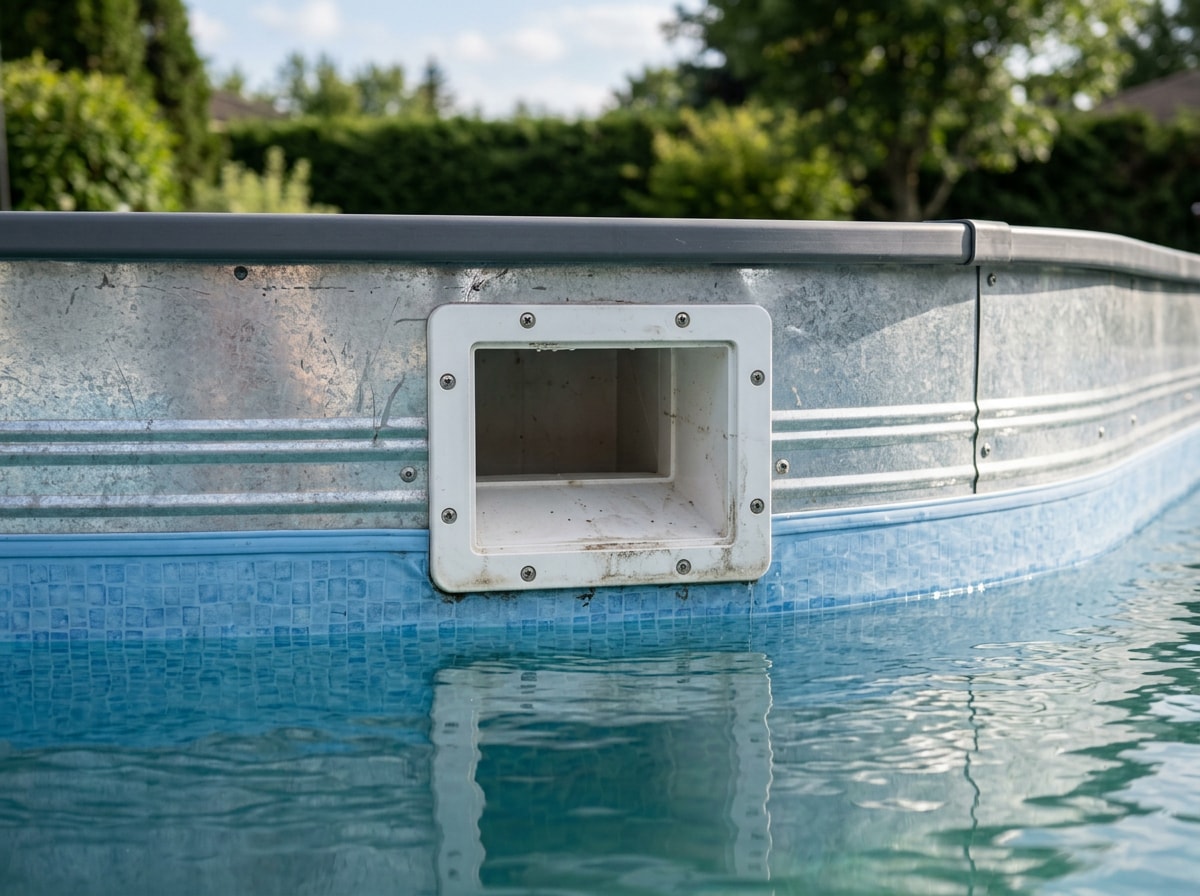
Drain the water to about four to six inches below the skimmer opening — enough to keep ice from damaging the skimmer or return lines, but never lower than that. Never fully drain an above ground pool; doing so removes the water weight that holds the walls and liner in place against the frame, which can cause buckling or collapse.
If your water level drops further due to evaporation during the closed months, it's generally fine to leave it — just don't chase a lower level on purpose. This is one of the more commonly misunderstood steps in winterizing, and it's worth getting right the first time.
Winterize the Filter, Pump, and Plumbing
Above ground pool equipment sits exposed to outdoor air far more than buried inground lines do, which makes it considerably more vulnerable to a hard freeze. Every component that holds water — filter, pump, hoses — needs to be drained or protected before temperatures drop.
The Filter: Sand, Cartridge, and DE
Each filter type winterizes a little differently.
| Filter Type | Winterizing Steps |
|---|---|
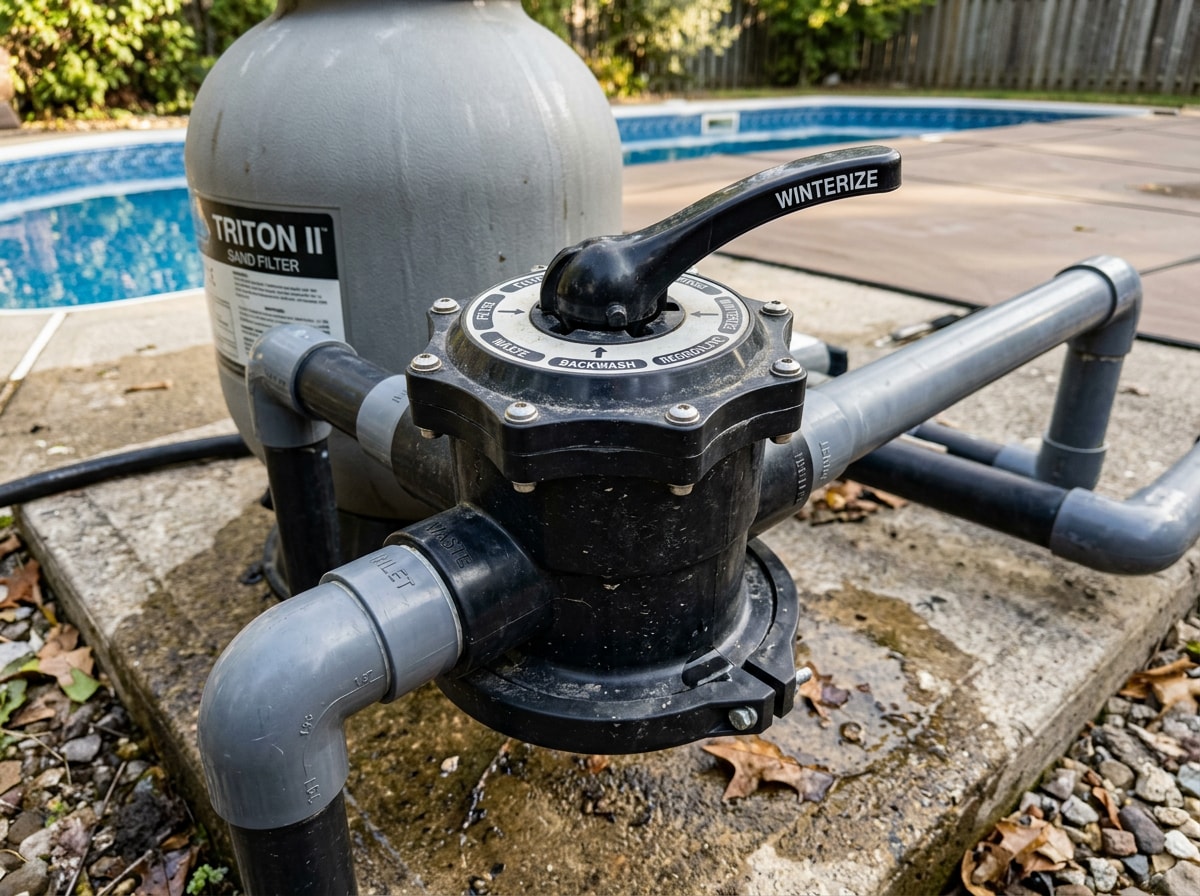
| Sand | Set the multiport valve to "Winterize," remove the drain plug, and let trapped water escape overnight. |
| Cartridge | Remove the cartridge, hose it off thoroughly, and store it indoors where it won't freeze or crack. |
| DE | Drain the tank fully, rinse the grids, and leave the drain valve open through winter so residual moisture can escape. |
If You Have a Salt Water Pool
Salt systems need their own shutdown step beyond standard filter winterizing. Most electronic chlorine generators switch off and stop producing chlorine once water temperature drops to around 52°F , which is well above typical Gainesville winter lows — meaning the cell has no real job to do once the pool is closed.
Many manufacturers recommend removing the electrolytic cell entirely and storing it indoors for the season, especially where hard freezes are possible. Checking your specific unit's manufacturer instructions, such as the Pentair IntelliChlor winterizing guide, is worth the few minutes it takes, since storage requirements vary by brand and model. If you're considering converting to or maintaining a salt system, our saltwater pool conversion service page has more detail.
Where to Put Antifreeze When Closing a Pool
Pool antifreeze causes confusion because it sounds like it belongs in the pool itself — it doesn't. Non-toxic, propylene-glycol pool antifreeze is only for sections of plumbing that can't be fully drained, like short runs of pipe between a disconnected pump and the wall fitting.
If your above ground pool uses removable flex hoses that you disconnect and drain completely, you likely don't need antifreeze at all. Adding it anywhere else is wasted product and won't protect anything that's already properly drained.
Clean and Stash Your Accessories
Remove ladders, steps, skimmer baskets, lights, and any floating toys before the cover goes on. Hardware left in place over winter gets hit by repeated freeze-thaw cycles that can corrode metal joints and wear grooves into the liner where it rubs against a step or ladder frame.
Store everything somewhere dry — a shed, garage, or basement works fine — so it's ready to reinstall without rust or mildew in the spring.
Install the Pool Pillow
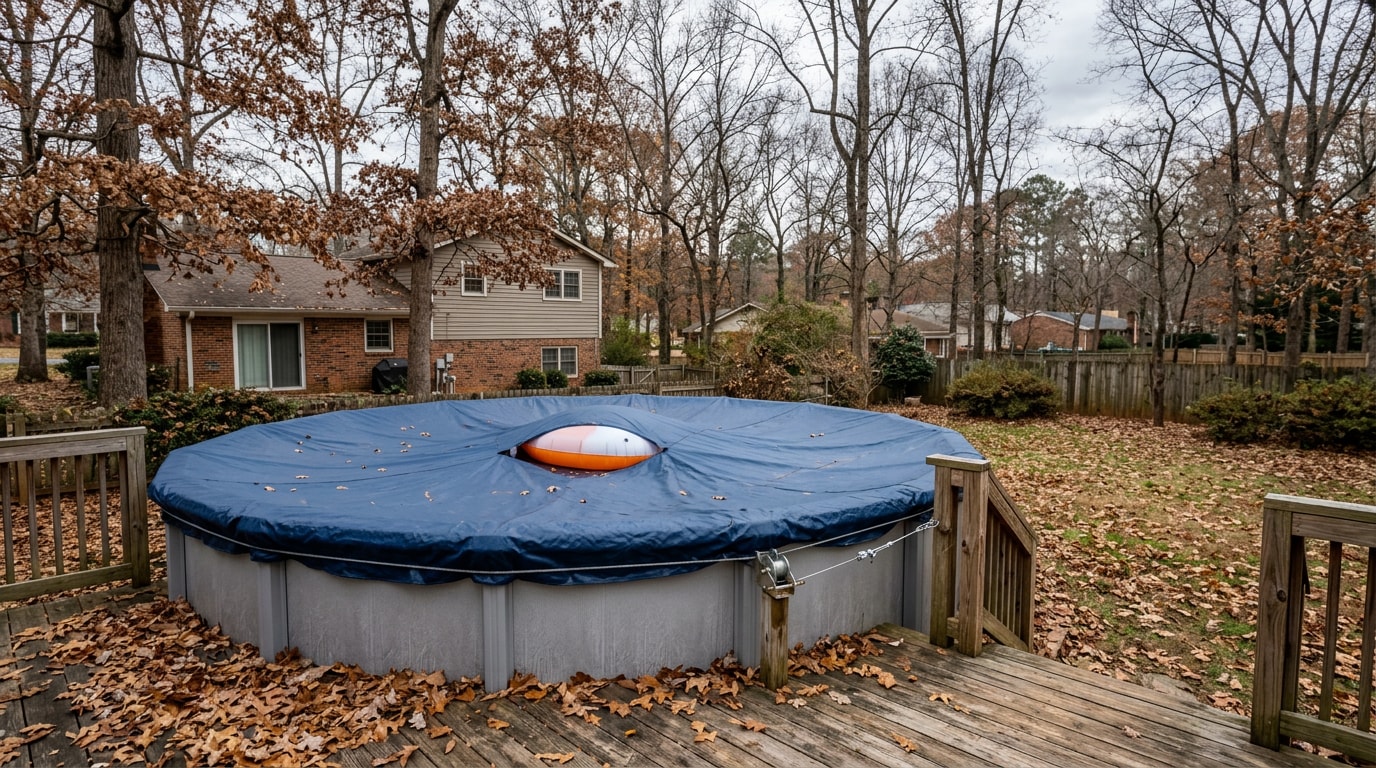
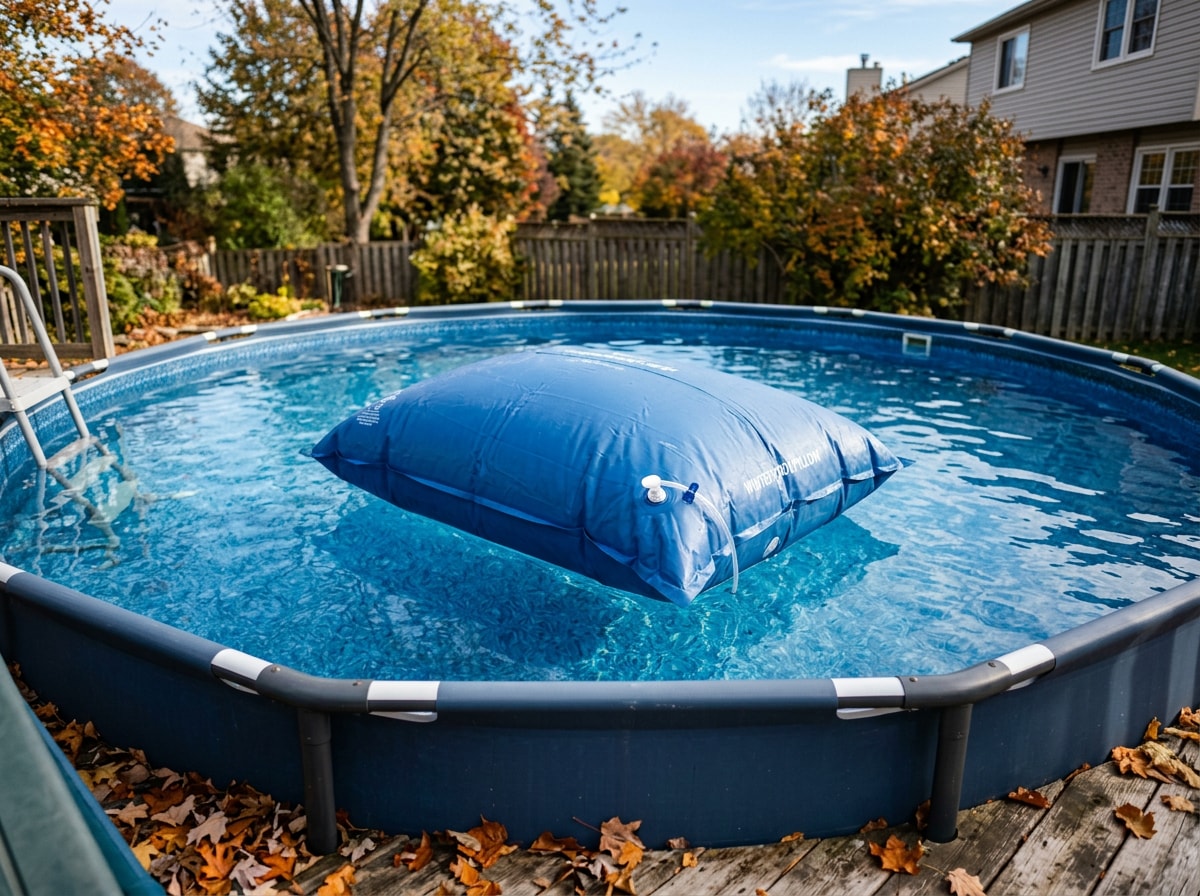
Center the air pillow in the middle of the pool and inflate it to about 50 to 60 percent full, not completely full. A pillow that's too full doesn't have room to compress and can rupture instead of absorbing pressure from expanding ice.
The air pillow acts as an ice compensator, giving winter ice somewhere to push against besides the pool walls. This single step prevents a surprising amount of structural wall damage in pools that see even light freezing over the season.
Install and Secure the Winter Cover
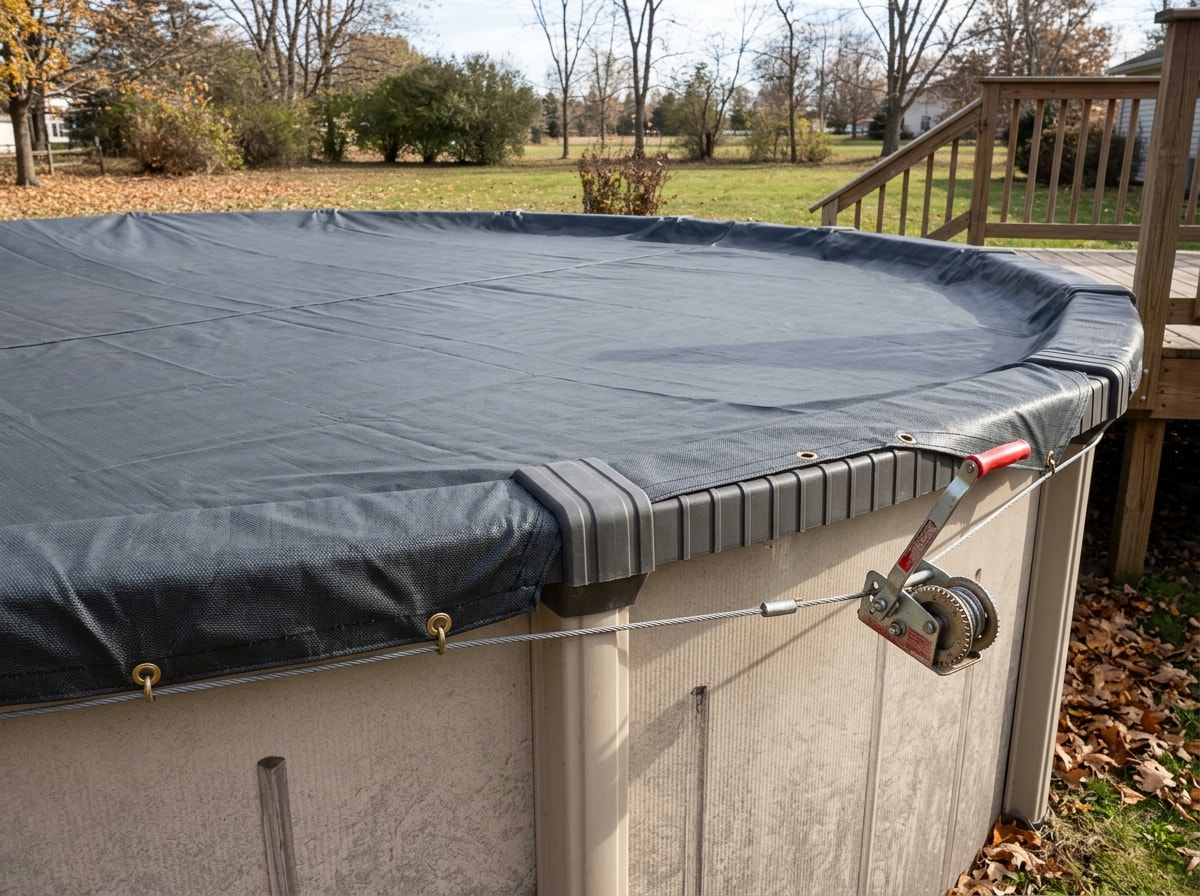
With the pillow in place, center the winter cover over the entire pool so it overlaps the top rail evenly on all sides. Run the cable through the grommets and tighten it with the winch system, or use clips if your cover is designed that way, until it sits snug against the rail without sagging into the water.
Skipping the cover entirely, even in a mild Gainesville winter, isn't a good shortcut. An uncovered pool collects debris and sunlight all season, which usually means more cleanup and chemical cost at reopening than the time saved by not covering it.
Should You Winterize or Keep Your Above Ground Pool Open Year-Round in Gainesville, GA?
Gainesville's winters are mild compared to most of the country, which leads some pool owners to wonder if a full close is even necessary. The honest answer: it depends on how much attention you're willing to give the pool between December and February, because mild doesn't mean frost-free. With roughly 57 freezing nights a year on average, an unprotected, undrained system is still a real freeze risk.
| Approach | What It Involves | Trade-Off |
|---|---|---|
| Keep it open | Run pump a few hours daily; maintain chemicals all winter | Adds to electric and chemical costs; still needs freeze-night attention |
| Full winterize | Clean, balance, drain, cover once in fall | More upfront effort and cost; zero attention needed until spring |
Keeping a pool open year-round means running the pump on a reduced schedule to prevent stagnant water and keep plumbing from freezing during the occasional hard freeze that does hit Hall County most winters. That adds to the electric bill and keeps you on the hook for chemical maintenance through the coldest months. A full close-and-reopen cycle costs more upfront in chemicals and labor but then requires zero attention until spring, and it all but eliminates freeze risk to the equipment.
For most above ground pool owners here, a full winterizing process makes more sense than keeping things open, simply because the unattended risk of a freeze event outweighs the convenience of year-round access. If you're weighing which route fits your setup, our pool cleaning services page covers both options in more detail, or you can reach out directly and we'll walk through it with you.
As a team that closes above ground pools across Hall County every fall, the single most common reopening problem we see isn't a bad cover or wrong chemical — it's chemicals added out of order, which is why the sequence matters more than any individual product. You can see our full range of work at Southern Life LLC.
FAQ
Should I Hire a Professional to Close My Above Ground Pool in Gainesville, GA?
It depends on your comfort level with chemical sequencing and equipment handling. A professional closing typically takes under an hour and guarantees the chemical order and drain level are correct, while a DIY close takes longer and carries more risk of a missed step. If you'd rather skip the research, you can request service and have it handled in a single visit.
Can I Leave My Above-Ground Pool Pump Outside in Winter?
Leaving a pump outside through a hard freeze risks cracked housings and ruined internal seals, since trapped water expands as it freezes. Most manufacturers recommend storing the pump indoors, in a garage or basement, once it's disconnected and drained. If indoor storage isn't possible, at minimum wrap it and keep it off bare ground.
How Much Shock Do I Need to Winterize an Above-Ground Pool?
Dosage varies by product, but most labels call for roughly 1 to 2 pounds of granular shock per 10,000 gallons for a winterizing dose. Always check the specific label on your product, since cal-hypo, dichlor, and non-chlorine formulas have different concentration levels and recommended amounts.
Do Above Ground Pools Need Pool Antifreeze?
Most above ground pools with removable flex hoses don't need antifreeze at all, since those lines get fully disconnected and drained rather than left in the ground. Antifreeze is mainly for pools with permanent, buried plumbing that can't be completely emptied, which is uncommon on standard above ground setups.
What's the Best Winter Cover for an Above Ground Pool?
A solid, tarp-style winter cover that attaches with a cable-and-winch system is the standard choice for above ground pools, since it blocks sunlight and keeps leaves and debris out all season. Mesh covers let more light and fine debris through and generally aren't the better pick for a full winter close in this climate.
How Long Does It Take to Close an Above Ground Pool for Winter?
A straightforward DIY closing usually takes two to three hours once the water is balanced and supplies are on hand, not counting the two-to-three-day wait between shocking and finishing the close. A professional crew typically finishes the hands-on work in under an hour.