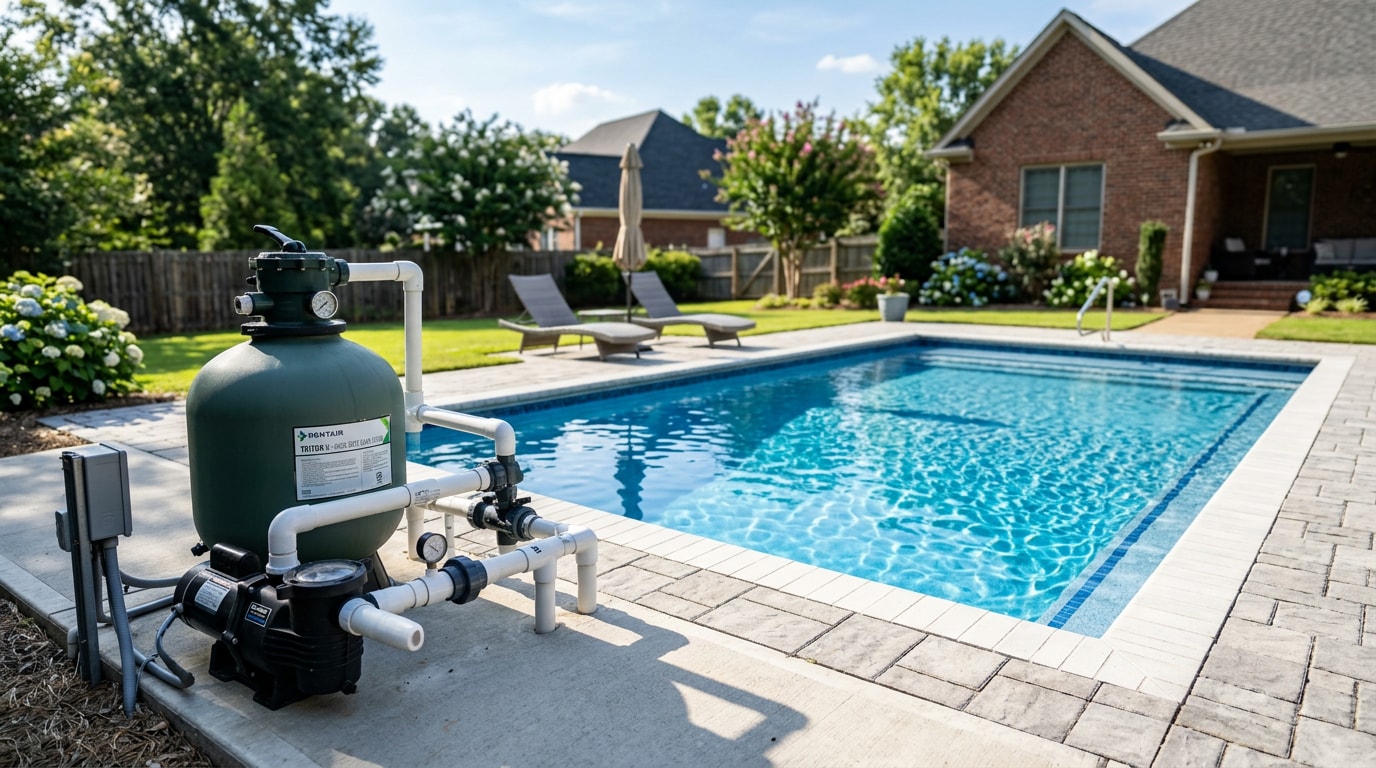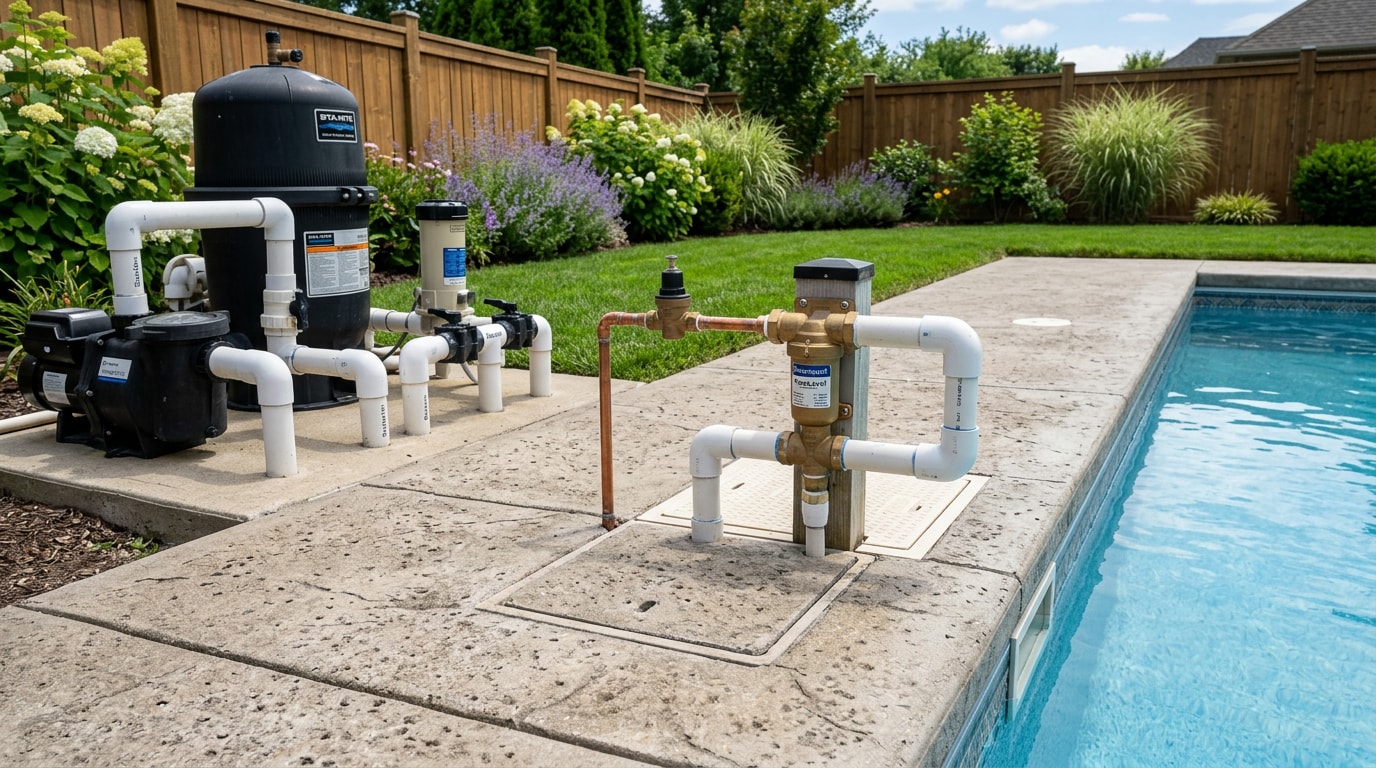
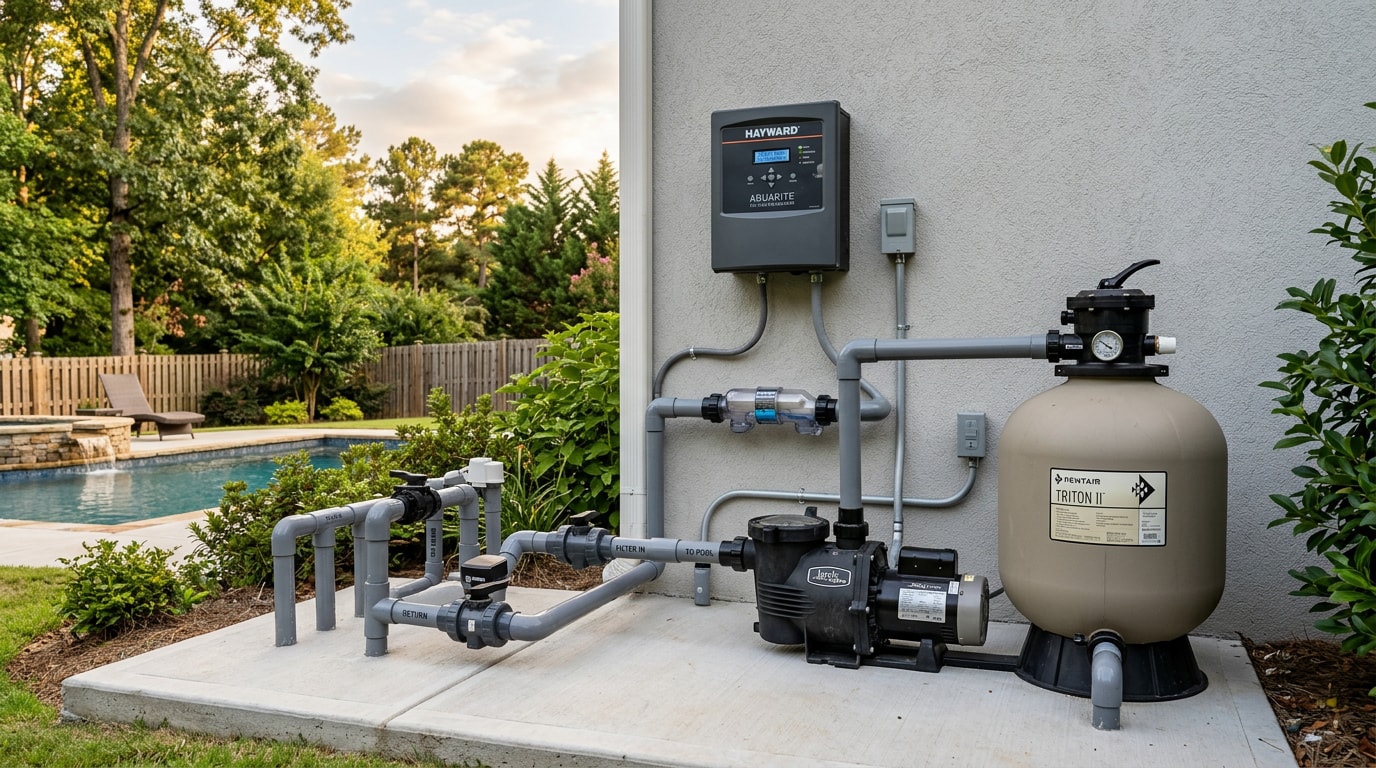
A salt water pool chlorinator in Gainesville, GA uses electrolysis to turn ordinary pool salt into chlorine, so you stop hauling jugs and tablets to the equipment pad every week. Most Hall County homeowners ask the same three questions before they call anyone: what does it cost, how long does the work take, and will their current pump and filter even handle it. This guide answers all three with real installation steps and current pricing ranges.
How Much Does a Salt Water Pool Chlorinator Cost in Gainesville, GA?
Pricing depends on whether you're converting an existing chlorine pool or adding a system during new construction, plus your pool's gallon capacity. Here's a general breakdown based on current industry pricing data:
| Cost Item | Typical Range |
|---|---|
| Salt chlorine generator and cell (equipment only) | $700 - $1,850 |
| Professional installation labor | $300 - $800 |
| Total conversion cost, existing pool | $1,150 - $3,100 |
| Annual salt top-off | $60 - $150 |
| Annual chemicals, traditional chlorine-only pool | $300 - $600 |
| Salt cell replacement (every 3-7 years) | $200 - $900 |
In 2026, the total cost to convert a pool to saltwater ranges from $1,150 to $3,100, including the salt chlorine generator power center, electrolytic cell, plumbing bypass loop, electrical sub-panel GFCI wiring, and initial salt dosing. On the chemical side, a salt chlorinator system costs between $1,500 and $2,500, with installation adding another $300 to $500 , and pool owners spend less than $100 a year on chemicals with salt systems, while traditional chlorine costs over $300 every season . Budget separately for the salt cell itself: a basic replacement cell for a mid-sized pool typically runs $200 to $450, while full systems or premium cells range $800 to $2,000 including installation .
Want an exact number for your pool size and equipment pad? Get a Free Estimate from our team before you commit to a brand or installer.
What Is a Salt Water Pool Chlorinator?
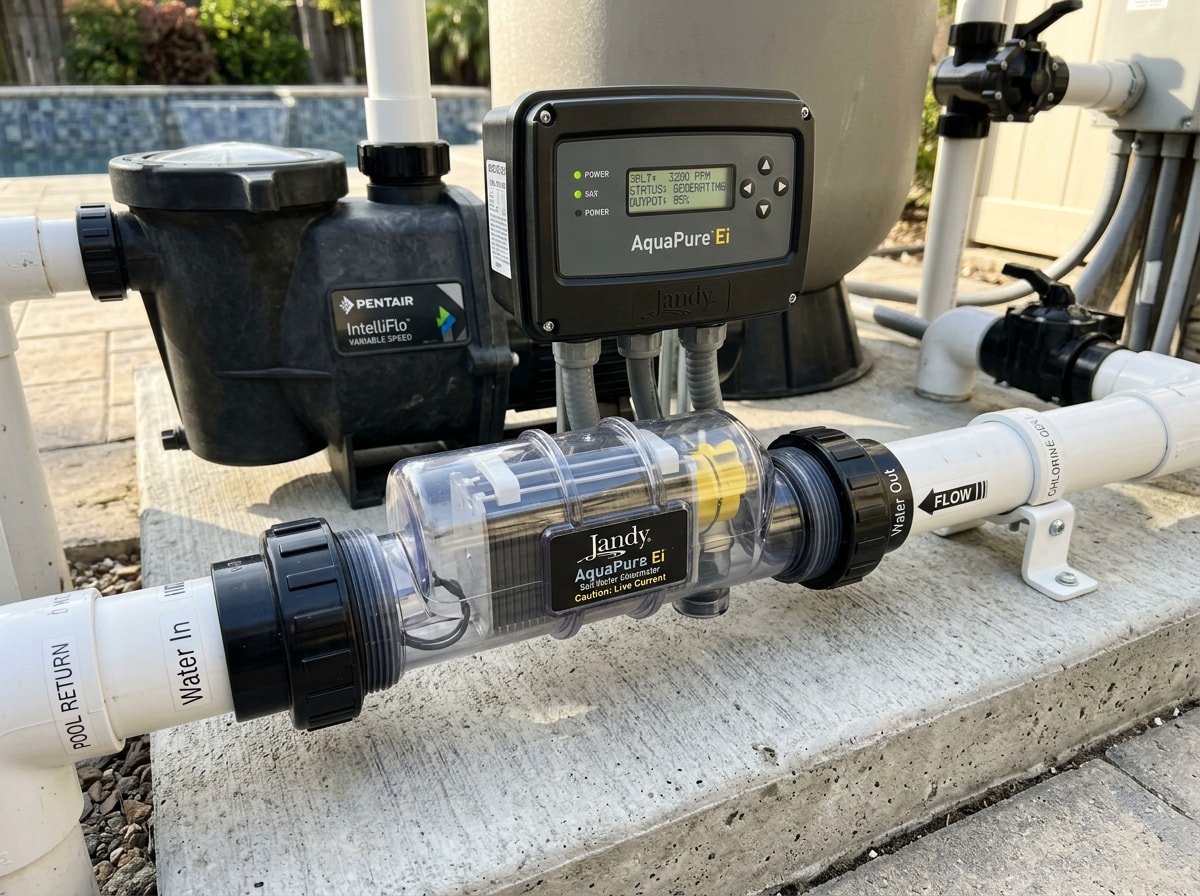
A salt water pool uses a salt chlorine generator to convert dissolved salt into chlorine, providing steady sanitation without hand-dosed tablets or liquid. The water feels softer, smells fresher, and is gentler on skin, eyes, and swimwear than a traditionally dosed pool.
It's a myth that salt pools are chlorine-free. They still sanitize with chlorine, it's just produced on-site instead of added by hand. If used properly, chlorine can kill most germs within a few minutes, and the CDC recommends pH 7.0 to 7.8 with a chlorine concentration of at least 1 ppm in pools , regardless of whether that chlorine comes from a jug or a salt cell.
Benefits of Switching to a Salt Water Pool
- Softer water feel. Lower chloramine buildup means less eye and skin irritation than a heavily tableted pool.
- Less chemical handling. The system makes chlorine on demand, so you're not storing or measuring jugs.
- More consistent sanitation. Output can be dialed up or down instead of guessing at a floating dispenser.
- Lower long-term chemical spend. Annual salt is cheaper than a season of tablets and shock, even once you budget for a cell replacement every few years.
For most of our Gainesville clients, the appeal is maintenance simplicity more than the cost savings alone, since a salt system still needs regular testing and a properly balanced pool to run well. Our [pool and spa maintenance](){{SITE_URL}}/services/pool-and-hot-tub-service/pool-and-spa-maintenance team handles that testing on every visit so the system isn't guessing at output.
Our Salt Water Conversion Process in Gainesville
Converting or installing a salt water pool chlorinator follows a predictable sequence from first visit to final walkthrough.
Consultation & Equipment Assessment
Every pool is different, so the process starts with a review of the existing pump, filter, plumbing, and electrical setup to confirm compatibility. From there, we recommend a generator sized to your pool's volume, usage, and bather load.
Professional Installation
Our technicians handle any plumbing or electrical modifications needed so the salt system integrates with your current equipment. Work follows manufacturer specs and local electrical code, including the bonding and GFCI protection required around pool equipment. Article 680 of the National Electrical Code addresses the construction and installation of electrical wiring for swimming pools and metallic auxiliary equipment such as pumps and filters , which is why a licensed installer, not a weekend DIY job, matters here.
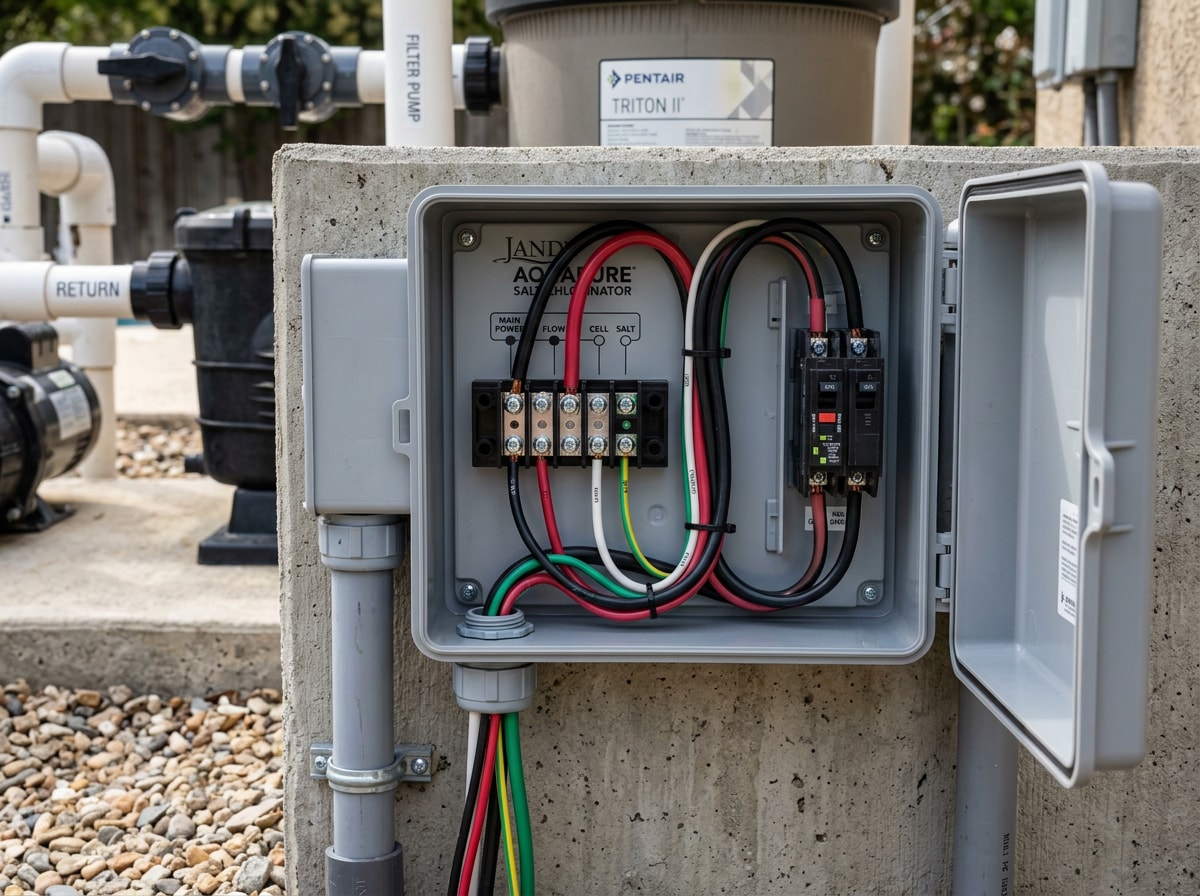
System Start-Up & Owner Training
After installation, we start the system, test the water, and dial in salt and output levels. Then we walk you through adjusting settings and spotting early warning signs, so the learning curve doesn't fall entirely on you. See our full saltwater pool conversion service details for what's included.
Salt Chlorinator Equipment, Repair & Troubleshooting
A malfunctioning chlorinator can quietly let chlorine levels drop, which opens the door to algae and cloudy water before you notice anything's wrong. Watch for these warning signs before calling for service:
- An error code or flashing light on the control panel
- Chlorine readings staying low despite normal or high salt levels
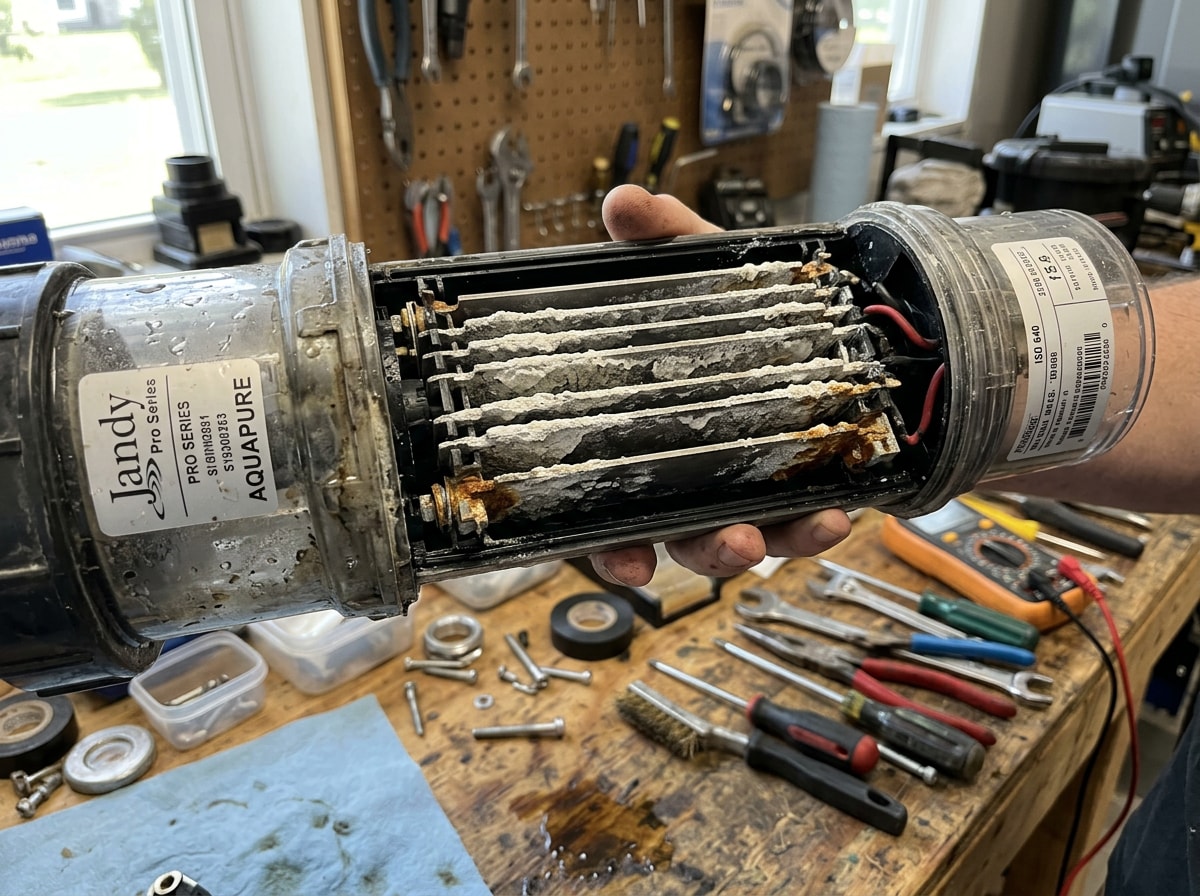
- Visible white scale buildup on the salt cell plates
- Reduced water flow through the cell housing
Most salt cells have an estimated life span of 3 to 7 years , and Hayward's own installation documentation lists three cell models, the T-CELL-15 for pools up to 40,000 gallons, the T-CELL-9 for pools up to 25,000 gallons, and the T-CELL-3 for pools up to 15,000 gallons , so the right replacement depends on matching the cell to your original system. If your pool also runs stabilized tablets alongside the salt cell, cyanuric acid buildup can throw off chlorine readings too. Our cyanuric acid guide covers how to keep that balance in check. For anything beyond a cell swap, our pool repair and renovation crew handles control board failures, wiring faults, and plumbing bypass issues.
Who We Help in Gainesville and North Georgia
Chlorinator installation and service needs look different depending on the type of pool owner.
Property Managers and HOAs
HOA, apartment, and rental properties need reliable scheduling and clear documentation across multiple salt systems, which we build into every commercial service plan.
Luxury and Custom Pool Owners
Homeowners with heated, automated, or custom-built pools get tailored support for salt, heat pump, and automation systems that go beyond a standard single-speed setup.
We serve Gainesville and the surrounding Gainesville, GA area as part of our broader North Georgia pool and hot tub service coverage.
Why Trust This Guide
This page was written and reviewed by the pool service team at Southern Life LLC, licensed contractors who install and repair salt systems on Gainesville-area pools throughout the swim season. In our experience, the installs that run into trouble later are almost always the ones where the equipment pad wiring or bonding was done as an afterthought, not a planned step, which is why we walk every client through the electrical scope before we quote a job. Questions about your specific pool? Contact us directly.
FAQ
Is a salt water pool cheaper than a chlorine pool long term?
Usually, yes, on chemicals. You'll spend more upfront on the generator and cell, but pool owners spend less than $100 a year on chemicals with salt systems, versus over $300 every season with traditional chlorine . Factor in a cell replacement every 3 to 7 years and the math still favors salt over a decade of ownership.
How much does it cost to install a salt water chlorinator?
Most residential installs run $1,150 to $3,100 all-in for an existing pool conversion, depending on pool size, equipment brand, and whether electrical upgrades are needed at the pad.
How long does a saltwater chlorinator installation take?
A straightforward retrofit on compatible plumbing and electrical typically takes one day, including start-up and salt dosing. Jobs that need new wiring, a sub-panel, or bypass plumbing can run longer.
Do salt water pools still need chlorine?
Yes. A salt system generates chlorine on-site through electrolysis rather than adding it by hand, but the water is still sanitized with chlorine, not an alternative chemical.
Can any pool be converted to a salt system?
Most gunite, vinyl, and fiberglass pools can convert, but older vinyl liners, certain metal fixtures, and some heaters aren't always salt-compatible. A compatibility check during consultation catches this before installation.
How often do I need to add salt to the pool?
Beyond the initial dose, you'll typically top off salt after heavy rain, backwashing, or draining, not on a fixed schedule. Evaporation alone doesn't remove salt.
How long does a salt water chlorinator last?
Salt cells have an estimated life span of 3 to 7 years , while control boards often run ten or more years. Poor water balance and infrequent cleaning shorten both.