Pool filter sand in Atlanta, GA isn't something you grab off a hardware store shelf and hope for the best. Grain size, grading, and certification all change how well a sand bed traps debris, and the wrong bag can leave a pool cloudy no matter how long the pump runs. Here's what to buy, how much your tank actually needs, and the one spec most bags sold locally don't carry.
How Sand Filters Work (And Why Atlanta Pools Clog Faster)
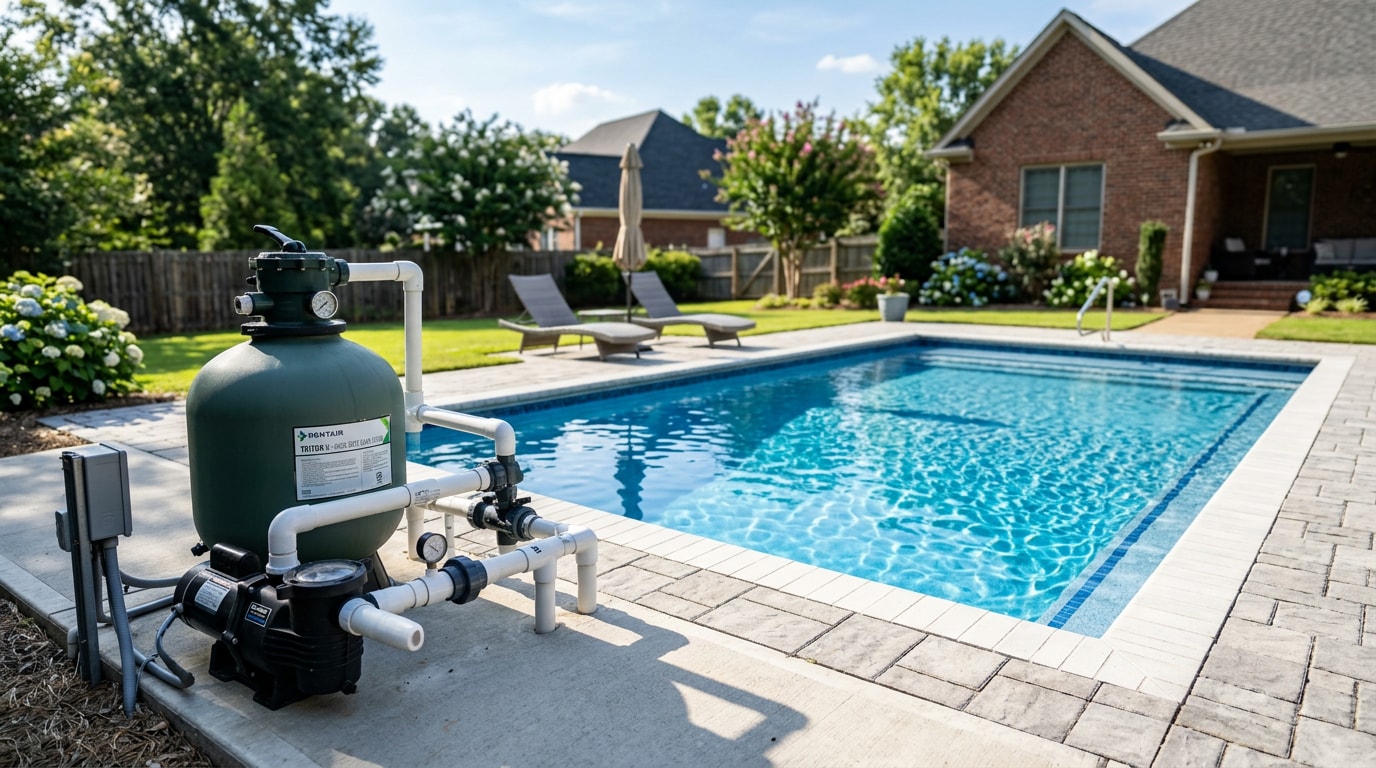
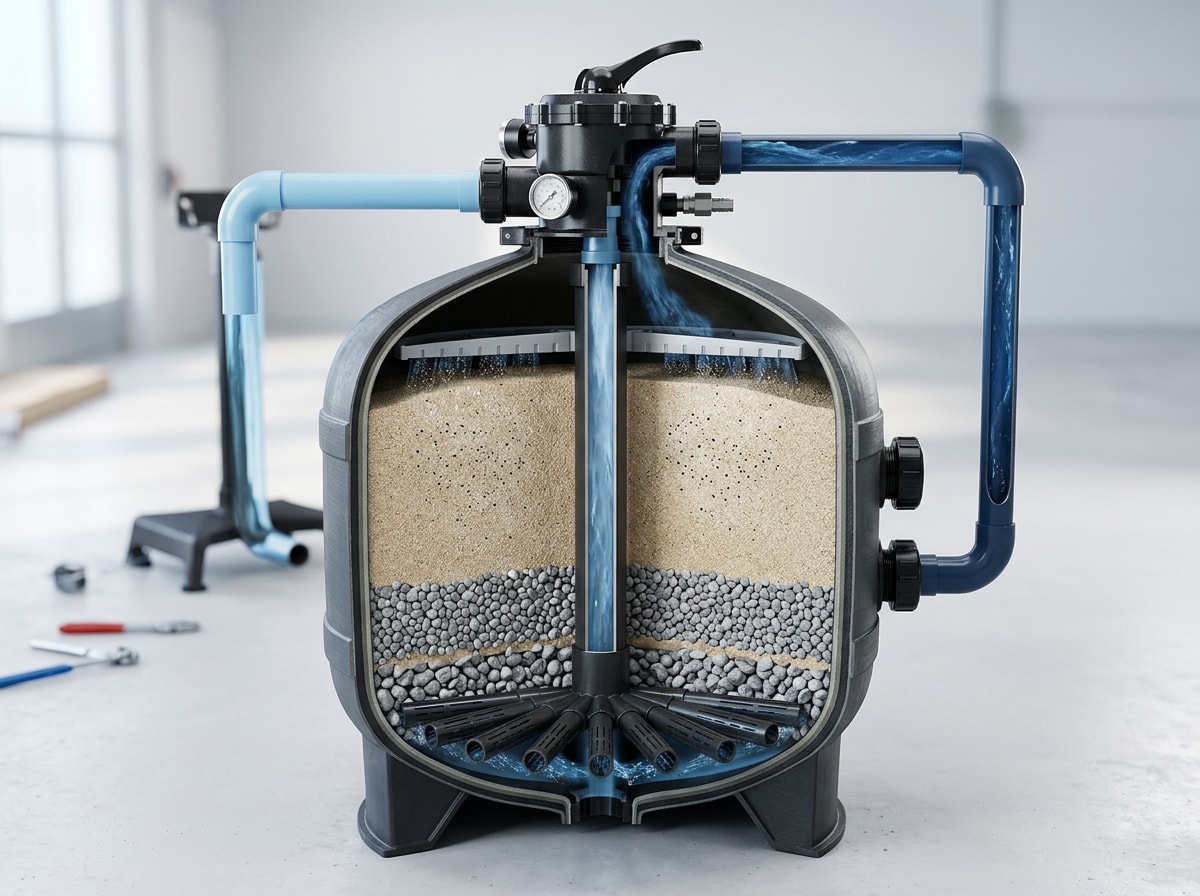
A sand filter cleans pool water by pushing it through a bed of graded silica packed inside a pressure tank. As water forces its way between the grains, debris gets trapped and clean water flows out the other side.
Filtration runs on pressure differential. Once the gauge climbs 8 to 10 PSI above its clean starting point, the sand bed is loaded and it's time to backwash.
In our service calls across metro Atlanta, that pressure climb happens faster than most filter manuals assume. Pine pollen in spring and red Georgia clay runoff after summer storms both load a sand bed quickly, especially in yards with heavy tree cover. If your pool keeps turning cloudy between cleanings even after backwashing, it's worth reading our guide on how to get rid of algae in a pool in Atlanta, GA, since a tired filter and an algae bloom often show up together.
What Is Pool Filter Sand, and Why #20 Silica Is the Standard
Pool filter sand is graded silica screened to a narrow, uniform grain size so the bed catches fine debris without clogging the laterals at the bottom of the tank. Manufacturer specifications for residential sand filters put that particle size at roughly .018 to .022 inches, or 0.45 to 0.55 millimeters . The "#20" designation refers to the mesh screen used during grading, sized to pass those grains while rejecting anything coarser or finer.
That grading matters more than most buyers assume. Inconsistent grain sizes create channels in the sand bed, letting water (and debris) bypass filtration entirely. Pentair's own owner's manual puts it plainly: "Be certain to install the precise amount of filter sand listed on your filter nameplate."
NSF/ANSI 50 remains the recognized U.S. standard for pool and spa filtration media. NSF describes its role as working to "assess the performance and durability of media used in recreational water systems, such as sand in pool filters" so products meet industry safety and reliability requirements. The 2025 edition of the standard covers testing guidelines for filtration media alongside pumps, valves, and other pool equipment . Before buying locally, check that the bag explicitly states compliance. You can review the NSF filtration media certification page to see what that certification actually covers, since not every silica product sold near Atlanta carries it.
What Not to Use in a Pool Filter
Play sand, mason sand, and general-purpose silica from hardware stores cause real problems in a pool filter.
- Play sand contains dust and irregular particles that clog laterals almost immediately.
- Mason sand often includes limestone or calcium carbonate that dissolves in chlorinated water and throws off chemical balance.
- Unlabeled "silica sand" may be the wrong grade entirely, even if it looks identical to pool sand in the bag.
Handling bagged silica also carries a real health consideration. Disturbed silica dust is a respiratory hazard regardless of grade, and OSHA's general industry standard sets the permissible exposure limit for respirable crystalline silica at 50 micrograms per cubic meter as an 8-hour average . Wear a mask when pouring sand, and review OSHA's silica safety guidance before handling large quantities.
Pool Filter Sand vs. Other Filter Media: Which Fits Your Pool?
Standard #20 silica is sharp-edged quartz and the lowest-cost option, filtering out debris effectively enough for most residential pools. Zeolite, a natural volcanic mineral, is a drop-in sand replacement that manufacturers generally market as finer-filtering and better at trapping chloramines, the compounds behind red eyes and strong chlorine smell. Glass media sits at the premium end, advertised for longer intervals between changes and less frequent backwashing, though it typically costs more per pound than silica.
| Media | Relative Cost | Best For |
|---|---|---|
| #20 Silica Sand | Lowest | Most residential pools, budget-conscious owners |
| Zeolite | Moderate | Allergy-prone swimmers, chlorine odor complaints |
| Glass Media | Highest | Owners who want fewer backwash cycles |
For most Atlanta homeowners managing pollen season and heavy pool traffic, standard #20 silica is still the practical default. Zeolite or glass make more sense if allergy symptoms, chlorine odor, or filter maintenance frequency are ongoing complaints.
Alternatives to Sand Filters
Beyond swapping media inside an existing tank, some homeowners replace the filter type entirely. Cartridge filters trap debris on a pleated fabric element instead of sand, while DE (diatomaceous earth) filters use a fine powder coating for sharper filtration. Both require different maintenance routines and aren't a simple media swap; they're a different equipment purchase altogether.
How Much Pool Filter Sand Do You Need?
Sand volume is tied to tank diameter, but figures vary by manufacturer and tank depth. The table below gives typical ranges for common residential sizes.
| Filter Diameter | Typical Sand Needed | Approx. 50 lb Bags |
|---|---|---|
| 16 in | 100 lbs | 2 bags |
| 18–19 in | 150 lbs | 3 bags |
| 20–22 in | 200 lbs | 4 bags |
| 24–26 in | 300–350 lbs | 6–7 bags |
| 27–30 in | 400–600 lbs | 8–12 bags |
| 36 in | 700–925 lbs | 14–19 bags |
As a real-world example, Pentair's 26-inch Sand Dollar SD80, one of the more common top-mount residential filters, calls for 350 pounds of sand per the manufacturer's own specifications. That figure lines up with the 24–26-inch row above, but it's still worth confirming against your own filter's data plate before ordering bags, since tank depth varies even within the same diameter class. Pentair publishes full specifications for its commercial and residential sand filter lines in its technical filter data sheets if you want to cross-reference your exact model.
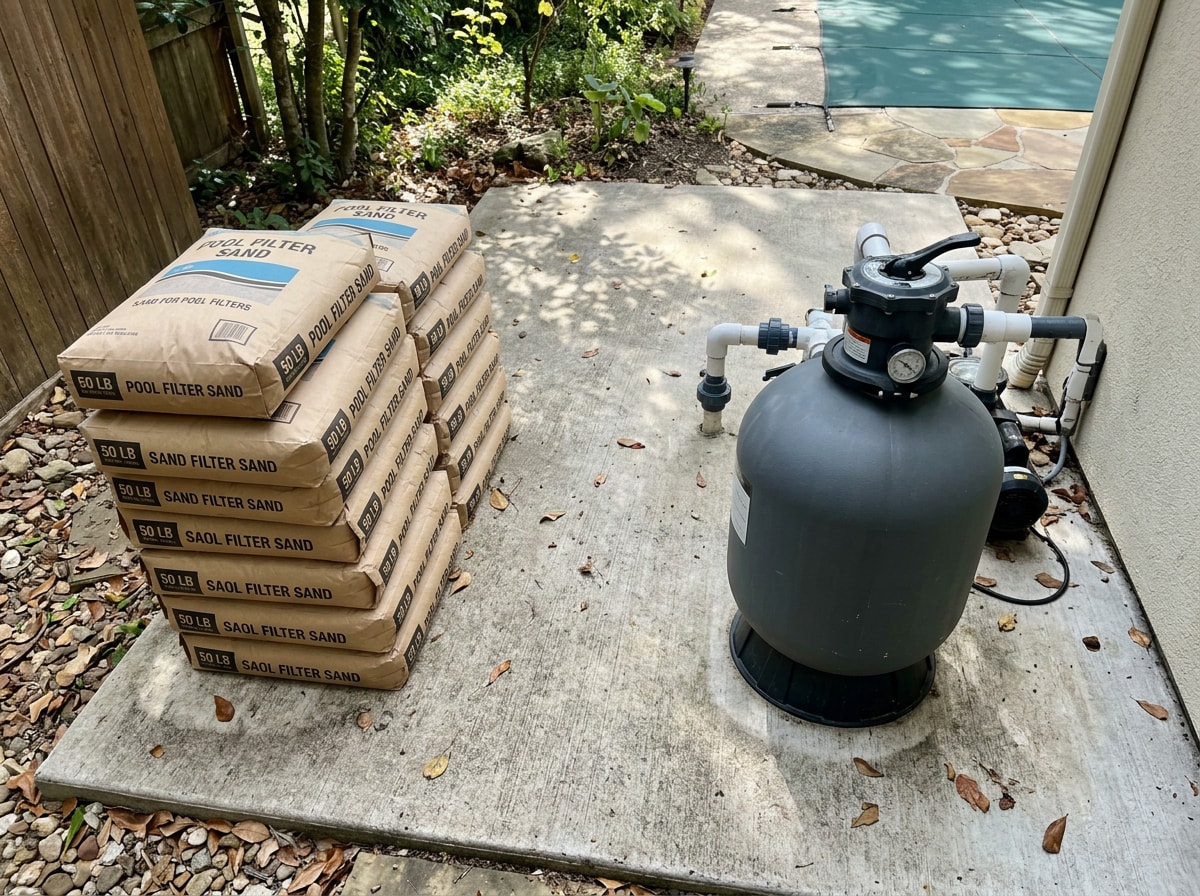
As a general fill-ratio rule, most sand filters should be filled two-thirds to three-quarters full. Play it safe and aim for two-thirds, since overfilling restricts the water's path through the bed and can undermine the entire filtration cycle.
How Often Should You Replace Pool Filter Sand?
Pool filter sand typically lasts five to seven years before it needs replacing. Each grain starts sharp and jagged, which is what snags dirt as water passes through. Years of water wearing against those edges slowly rounds them smooth, and smooth sand lets debris slip back into the pool instead of trapping it.
Watch for warning signs before the five-year mark, especially with heavy pool use:
- Backwashing needed more often than it used to be
- Pressure gauge climbing faster than normal between cleanings
- Water that stays cloudy even right after a full backwash cycle
Any of these point to sand that's past its useful life, regardless of how many years are on the calendar.
How to Change Pool Filter Sand (Step-by-Step)
Replacing pool filter sand is a straightforward job if you follow the sequence in order.
- Shut down the pump and release all pressure from the tank before opening it. Skipping this step is the most common cause of injury during a DIY sand swap.
- Remove the old sand completely, taking care around the laterals at the bottom of the tank since they're easy to crack.
- Fill the tank partway with water before pouring in new sand. This cushions the laterals and prevents the new sand from damaging them on the way down.
- Seal the tank back up and run a full backwash cycle before returning the system to normal filtration.
Done correctly, you should see clearer water and better pressure readings almost immediately. If you'd rather skip the mess, our team handles pool and spa maintenance and full pool repair and renovation across the Atlanta area, including sand changes done right the first time. Contact us for a free estimate before your next backwash season catches you off guard.
Frequently Asked Questions
How much sand do I need for my pool filter?
Most residential filters need 100 to 600 pounds of sand depending on tank diameter, ranging from 2 bags for a 16-inch filter up to 12 or more bags for a 30-inch filter. Check the size chart above and confirm against your filter's data plate.
How often should I change the sand in my pool filter?
Pool filter sand should generally be replaced every five to seven years. Rounded, worn grains stop trapping debris effectively, even if the sand still looks fine in the bag.
Can I use regular sand in my pool filter?
No. Play sand and mason sand are the wrong grade and shape for filtration. They clog laterals and can introduce minerals that throw off your water chemistry.
What type of sand is best for a pool filter?
#20 silica sand is the industry standard for most residential pools. Zeolite or glass media are worth considering if you want finer filtration or less frequent backwashing.
How much does pool filter sand cost in Atlanta?
A 50 lb bag of #20 silica sand typically runs $10 to $25 at pool supply retailers, so a full sand change usually costs $40 to $250 in media alone depending on tank size. Professional installation adds labor on top of that.
What happens if I put too much or too little sand in my filter?
Overfilling restricts water flow through the bed and can push sand into the plumbing during backwash. Underfilling reduces the filter's contact time with water, leaving debris and cloudiness behind. Stick to the fill ratio and pound amount listed on your tank's nameplate.
Can I mix old and new pool filter sand?
It's not recommended. Old sand is worn smooth and no longer filters as effectively, so blending it with new sand drags down the whole bed's performance. Replace the full charge at once for consistent results.
Pool filter sand is one of those parts that quietly decides whether your whole system performs well or fights you all summer. Get the grade right, size it to your tank, and keep an eye on backwash frequency, and the rest of your filtration takes care of itself. Southern Life LLC services pools throughout Atlanta, GA and the surrounding metro, and you can see our full range of work on the homepage or reach out through our contact page for a free estimate.