Pool pads in Gainesville, GA are the poured concrete slabs that ring an in-ground pool, and they take more weather abuse than almost any other slab on the property. Hall County's humidity, heat, and seasonal freeze-thaw swings crack, stain, and roughen a pad faster than most homeowners expect. This guide breaks down 2026 pricing, code requirements, and finish options so you know what you're paying for before a crew ever shows up.
What Is a "Pool Pad" in Gainesville, GA?
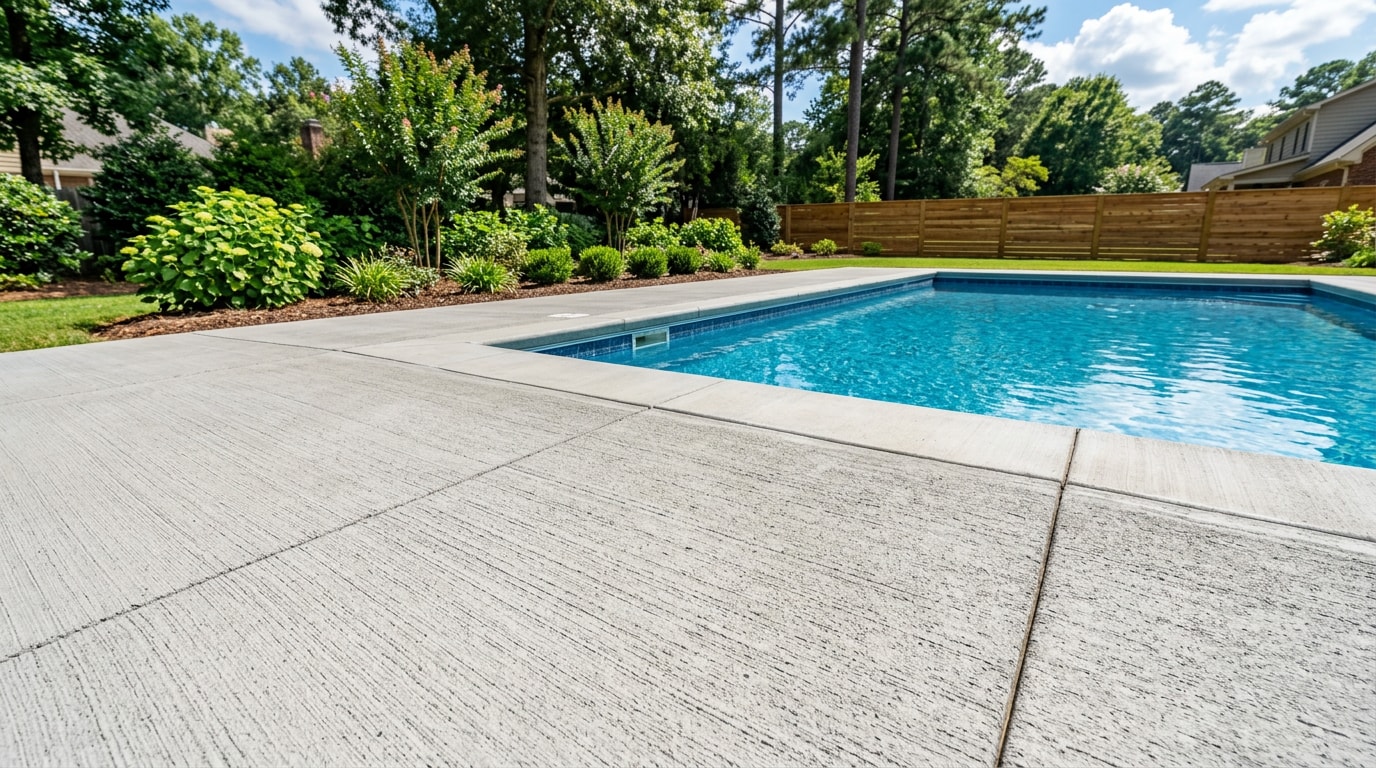
A pool pad is the poured concrete surface surrounding an in-ground pool, also called a pool deck. It's the slab you walk on barefoot between the water and the lounge chairs, and it has to handle splash, chlorine, and constant wet-dry cycles without cracking or going slick.
One quick clarification before we go further: a search for "pool pad" in Hall County also turns up public splash pads, like Laurel Park Splash Pad . That's not what this guide covers. This page is about building, pricing, and repairing the concrete deck around a residential or commercial swimming pool.
See our full concrete contractor services for examples of past pool pad and patio work around Gainesville.
Pool Pad Costs in Gainesville, GA (2026)
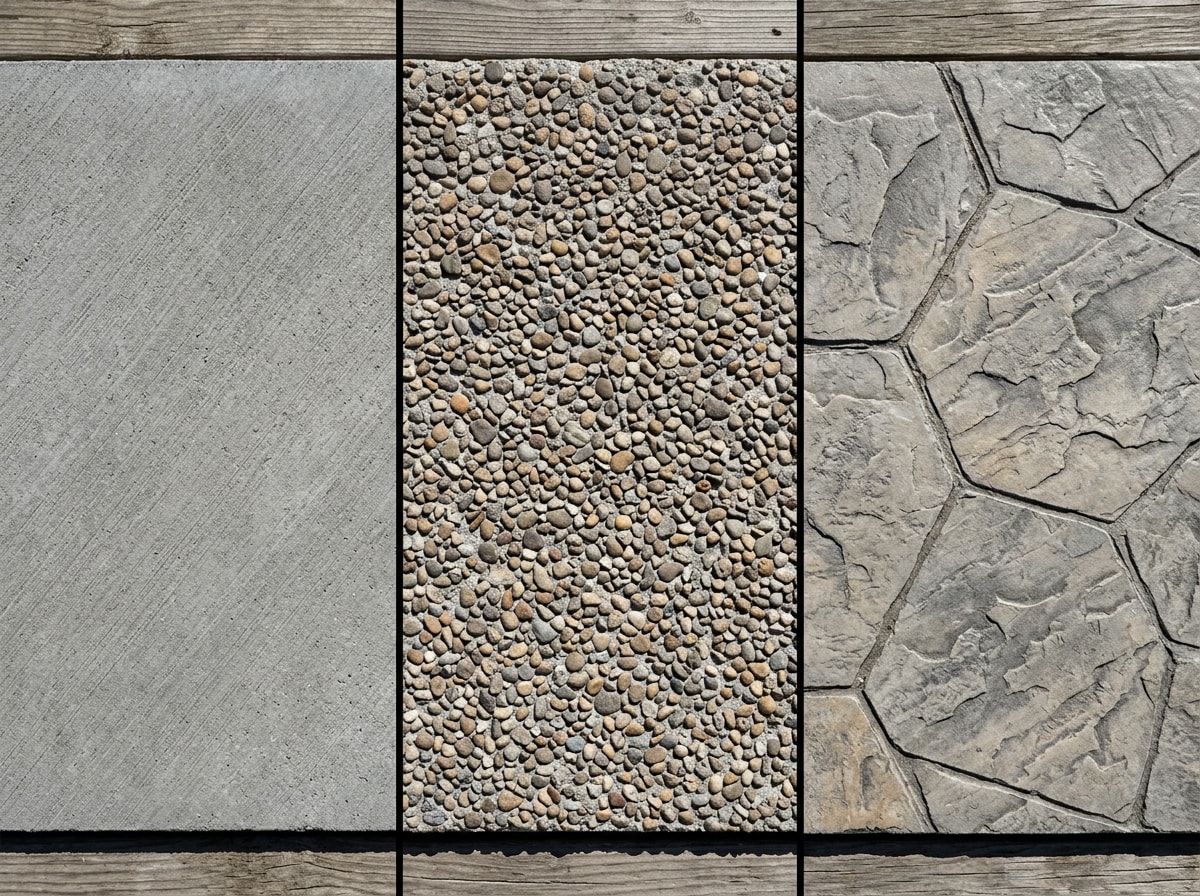
Three finishes account for most of the pool decks we build in Hall County. Pricing below reflects typical 2026 installed costs for a standard residential pad; exact pricing depends on access, slab thickness, and site prep.
| Finish | 2026 Cost per Sq. Ft. | Slip Resistance | Look |
|---|---|---|---|
| Broom finish | $6 – $10 | High | Plain, utilitarian |
| Exposed aggregate | $9 – $15 | High | Natural, pebbled texture |
| Stamped concrete | $12 – $20 | Medium (depends on stamp depth) | Mimics stone, brick, or tile |
Broom finish is the most budget-friendly and the easiest to repair in sections. Exposed aggregate splits the difference between grip and good looks. Stamped concrete costs the most but gives the deck a finished, high-end appearance that matches a travertine or flagstone patio.
How We Build Pool Decks in Gainesville
Every pool pad project starts with a site assessment, moves into design and finish selection, and ends with a written estimate.
Site Assessment and Drainage Planning
A site assessment covers layout, grading, and drainage before any concrete gets poured. Crews check how water will flow away from the pool to prevent standing puddles, low spots, or erosion once the pad is finished. Skipping this step is the most common reason decks develop drainage problems within a few years.
In our Hall County installs, the pads that fail early are almost always the ones where the original crew rushed the grading step to save a day of labor.
Design and Finish Selection
Beyond the finish itself, the concrete mix matters more than most homeowners realize. For exterior slabs exposed to rain and seasonal temperature swings, concrete should be air-entrained, with a recommended total air content of 6 percent for mixes using ¾-inch or 1-inch coarse aggregate . Exterior slabs should also be ordered at a specified strength of 4,000 psi, consistent with ACI 332 residential concrete requirements . Pads poured without these specs are the ones that scale, flake, or crack within a few winters.
Get a Free Pool Pad Estimate
A free estimate includes on-site measurements, a conversation about finish and budget, and a realistic timeline. Request your free estimate before committing to a pool pad budget based on guesswork.
Permits, Fence Lines, and Code Rules for Gainesville Pool Pads
Pool pad projects in Gainesville run into two separate rulebooks: building permits and pool barrier (fence) requirements. They're easy to mix up, so here's the breakdown.
Building permits. The City of Gainesville requires building permits for many building projects, including additions or enclosures, decks, demolition, electrical upgrades, fencing, new construction, plumbing upgrades, pool/spa installation, roofing, and more . For fencing specifically, no permit is required unless the fence is over 6 feet in height, though fences still have to meet height, location, and composition requirements . The city also just rolled out an update worth knowing about: the City of Gainesville adopted the 2024 ICC Code Editions and 2026 Georgia Amendments, effective January 1, 2026 , so pulled plans should reference the current code cycle. Confirm current requirements on the City of Gainesville building permit page before scheduling your pour.
Pool barriers. Georgia's pool fence rules track closely with the federal CPSC guidelines. The top of a pool barrier should be at least 48 inches above grade, measured on the side facing away from the pool, and some states, counties, or municipalities require pool barriers of 60 inches . Gate hardware has its own spec: at residential pools and spas, the latch release mechanism should sit not less than 54 inches above the ground . If your property sits in unincorporated Hall County rather than inside city limits, the baseline is slightly different: pool fences in unincorporated Hall County require a 4 ft minimum height, with a self-latching or self-closing gate .
This enclosure line should be finalized before the pad is poured. Redesigning a finished deck to fit a fence added later is far harder than planning the layout up front. See the CPSC's Safety Barrier Guidelines for Residential Pools for the full federal baseline, and check our Gainesville, GA service area page for more on how we coordinate pad and fence layout locally.
Concrete Pool Pad Repair in Gainesville
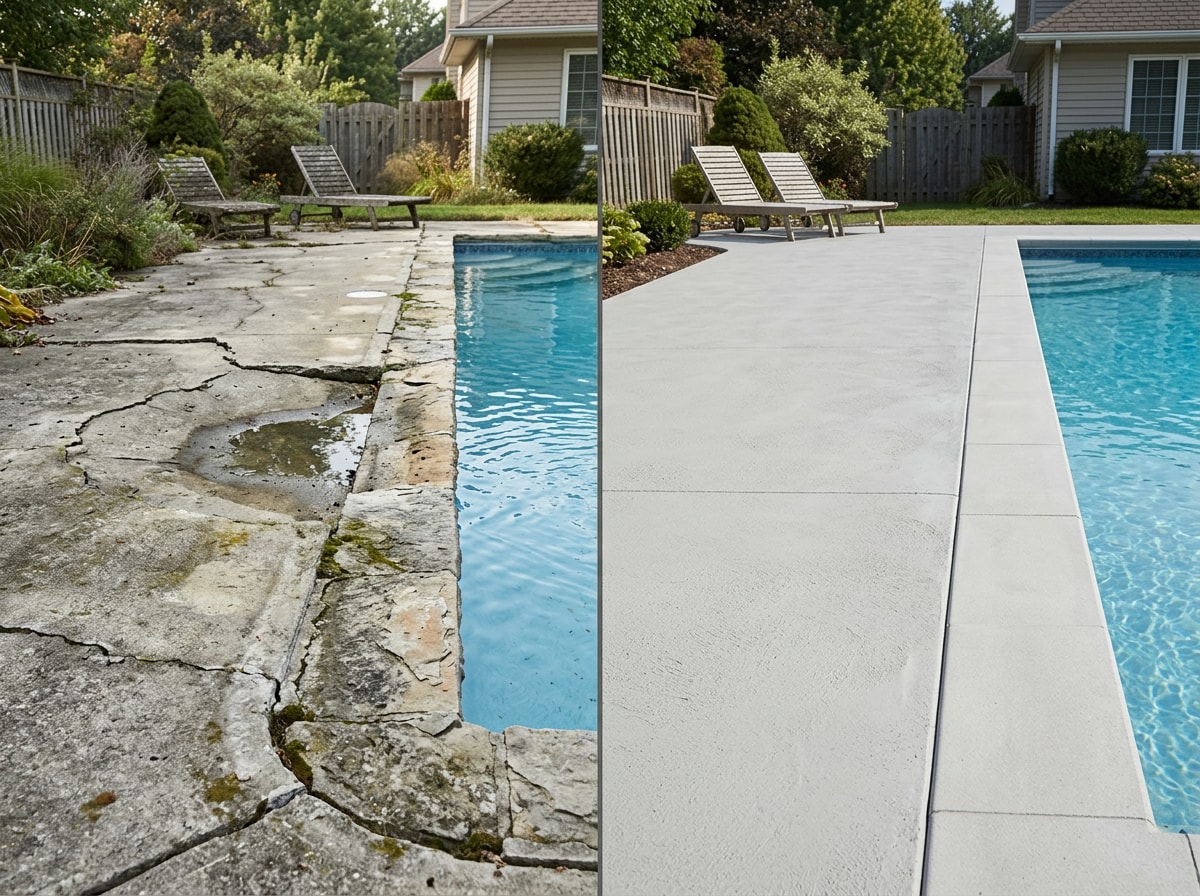
Many homeowners need pool pad repair, not a new pour. Cracked or sunken pads can often be resurfaced instead of replaced. Concrete pool decks are prone to settling because of the pool construction process itself: the backfill soil added around the pool excavation is never as dense or well-compacted as the undisturbed soil around it . That's why so many older pads develop a dip right at the coping line, even when the rest of the slab is solid.
Our concrete repair services include:
- Pool decking repair — patching cracks and resurfacing worn broom or stamped finishes
- Slab leveling — correcting sunken sections near the pool edge where backfill has settled
- Outdoor recreation area repair — extending repairs to adjoining patios and walkways
A cracked or uneven pad is also a trip hazard, not just a cosmetic one. See our Concrete Repair and Replacement services for a closer look at how resurfacing versus replacement decisions get made on real jobs.
Maintenance Tips to Extend Your Pool Deck's Life
A little upkeep buys years of service out of any pool pad:
- Reseal broom and exposed aggregate finishes every 2–3 years to block chlorine and UV damage.
- Rinse chemical splash off the slab promptly instead of letting it dry and etch the surface.
- Re-caulk expansion joints annually so water can't work its way under the slab.
- Keep planters and furniture off any crack until it's been evaluated, since standing weight can widen it.
Our Concrete Finishing and Sealing team handles resealing on a schedule if you'd rather not track the calendar yourself. And if you're updating the pool's sanitation system while the deck work is underway, our Salt Water Pool Chlorinator Gainesville, GA guide walks through installation and conversion costs.
Southern Life LLC builds and repairs pool pads throughout Hall County as part of a broader concrete contractor lineup, including patio installation. Visit our homepage to see the full range of outdoor projects we handle beyond pool pads.
FAQ
What is a pool pad?
A pool pad is the poured concrete slab surrounding an in-ground pool. It's also called a pool deck, and its main jobs are slip resistance, drainage, and chemical durability.
How much does a pool pad cost in Gainesville, GA in 2026?
Broom finish runs roughly $6–$10 per square foot, exposed aggregate $9–$15, and stamped concrete $12–$20. Exact pricing depends on slab thickness, access, and site prep.
Will a concrete pool deck be slippery when wet?
No. Broom and exposed aggregate finishes are built for slip resistance. Smooth or heavily polished stamped patterns need a slip-resistant sealer to match that performance.
Can a pool deck handle chlorine and pool chemicals?
Yes, properly mixed and sealed concrete resists cracking, fading, and chemical damage long-term, but splashed chemicals should still be rinsed off promptly to protect the sealer.
What design options are available for a pool deck?
Broom-textured, exposed aggregate, and stamped concrete are the three main options, each with different costs, grip, and appearance.
Does Gainesville require a fence around my pool?
Yes. Pool barriers need a minimum height, a self-latching gate, and a maximum ground clearance under federal CPSC guidelines that most local codes follow. Confirm your specific setback and permit requirements with the city before finalizing your layout.
Do I need a permit for a new pool pad or pool deck?
Pool and spa installation, resurfacing, and repairs all require a building permit in the City of Gainesville. Fencing only needs a separate permit if it's over 6 feet tall.
Can a cracked pool pad be repaired instead of replaced?
Often, yes. If the slab is structurally sound with no major heaving, resurfacing or patching is usually cheaper and faster than a full tear-out and replacement.