A swimming pool vacuum head in Dawsonville, GA has to handle more than average pool debris. Red clay runoff after a summer storm, pine pollen in spring, and leaf litter from the surrounding Chattahoochee National Forest tree line all end up on your pool floor. Pick the wrong head and you'll either leave debris behind or scuff a liner you just paid to install.
This guide breaks down exactly what to check before you buy, section by section, so you only have to get it right once.
Why Vacuum Head Choice Matters More Here Than in Most Areas
Your skimmer and filter catch floating debris. They don't catch what sinks.
Silt, pollen, and grit settle on the pool floor and walls, and that's where a vacuum head does its job. Skipping this step doesn't just leave a pool looking dull. Poor maintenance can result in low disinfectant levels that can allow the spread of a variety of germs that cause diarrhea as well as skin and respiratory illnesses , which is one reason the CDC treats routine cleaning as part of basic pool safety, not just appearance.
After servicing pools across Dawsonville and the surrounding Lumpkin and Dawson county lake communities, we see the same pattern every spring: owners who skip vacuuming through pollen season end up fighting algae by June. A five-minute vacuum pass twice a week during heavy pollen drop prevents most of that.
How to Choose a Pool Vacuum Head: 4 Variables That Actually Matter
Four things decide whether a vacuum head performs on your pool: weight, wheels versus brushes, shape and width, and whether it fits your existing hose and pole. Get one of these wrong and you'll damage a surface or leave debris behind.
Weight and Suction Stability
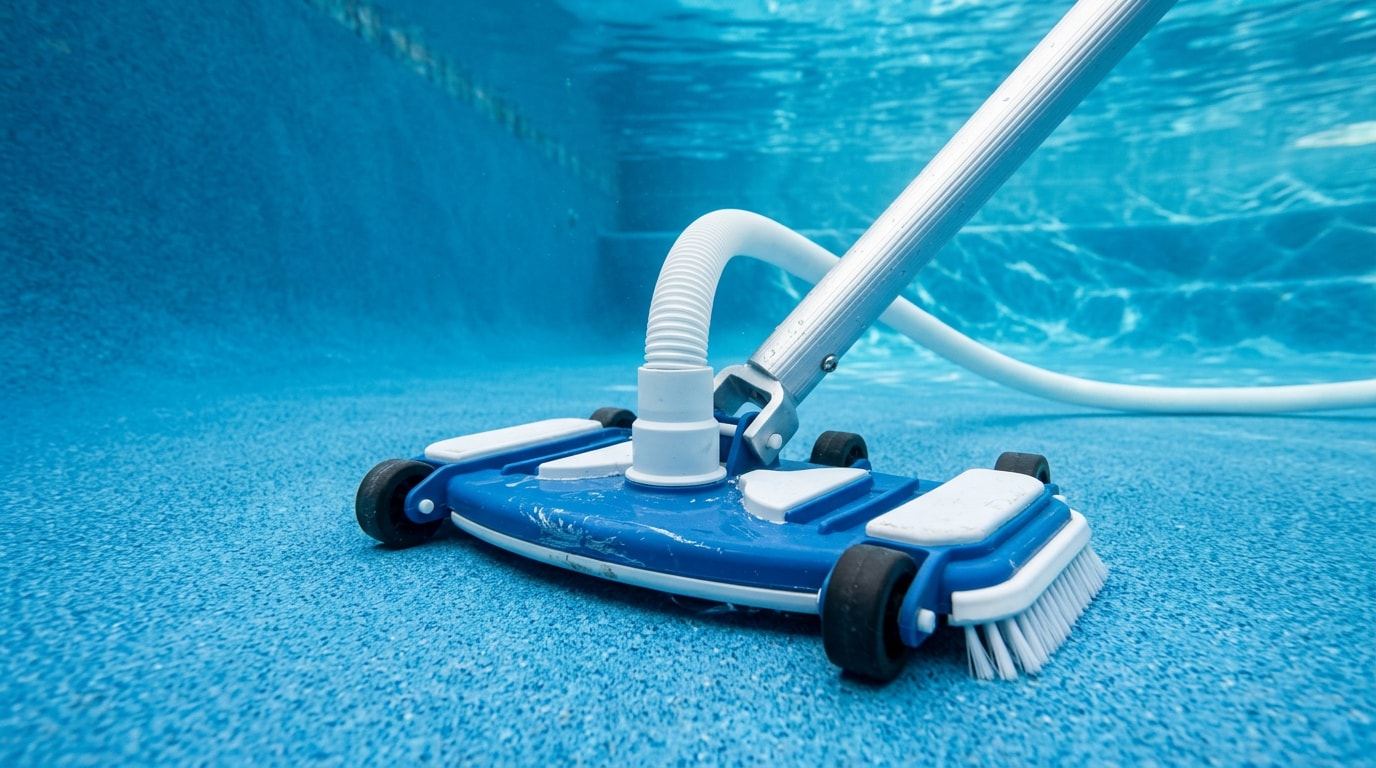
A weighted vacuum head stays pressed against the pool floor instead of floating up, which keeps the suction seal tight.
Lighter heads tend to skate over heavy silt and leaves, especially near a return jet. Above-ground pools generally do fine with lighter heads since their floors are smaller and flatter. In-ground pools typically need something in the 4 to 7-pound range to maintain consistent floor contact, particularly in deeper areas or on textured surfaces.
Heavier isn't automatically better. A head too heavy for a weak pump can be hard to push and may stall suction in corners.
Wheels vs. Brushes
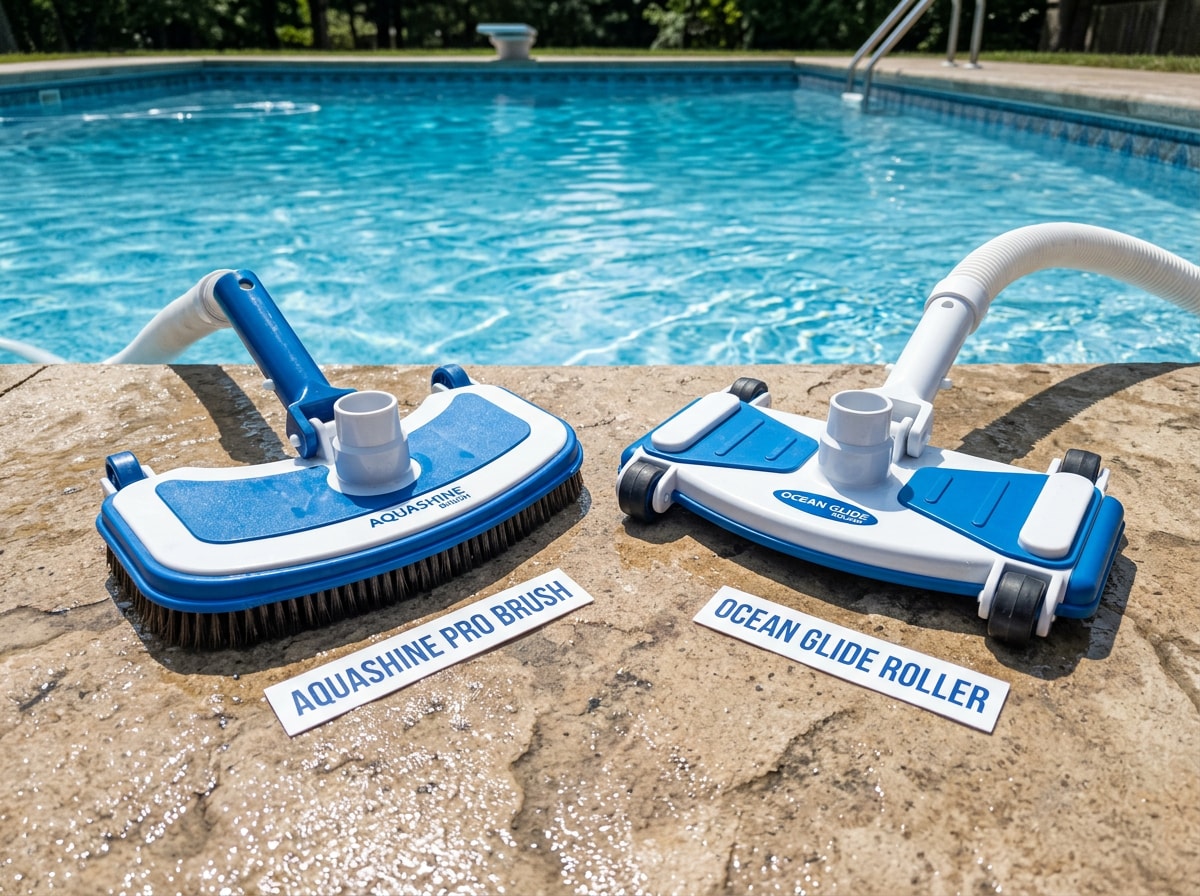
- Wheels glide smoothly across smooth surfaces and are the safer choice for vinyl liners since they don't scrape the material.
- Brushes use bristles to physically scrub algae and embedded grit off rougher textures like plaster or exposed aggregate.
A stiff concrete-rated brush dragged across a vinyl liner can scratch or tear it over time, even if the damage isn't obvious right away. If you're unsure which your pool has, check with whoever installed or last resurfaced it before buying a head with aggressive bristles.
Shape, Size, and Width
A triangular head pivots into corners and steps, which makes it a strong fit for pools with tight angles. A rectangular pool with large open floor space usually cleans faster with a wider head.
Standard vacuum head width runs 12 to 14 inches, which maneuvers well in smaller or irregular pools. Wider heads, from 18 to 23 inches, cover more ground per pass but are harder to control in corners. Match the width to your pool shape instead of assuming wider always wins.
Handle, Hose, and Pole Compatibility
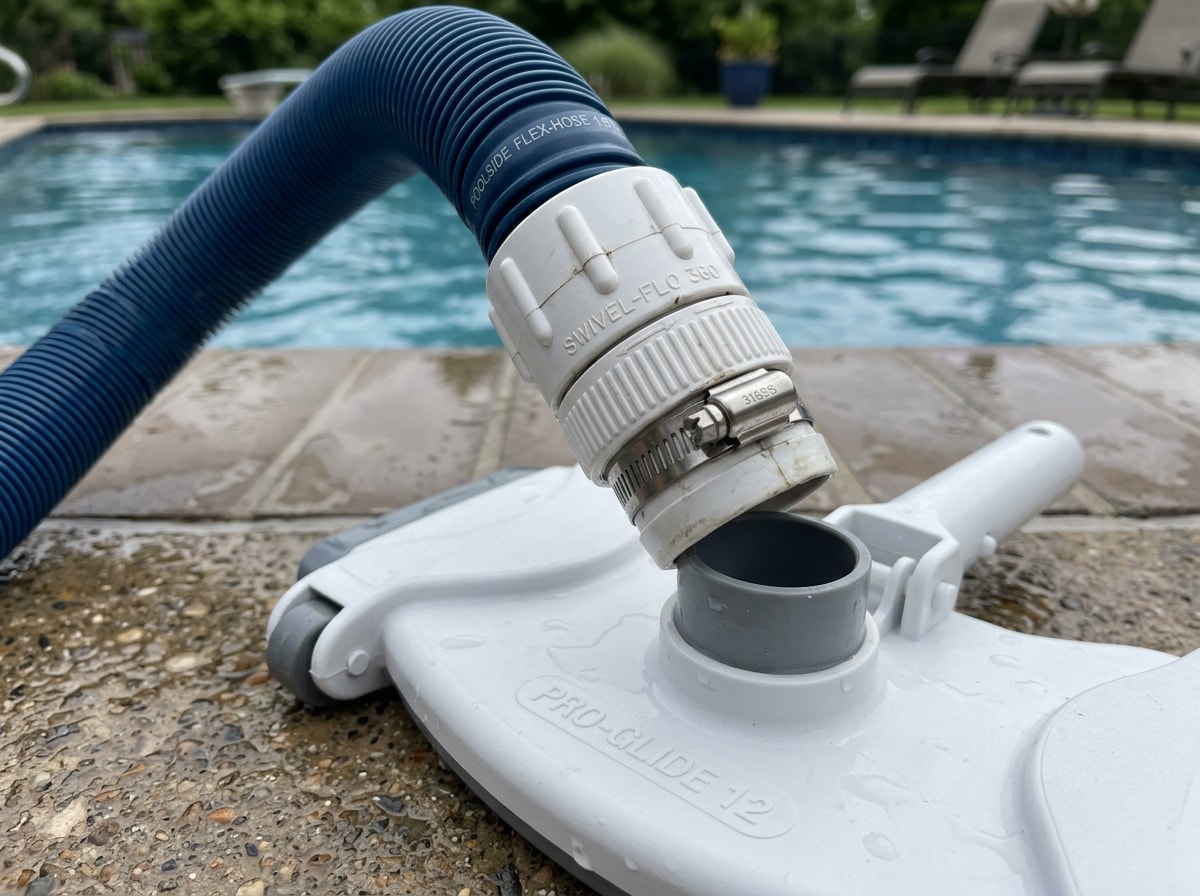
Most vacuum heads fit a standard telescopic pole, but hose size varies, typically 1.25 or 1.5 inches. A mismatch here chokes suction regardless of how good the head is. Check your hose diameter before ordering a replacement.
A 360-degree swivel hose connector solves a real annoyance: without one, the hose twists as you vacuum, which tires your arms and can pull the head off-track mid-pass.
Secure, properly rated fittings also matter for safety, not just convenience. Virginia Graeme Baker, after whom the Pool and Spa Safety Act is named, died from drowning due to a suction entrapment from a faulty drain cover , which is why federal guidance treats every piece of suction hardware, hoses, fittings, and connections alike, as something that needs to stay intact and properly seated.
Pool Surface Compatibility Guide
Surface type is the single biggest factor in avoiding equipment damage, more important than brand or price. A head that's safe on one surface can scratch another.
| Surface | Best Head Features | Avoid |
|---|---|---|
| Vinyl liner | Soft bristles, non-marking wheels, dual air-relief valves | Stiff concrete brushes, hard-edged wheels |
| Concrete / gunite / plaster | Stiffer brushes, heavier weighted body | Bare metal edges on liner pools |
| Fiberglass | Non-abrasive wheels, light-to-medium weight | Aggressive scrub brushes that dull the gel coat |
Vinyl Liner Pools
A vacuum head for a vinyl liner pool should use soft bristles, non-marking wheels, and dual air-relief valves to avoid tearing or puncturing the liner. Avoid anything marketed primarily for concrete or gunite use. Even a small amount of grit trapped under a stiff-wheeled head can drag across a vinyl surface and leave a visible scuff.
Concrete, Gunite, and Plaster Pools
These harder surfaces tolerate stiffer brushes and heavier heads far better than vinyl does. The tougher surface can take the extra agitation needed to dislodge embedded algae.
That agitation loosens debris into the water column, so plan to run your filter a bit longer after a deep vacuum pass. If you'd rather hand this off, our pool and spa maintenance visits include surface checks so you're never guessing which vacuum head is safe.
Hardware & Specs: Where Vacuum Heads Actually Wear Out
Most buying guides stop at "weighted or not." These are the parts that actually fail.
Wheel Materials
Ball-bearing wheels are common on heads built for concrete and gunite, since they hold up to rougher pool floors without seizing. Rubber or non-slip wheels are more typical on vinyl and fiberglass-rated heads, prioritizing gentler surface contact over durability.
Wheel tread separation, where the rubber coating splits away from the wheel core, is one of the most common failure points on either style. Inspect wheels periodically; replacing a wheel is usually cheap compared to replacing the whole unit.
Brush Configurations
Side brushes handle debris collecting against walls and corners. Bottom brushes focus on scrubbing the floor. Many mid-range and higher heads combine both for fuller coverage in one pass.
Bristle material matters too. Nylon bristles are softer and safer for painted or vinyl surfaces, while stiffer bristle blends are reserved for textured concrete and plaster finishes.
Tips for Extending Vacuum Head Life
- Rinse the head after each use to clear chlorine residue and trapped debris from wheels and bristles.
- Inspect hardware weekly during heavy-use months for loose screws, cracked plastic, or frayed bristles.
- Store the head out of direct sunlight; UV exposure breaks down plastic components faster than normal wear.
- Confirm hardware is rated to the current ANSI/PHTA suction and fitting standards before buying aftermarket parts.
The Pool & Hot Tub Alliance is a non-profit organization with 4,000 members from around the world, established in 1956 to support, promote, and protect the common interests of the pool, hot tub, and spa industry , and it maintains the national consensus standards manufacturers build against.
Matching Head Type to Your Situation
Rather than naming specific products, it's more useful to match the category of head to your pool.
- Vinyl pools: lightweight head, soft rubber wheels, rounded edges.
- Concrete or gunite: heavier head, stiffer bottom brushes for embedded algae.
- Mixed or multi-pool routes: mid-weight, brush-and-wheel hybrid that adapts across surfaces.
- Tight corners and steps: triangular head, even if it covers less area per pass.
If you have an above-ground pool specifically, sizing and weight recommendations differ enough that it's worth a separate look. Our above-ground pool cleaning guide for Dawsonville covers pricing and equipment specifics for that setup.
Not sure which category fits? Our team handles this question on almost every maintenance call. Get a free estimate and we'll confirm your surface type and recommend a head that actually fits your pool, not just your budget.
FAQ
Will a Weighted Vacuum Head Damage My Pool Liner?
Weight itself generally isn't what damages a vinyl liner. Abrasive wheels or overly stiff brushes are the real culprits. A weighted head with soft rubber wheels and a rounded, vinyl-safe edge can be used on a liner pool without issue in most cases. Prioritize wheel material and edge design over weight alone.
How Do I Use a Pool Vacuum Head?
Attach the head to a telescopic pole, then connect the hose to the head on one end and your skimmer or dedicated vacuum port on the other. Before turning on suction, submerge the hose fully to push out trapped air; starting with air in the line can disrupt filtration. Once primed, lower the head to the floor and move it in slow, overlapping passes.
Can I Use One Vacuum Head for All Pool Types?
No. Features that protect one surface, like stiff brushes for concrete, can damage another, like a vinyl liner. Match the head to your specific pool type rather than looking for one "do-it-all" option.
What Size Vacuum Head Do I Need?
For most residential pools, 12 to 14 inches works well and maneuvers easily around steps and corners. Larger rectangular pools with open floor space can use 18 to 23-inch heads to cover more ground per pass, but they're harder to control in tight spots.
How Often Should I Vacuum My Pool in Dawsonville, GA?
Plan on vacuuming once or twice a week during pollen season (typically March through May) and after any heavy North Georgia thunderstorm that washes clay or silt into the water. Outside of those periods, once a week is usually enough to keep the floor clear.
If you'd rather not deal with any of this directly, Southern Life handles vacuum head selection and routine cleaning as part of our broader pool and hot tub service for homeowners throughout Dawsonville and North Georgia. Reach out through our contact page for a free estimate on equipment or ongoing maintenance.