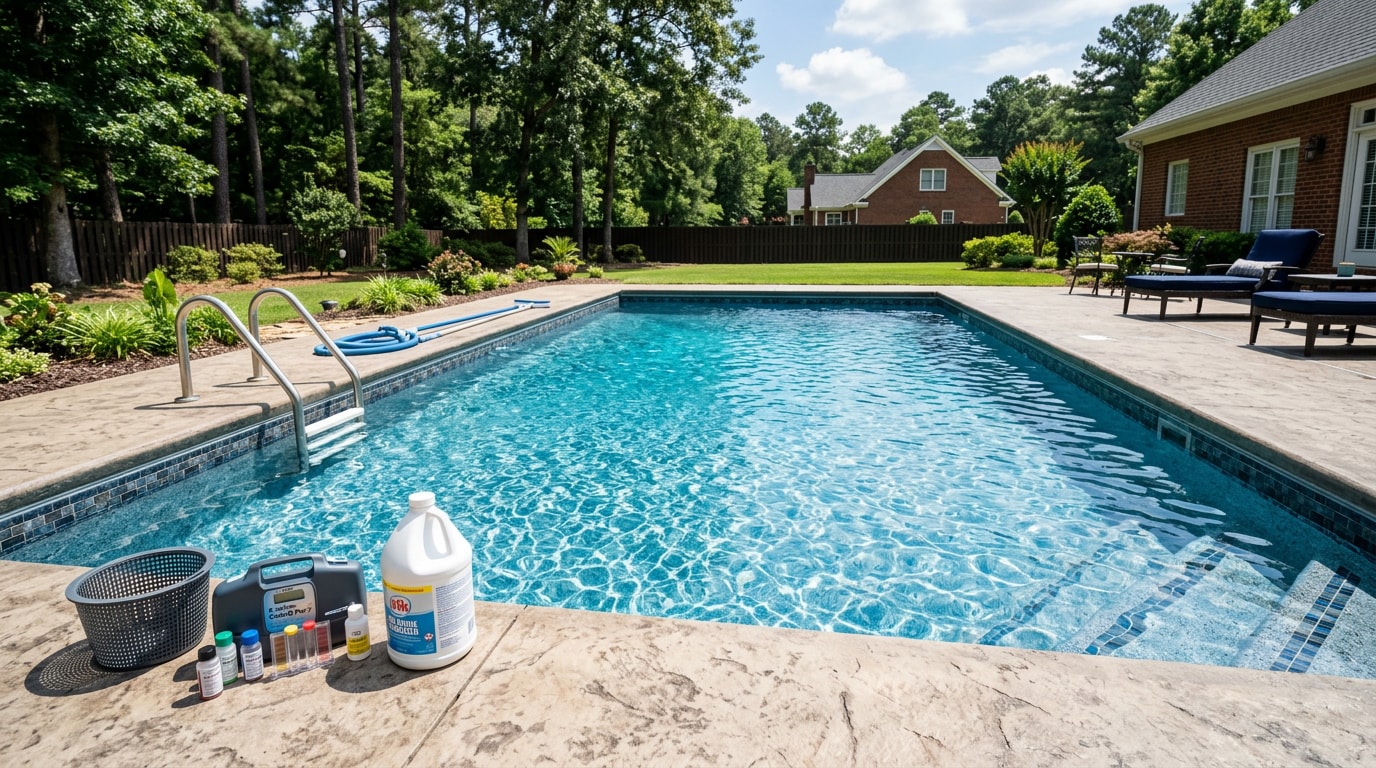
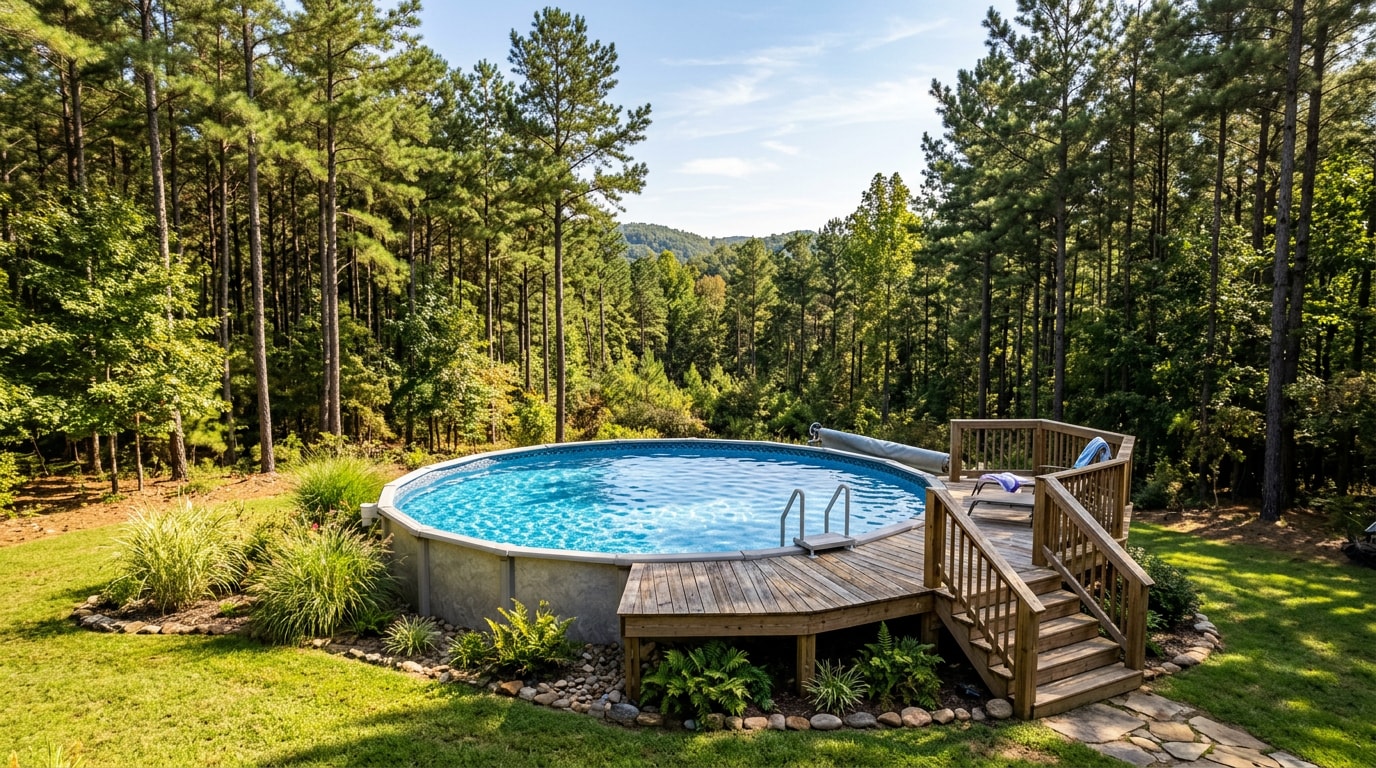
Above ground pool cleaning service in Dawsonville, GA has become a seasonal necessity for homeowners fighting heavy spring pollen, sudden downpours, and red Georgia clay that can turn clear water cloudy within days. DIY upkeep works for some, but it eats 1-2 hours a week and leaves little room for error with chemicals. This guide covers exactly what a professional visit should include, what it costs locally in 2026, and the one maintenance step most DIY owners skip right before their water turns green.
What a Professional Above Ground Pool Cleaning Service Covers in Dawsonville
A proper service visit is built around five tasks: skimming, wall brushing, vacuuming, equipment inspection, and water testing with chemical balancing.
In Dawsonville and the rest of Dawson County, that routine has to work harder than it would in a drier climate. Spring pollen bloom coats the surface fast, and the thunderstorms that roll off the North Georgia foothills wash red clay sediment toward low-lying yards and pool decks. Tree canopy common on the area's larger rural lots also means more leaf litter in the skimmer basket than a typical suburban pool sees.
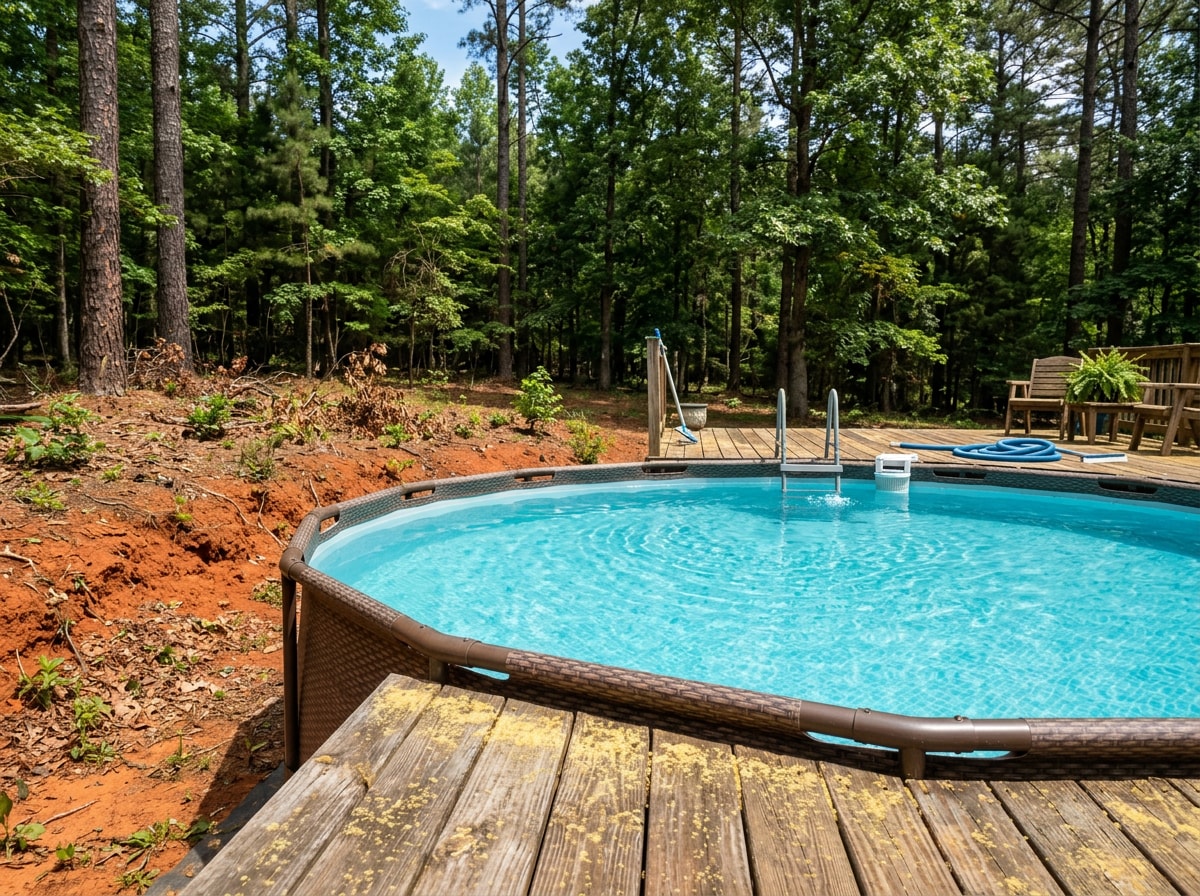
A technician's visit typically includes:
- Skimming the surface and emptying the basket before debris sinks and stains the liner
- Brushing walls to stop algae from taking hold in seams and corners
- Vacuuming the floor to clear fine sediment the skimmer missed
- Checking the pump, filter, and pressure gauge for wear
- Testing and balancing pH, chlorine, alkalinity, and stabilizer
A good visit also leaves behind a short report noting chemical readings, equipment condition, and anything that needs attention before it becomes a repair bill. For a full breakdown of what's included at each service tier, see our pool and hot tub service page.
How Much Does Pool Cleaning Cost in Dawsonville, GA?
Pricing depends on pool size, visit frequency, and whether the plan includes equipment checks or just surface cleaning. Here's a general comparison homeowners in the area can use as a starting point.
| Task | DIY | Professional Service |
|---|---|---|
| Weekly cleaning | 1-2 hrs/week | Included, scheduled |
| Chemical testing | Test strips | Lab-grade testing |
| Equipment checks | Occasional | Every visit |
| Typical monthly cost | $30-$80 in supplies | $100-$220 depending on plan |
Basic plans usually cover cleaning only. Full-service plans add testing, minor repairs, and seasonal adjustments like openings and closings. Rates vary by pool size and site access, so the most accurate number comes from a free estimate based on your specific pool.
DIY vs. Hiring a Pro: Which Makes Sense for Your Pool?
DIY saves money but costs time, and the risk of a chemical mistake goes up when storms or heavy swimmer use throw chemistry off balance between testing sessions. Hiring a pro trades that time and risk for a predictable monthly cost and trained oversight.
Technicians trained through the Pool & Hot Tub Alliance's Certified Pool & Spa Operator program are taught water chemistry, equipment handling, and hazard reduction in depth, which matters more than it seems once a pool starts fighting algae or a cloudy filter. If you're comparing options near Dawsonville, our Dawsonville service area page outlines current local availability and response times.
Weekly Above-Ground Pool Maintenance Checklist
A simple cadence prevents most problems before they start:
- Daily: Check the skimmer basket and water level
- Weekly: Brush the walls, vacuum the floor, test pH and chlorine, shock if needed
- Monthly: Check calcium hardness and stabilizer (cyanuric acid) levels
The CDC's home pool water treatment guidance recommends a pH of 7.0 to 7.8 and a chlorine concentration of at least 1 ppm in pools , numbers worth keeping on a magnet by the pump. Sticking to this schedule is the single biggest factor in avoiding algae outbreaks before they start.
Step-by-Step: How to Clean an Above-Ground Pool
A technician's routine usually follows the same order every visit, and it's worth copying even if you're doing it yourself.
- Check and empty the pump strainer basket so debris doesn't choke circulation
- Rinse or backwash the filter when pressure runs 8-10 psi above its normal starting point
- Skim floating debris with a flat net or leaf bag before it sinks and stains the liner
- Brush the walls to loosen algae and scale before it sets in
- Vacuum the floor to pull up fine sediment the skimmer missed
- Test and balance chlorine, pH, and alkalinity last, once the water has circulated
Doing these in order keeps circulation working efficiently instead of fighting dirty water all week.
Seasonal Pool Care in North Georgia
- Spring: Inspect equipment and check for winter damage before opening
- Summer: Test twice weekly as heat and swimmer load spike
- Fall: Skim more often as leaves drop, especially under tree cover
- Winter: Winterize lines, protect equipment from freezing, and store chemicals properly
Before draining or winterizing, it's worth knowing Georgia's rules on pool water disposal. The Georgia EPD's pool water conservation guidelines state that drained pool water must flow over at least 50 linear feet of permeable ground before being discharged into a receiving water body such as a stream or creek, a detail most generic pool guides skip entirely. Chemicals being stored for winter should also follow the EPA's safe storage guidance for swimming pool chemicals, since several common pool products are reactive enough to pose a fire or vapor risk if stored together.
Advanced Cleaning & Troubleshooting
Deep cleans go further than a weekly tidy-up. Pros use pressure-washing attachments to strip buildup off walls, targeted treatment for stubborn green or black algae spots, and commercial-grade tools like robotic cleaners that cover more surface area faster than a standard DIY vacuum head.
If a pool has been neglected for a season or needs liner, plumbing, or pump repair beyond routine cleaning, that's a job for our pool repair and renovation team rather than a weekly maintenance visit. For ongoing care once the pool is back in shape, our pool and spa maintenance plans are built around exactly the schedule outlined above.
Visible dirt is a lagging indicator, not an early one. Shock the pool weekly during heavy use or after rain, and don't wait for the water to look dirty before testing it. For homeowners anywhere in Dawson County who'd rather hand off the weekly routine, visit Southern Life LLC or request a free estimate to get a plan built around your pool size and usage.
FAQ
Is it worth hiring a pool cleaning service, or can you do it yourself?
It depends on your schedule and comfort handling chemicals. DIY works fine for hands-on owners with time to spare, but a pool cleaning service saves hours weekly and reduces the risk of imbalance-related problems like algae or equipment wear.
How often should an above-ground pool be cleaned in Dawsonville, GA?
Weekly, at minimum, during swim season. Pools under heavy tree cover or exposed to spring pollen often need a quick skim every few days on top of the weekly service to keep the skimmer from clogging.
How much does professional pool cleaning cost in Dawsonville, GA?
Basic cleaning plans generally run $100-$150 a month, while full-service plans with equipment checks and chemical supply run higher, often $150-$220. Exact pricing depends on pool size and condition, so a free estimate is the fastest way to get a real number.
How often should you change the water in an above-ground pool?
Most above-ground pools need a full water change every 5-7 years, though heavy use or inconsistent maintenance can shorten that lifespan. Well-balanced water with regular testing often stretches toward the longer end of that range.
How often should you backwash an above-ground pool?
Backwash when the filter pressure gauge reads 8-10 psi above its normal starting point, not on a fixed calendar schedule. This pressure-based rule keeps filtration efficient without wasting water on unnecessary backwashes.
Can you drain pool water into your yard in Georgia?
In most cases, yes, but not directly into a storm drain or creek. Georgia's EPD guidance requires dechlorinated water to pass over enough permeable ground to filter out before reaching any stream or storm system, so check local county rules before draining a full pool.