Knowing how to raise pH in a pool quickly is the first skill every Alpharetta pool owner needs once a summer storm rolls through, because stinging eyes and chlorine that won't hold a reading are both symptoms of the same acid problem. Metro Atlanta pools lose pH faster than pools in drier regions, and the fix depends on getting your total alkalinity and dosing order right, not just dumping in chemicals. This guide gives you the exact soda ash, baking soda, and aeration steps to fix it today, plus how to stop it from happening again.
Visit Southern Life LLC to see our services and request a free estimate.
Quick Answer: How to Raise Pool pH Fast
- Test first. Confirm your pH and total alkalinity before adding anything.
- Low pH, normal alkalinity: Use soda ash (sodium carbonate). It raises pH fast with only a mild effect on alkalinity.
- Low pH and low alkalinity: Use baking soda (sodium bicarbonate) instead, since it raises both together.
- No chemicals on hand: Run waterfalls, jets, or a garden hose for splash to aerate the water, but expect it to take a day or two.
- Always retest 4 to 6 hours after dosing before adding more product.
Our pool and spa maintenance team handles this exact testing-and-dosing routine for homeowners across Alpharetta if you'd rather skip the guesswork.
What Is Pool pH and Why the Right Range Matters
Pool pH measures how acidic or basic your water is on a 0 to 14 scale, with 7 as neutral. CDC recommends pH 7.0–7.8 and a chlorine concentration of at least 1 ppm in pools and at least 3 ppm in hot tubs. Most pool professionals narrow that further to 7.4–7.6 as a practical sweet spot for comfort and equipment life.
The range exists for a chemistry reason, not just comfort. The degree of dissociation of hypochlorous acid is pH dependent, being gradually suppressed as the pH falls, so the share of chlorine present as hypochlorous acid falls to about 50% by pH 7.5. At pH 6.5, roughly 92% of chlorine stays in its active hypochlorous acid form at typical pool temperatures, based on published equilibrium tables for chlorine dissociation.
Pool pH cuts both ways. As pH goes up, the ability of chlorine to kill germs decreases, especially if pH is above 8.0, while pH below 7.0 lets chlorine work faster but makes pool pipes more likely to corrode or break down. That's why "raise it fast" still needs a target, not just an upward direction.
What Causes Low pH in Alpharetta, GA Pools
A handful of everyday factors push pH down, and rainfall is a bigger driver here than most homeowners realize. Normal annual precipitation at the Atlanta/Peachtree City climate station runs close to 49.71 inches a year. Mildly acidic rainwater dilutes pool water fast during a heavy storm, and it doesn't take many consecutive downpours to drop pH overnight.
Our Southern Life pool technicians see this pattern every summer across Alpharetta and Roswell: a pool tests perfectly on Saturday, then a Tuesday thunderstorm knocks pH into the 6s by Wednesday morning. Beyond rain, three other factors matter:
- Acidic sanitizers. Trichlor and dichlor tablets lower pH with every dose.
- Heavy bather load. Sweat, sunscreen, and body oils add organic acids after parties or weekend crowds.
- Low total alkalinity. When alkalinity runs below about 60 ppm, pH swings unpredictably no matter what you add.
How to Raise pH in a Pool: Step by Step
Step 1: Test Your Water First
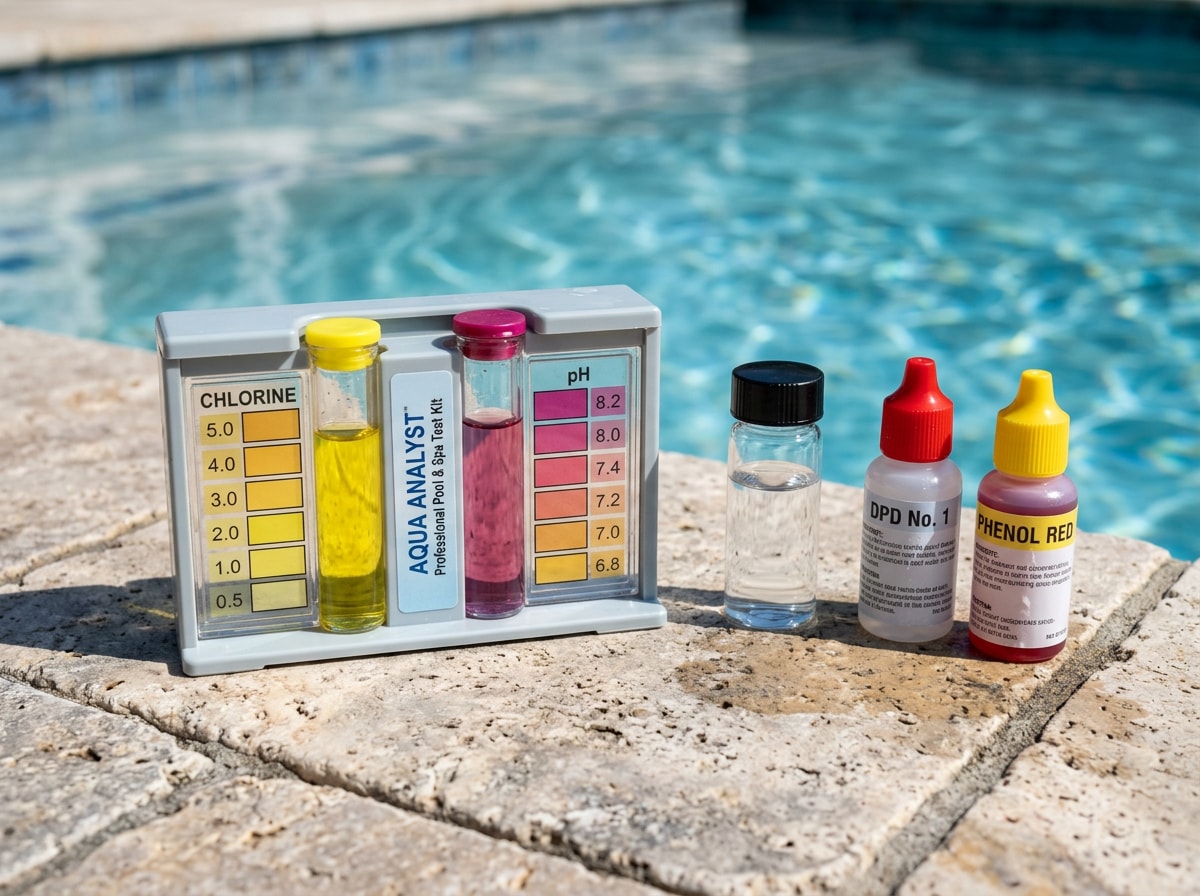
Before adding anything, test pH and total alkalinity together. A liquid test kit is more accurate for dosing decisions; test strips work fine for a quick daily check. Skipping this step is how people end up overcorrecting and chasing a swinging number for days.
Step 2: Calculate Pool Volume
You can't dose chemicals accurately without knowing your pool's gallon volume. A pool volume calculator based on shape and average depth gives you that figure in a couple of minutes.
Step 3: Soda Ash for a Fast Fix
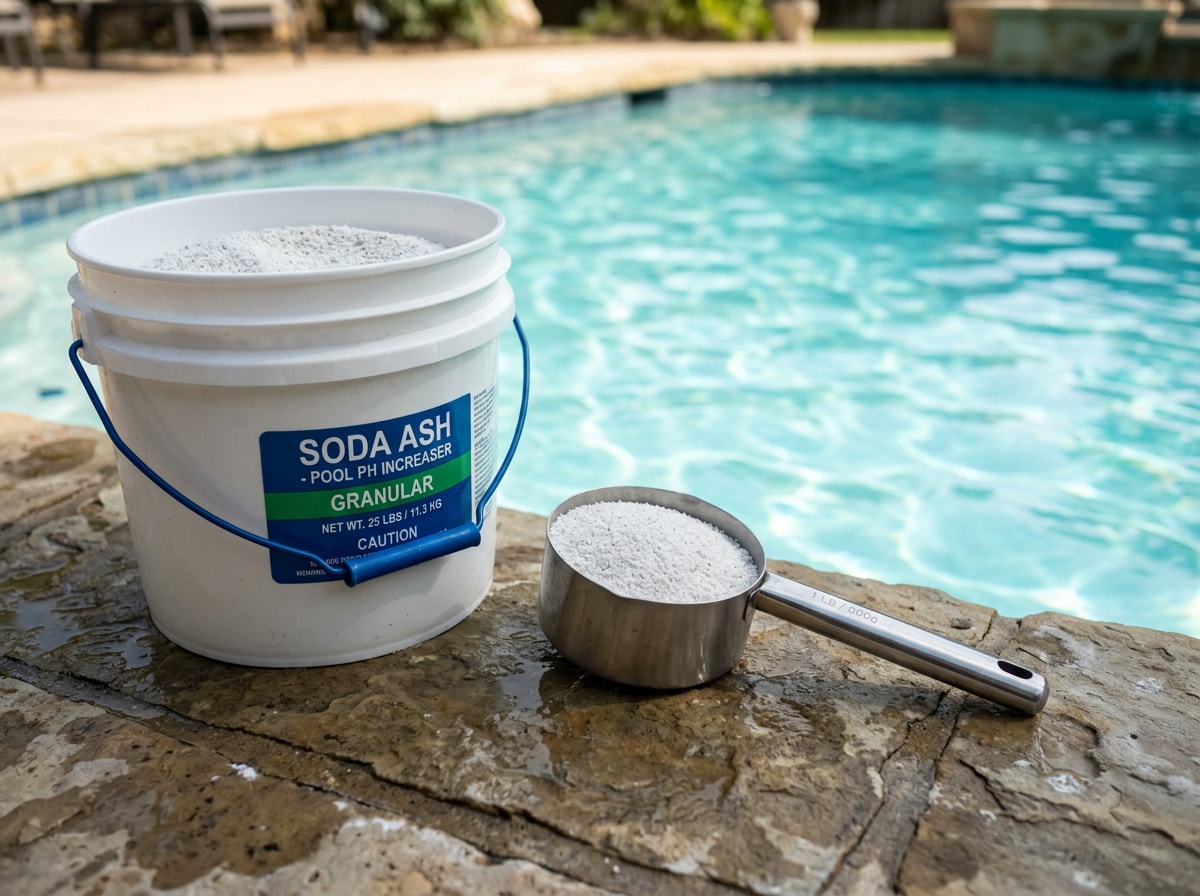
Soda ash (sodium carbonate) is the fastest reliable way to raise pH when alkalinity already sits in range. Most products call for roughly six ounces of soda ash per 10,000 gallons to raise pH by about 0.2.
| Pool Volume | Soda Ash Amount | Approx. pH Increase |
|---|---|---|
| 10,000 gallons | 6 oz | 0.1–0.2 |
| 15,000 gallons | 9 oz | 0.1–0.2 |
| 20,000 gallons | 12 oz | 0.1–0.2 |
| 30,000 gallons | 18 oz | 0.1–0.2 |
For a 20,000-gallon Alpharetta backyard pool reading 7.0, dissolve about 12 ounces of soda ash in a bucket of warm water. Broadcast it slowly across the surface with the pump running. Dumping powder straight into the pool undissolved is the fastest way to get cloudy water, so always mix it in a bucket first.
Wear gloves and eye protection when handling soda ash. CDC advises wearing safety equipment such as respirators or goggles when handling pool chemicals and checking product labels for specific directions.
Step 4: Baking Soda for a Gentle, Dual-Purpose Boost
Baking soda (sodium bicarbonate) raises both pH and total alkalinity, making it the right call when alkalinity is also low. Approximately 1.5 lbs of sodium bicarbonate will raise the total alkalinity of 10,000 gallons of water by 10 ppm , with a much smaller, gentler bump to pH itself.
This method works slower and more modestly than soda ash. If alkalinity is fine but pH is seriously low, soda ash is still the better tool.
Step 5: Aeration for a Chemical-Free Option
Aeration raises pH by releasing dissolved carbon dioxide from the water. Running waterfalls, fountains, or spa jets for a few hours, or simply pointing a hose into the pool to create splash, lets pH climb gradually over a day or two. It's genuinely the slowest method here, so pair it with soda ash or baking soda if you need results today.
Step 6: Retest and Fine-Tune
Let the pump circulate for at least four hours before retesting. If the reading is still low, repeat with a smaller dose rather than adding more product at once. Retest two to three times a week until pH holds steady on its own.
Total Alkalinity: The Setting That Makes pH Fixes Stick
Total alkalinity buffers pH so it doesn't bounce every time you add chemicals or it rains. The ANSI/APSP/ICC11 2019 American National Standard for Water Quality in Public Pools and Spas by the Pool & Hot Tub Alliance states that total alkalinity shall be maintained between a minimum of 60 ppm and a maximum of 180 ppm. Most residential pools run best closer to 80–120 ppm.
If your pH keeps drifting back down within a day or two of treating it, test alkalinity before you buy more soda ash. A low-alkalinity pool will undo a pH fix almost as fast as you can make it.
Common Mistakes When Raising pH
- Mistake: Dumping soda ash or baking soda in undissolved. Fix: Dissolve it in a bucket of warm water first, then broadcast across the surface.
- Mistake: Dosing too much at once for a faster result. Fix: Use the dosage chart for your pool volume and retest between smaller doses.
- Mistake: Adding more chemical before retesting. Fix: Wait at least four hours with the pump running, then retest.
- Mistake: Treating pH without checking alkalinity first. Fix: Test both together, since low alkalinity makes pH swing no matter what you add.
DIY vs. Hire a Pro in Alpharetta, GA
Most homeowners can raise pool pH quickly using the steps above. Persistent or recurring low pH is a different problem. A local pool service brings reliable testing equipment, exact dosing experience, and the ability to diagnose why pH keeps dropping instead of just treating the symptom each time.
Certified Pool & Spa Operator (CPO) training gives technicians the knowledge, techniques, and skills required for proper pool operations, following current guidance from the CDC, the Council for the Model Aquatic Health Code, and the International Swimming Pool and Spa Code. That's a higher standard than test-strip guesswork, and it matters more here given how often Alpharetta pools see rain-driven pH swings.
Pool chemical injuries account for about 4,500 emergency department visits each year nationally , which is one more reason to hand off chemical handling to a trained technician if you're not confident mixing and dosing yourself. If your pool keeps drifting back to low pH despite following these steps, request a free estimate from our team and we'll get it resolved for good.
For homeowners who also want year-round care rather than a one-time fix, our pool essentials guide for Alpharetta covers the testing kit and chemical basics every local pool needs on hand. You can also browse our full pool and hot tub service lineup or see {{SITE_URL}}) for everything we handle for homeowners in Alpharetta, GA.
FAQ
How long does it take to raise pool pH?
Most pools show a measurable increase within four to six hours of adding soda ash once the pump has circulated it. Full stabilization can take up to 24 hours. Aeration is much slower, often taking one to two full days.
What is the fastest way to raise pH in a pool?
Soda ash is the fastest chemical method when total alkalinity is already in range. Aeration is the fastest chemical-free option, but it's slow overall and works better as a supplement than a standalone fix.
Can I use baking soda to raise pool pH?
Yes, but it affects total alkalinity more strongly than pH itself. It works best when both alkalinity and pH are low rather than as a standalone quick pH fix.
How much soda ash do I need to raise pool pH?
As a general guideline, about 6 ounces of soda ash per 10,000 gallons raises pH by roughly 0.1 to 0.2. Check the dosage table above for a breakdown by pool size.
Does shocking a pool raise or lower pH?
Liquid chlorine (sodium hypochlorite) shock is alkaline and can nudge pH up slightly. Cal-hypo shock has a milder effect. Retest pH a few hours after shocking rather than assuming it stayed put.
Will low alkalinity stop my pH fix from working?
Yes. If alkalinity sits below about 60 ppm, pH bounces no matter how much soda ash or baking soda you add. Raise alkalinity into the 80–120 ppm range first, then fine-tune pH separately.